Showing posts with label death. Show all posts
Showing posts with label death. Show all posts
Thursday, January 17, 2013
Deadlines
1st day of the new semester, I'm sure to be asked about due dates and deadlines. But I don't want to talk about them today. They'll arrive soon enough.


Wednesday, September 12, 2012
A philosopher finds his peace
A former student just back from Germany sends along proof-positive that pessimistic philosophers eventually get what they yearn for.

Old Artur's not wrestling with the Will anymore. Thanks, Rudy!

Old Artur's not wrestling with the Will anymore. Thanks, Rudy!
Saturday, January 28, 2012

Monday, February 14, 2011
B/V'day poem
A poem, to mark yet another birthday. Happy Valentine's Day.

Ever since that moment
when it first occurred
to me that I would die
(like everyone on earth!)
I struggled against
this eventuality, but
never thought of
how I'd die, exactly,
until around thirty
I made a mental list:
hit by car, shot
in head by random ricochet,
crushed beneath boulder,
victim of gas explosion,
head banged hard
in fall from ladder,
vaporized in plane crash,
dwindling away with cancer,
and so on. I tried to think
of which I'd take
if given the choice,
and came up time
and again with He died
in his sleep.
Now that I'm officially old,
though deep inside not
old officially or otherwise,
I'm oddly almost cheered
by the thought
that I might find out
in the not too distant future.
Now for lunch.
The Death Deal" by Ron Padgett, from How Long. © Coffee House Press, 2011. Writer's Almanac
Monday, February 22, 2010
Thanatopsis
Friday, February 19, 2010
A free man
Freddie William Roth (12.12.28 - 2.19.10) Builder, engineer, leader, beloved father, husband, grandpa. A free man. [obit] [obit jco]
United with his fellow-men by the strongest of all ties, the tie of a common doom, the free man finds that a new vision is with him always, shedding over every daily task the light of love. The life of Man is a long march through the night, surrounded by invisible forces, tortured by weariness and pain, towards a goal that few can hope to reach, and where none may tarry long. One by one, as they march, our comrades vanish from our sight, seized by the silent orders of omnipotent Death. Very brief is the time in which we can help them, in which their happiness or misery is decided. Be it ours to shed sunshine on their path, to lighten their sorrows by the balm of sympathy, to give them the pure joy of a never-tiring affection, to strengthen failing courage, to instil faith in hours of despair. Let us not weigh in grudging scales their merits and demerits, but let us think only of their need -- of the sorrows, the difficulties, perhaps the blindnesses, that make the misery of their lives; let us remember that they are fellow-sufferers in the same darkness, actors in the same tragedy with ourselves. And so, when their day is over, when their good and their evil have become eternal by the immortality of the past, be it ours to feel that, where they suffered, where they failed, no deed of ours was the cause; but wherever a spark of the divine fire kindled in their hearts, we were ready with encouragement, with sympathy, with brave words in which high courage glowed.
Brief and powerless is Man's life; on him and all his race the slow, sure doom falls pitiless and dark. Blind to good and evil, reckless of destruction, omnipotent matter rolls on its relentless way; for Man, condemned today to lose his dearest, tomorrow himself to pass through the gate of darkness, it remains only to cherish, ere yet the blow falls, the lofty thoughts that ennoble his little day; disdaining the coward terrors of the slave of Fate, to worship at the shrine that his own hands have built; undismayed by the empire of chance, to preserve a mind free from the wanton tyranny that rules his outward life; proudly defiant of the irresistible forces that tolerate, for a moment, his knowledge and his condemnation, to sustain alone, a weary but unyielding Atlas, the world that his own ideals have fashioned despite the trampling march of unconscious power. Bertrand Russell, "A Free Man's Worship"
Monday, January 25, 2010
Robert C. Solomon
Bob Solomon's life ended suddenly in the airport in Zurich, Switzerland on January 2, 2007. A victim of pulmonary hypertension, he was dead at 64.
A former student said he was "more aware than most people how fragile and finite life is. He would tell students that if there were some things they wanted to do, to not hesitate to do them." And, he told them to be grateful every day.

"Gratitude, I want to suggest, is not only the best answer to the tragedies of life. It is the best approach to life itself. The proper recognition of tragedy and the tragic sense of life is not shaking one's fist at the gods or the universe in scorn and defiance. Whether or not there is a God or there are gods to be thanked, however, seems not the issue to me."

He was a teacher who clearly loved his calling. He reached past the confines of his university (Texas) to teach countless autodidacts around the world who found him, and will continue to find him, through The Teaching Company. My great regret: I won't get to find him anymore at his favorite Austin pub, The Dog & Duck.
In my classrooms we'll continue to engage his instruction via Passion for Wisdom and Spirituality for the Skeptic.
Thursday, September 24, 2009
Frank Pajares

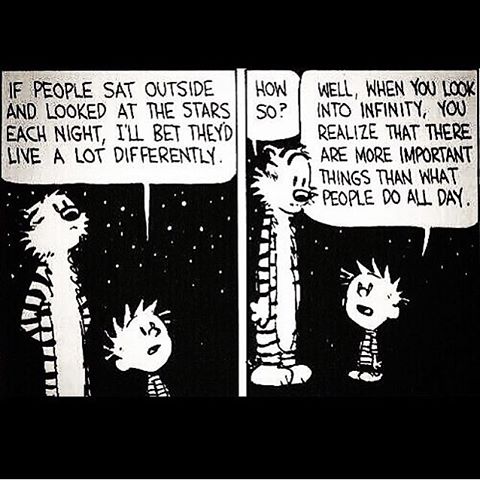
For years, Frank Pajares of Emory University maintained the best unofficial William James site on the web. And so it comes as a huge sadness to learn, belatedly, that Professor Pajares passed away earlier this year. I never met him in person, though he was kind enough to post news of my James book's publication a few years ago. His whimsical personality was evident. Like me, he loved Calvin and Hobbes. Like me, he would have appreciated someone observing in connection with his own passing what James observed of Emerson's:
The pathos of death is this, that when the days of one's life are ended, those days that were so crowded with business and felt so heavy in their passing, what remains of one in memory should usually be so slight a thing. The phantom of an attitude, the echo of a certain mode of thought, a few pages of print, some invention, or some victory we gained in a brief critical hour, are all that can survive the best of us. It is as if the whole of a man's significance had now shrunk...into a mere musical note or phrase suggestive of his singularity — happy are those whose singularity gives a note so clear as to be victorious over the inevitable pity of such a diminution and abridgement.
Good-bye, Professor. Thank you.
Monday, August 31, 2009
philosophy and mortality
Philosophy teaches us, among other things, how to die: that was today's main lesson, on the first day of Intro to Philosophy. (See Simon Critchley's Book of Dead Philosophers for palatably-told details.)
Douglas Adams' whale didn't learn that lesson, but of course he didn't really need to: his own demise was quick and unexpected. That's true enough for plenty of humans, too, but if we're being brutally honest with ourselves most of us will admit our natural mortality. Then, we must seek some form or other of accommodation to the unpleasant fact. Religion is the adaptation of choice for most people in this culture. Philosophy thus has a lot of catching up to do. Our work is cut out, stay tuned.
Saturday, August 29, 2009
Edward Moore Kennedy
I wasn't planning to spend the morning viewing Ted Kennedy's funeral mass, but it was irresistible, emotional, consoling, and right. Couldn't tear myself away from the TV, notwithstanding a competing aversion to the whole florid medieval display of Holy Mass, which to me reeks of ancient, primitive superstition and fear.
Yet it's easy to understand how someone raised in that faith tradition would derive the greatest solace and strength from the ritual enactments of Mother Church, and would find life's harsh transitions made bearable in them.
And yet again... how do honest believers reconcile themselves to the undeniable challenges of intellectual conscience? How do they square the beautiful and confident aesthetic of tradition and ritual and faith with the (at least) equally compelling recognition that even the fullest life any of us is privileged to enjoy on earth is fragile and fleeting and without evidence of a sequel?
But how do honest unbelievers reconcile themselves to the fragility and transience of life in the absence of such majestic tradition and ritual and faith?
More good questions for "Atheism and Spirituality," I can't wait.
Monday, August 10, 2009
Graham Chapman
The philosophers' song was ridiculous, and entirely false. Graham Chapman's memorial was sublime, honest, and full of sincere affection.
Sunday, July 26, 2009
A deathbed non-conversion
"I would love to believe that when I die I will live again, that some thinking, feeling, remembering part of me will continue. But as much as I want to believe that, and despite the ancient and worldwide cultural traditions that assert an afterlife, I know of nothing to suggest that it is more than wishful thinking...the world is so exquisite, with so much love and moral depth, that there is no reason to deceive ourselves with pretty stories for which there's little good evidence. Far better, it seems to me, in our vulnerability, is to look death in the eye and to be grateful every day for the brief but magnificent opportunity that life provides...Five thousand people prayed for me at an Easter service at the Cathedral of St. John the Divine in New York City, the largest church in Christendom. A Hindu priest described a large prayer vigil for me held on banks of the Ganges. The Imam of North America told me about his prayers for my recovery. Many Christians and Jews wrote me to tell about theirs. While I do not think that, if there is a god, his plan for me will be altered by prayer, I'm more grateful than I can say to those, including so many whom I've never met, who have pulled for me during my illness. Many of them have asked me how it is possible to face death without the certainty of an afterlife. I can only say that it hasn't been a problem. With reservations about feeble souls, I share the view of a hero of mine, Albert Einstein: I cannot conceive of a god who rewards and punishes his creatures or has a will of the kind that we experience in ourselves. Neither can I, nor would I want to, conceive of an individual that survives his physical death. Let feeble souls, from fear for absurd egotism, cherish such thoughts. I am satisfied with the mystery of the eternity of life and a glimpse of the marvelous structure of the existing world, together with the devoting striving to comprehend a portion, be it ever so tiny, of the Reason that manifests itself in nature." Carl Sagan
Tuesday, June 9, 2009
The 5th Inning
 Heard Ethelbert Miller talking to Bob Edwards about his memoir The 5th Inning , the title a metaphor for approaching the end of life. A baseball game is considered "complete" and can go in the books after five innings. If a decade of living roughly corresponds to an inning, then, those of us in our 50s can only hope for a 7th inning stretch, a dramatic and satisfying 9th, and (hope against hope) extra innings ( "That's what one hopes for when the game seems to be ending.") I miss Ernie Banks ("let's play two!)... but take heart from Norman Corwin.
Miller's cool website pays homage to the generations before him.
The book features this epigraph, from an 8th century Chinese poet: "The months and the years, a running river. Then there's the day you wake up old."
Then there's the day you wake up younger than the day before. It can happen.Monday, June 8, 2009
There goes Roy Hobbs
"Sometimes when I walk down the street I bet people will say there goes Roy Hobbs, the best there ever was in the game."
"Isn't there something over and above earthly things— some more glorious meaning to one's life and activities?"
"In baseball?"
"Yes."
He racked his brain... (Bernard Malamud, The Natural)
As did Ted Williams, as did John Updike, as also (without bat in hand) do I. Racking our brains, tracking ever-elusive, "ever-not-quite" (William James liked to say) transcendence on Earth. It's oh-so-close, sometimes, glimmering and twinkling at us before it darts back into the dark. But while we're here in the visible world we've got to keep on tracking. And drink a toast before we go.

"Isn't there something over and above earthly things— some more glorious meaning to one's life and activities?"
"In baseball?"
"Yes."
He racked his brain... (Bernard Malamud, The Natural)
As did Ted Williams, as did John Updike, as also (without bat in hand) do I. Racking our brains, tracking ever-elusive, "ever-not-quite" (William James liked to say) transcendence on Earth. It's oh-so-close, sometimes, glimmering and twinkling at us before it darts back into the dark. But while we're here in the visible world we've got to keep on tracking. And drink a toast before we go.

Wednesday, June 3, 2009
"Nothing to be frightened of"
"I don't believe in God, but I miss Him."
Julian Barnes' brother Jonathan, a philosopher, thought his brother's opening line in Nothing to be Frightened Of "soppy"; but it expresses the natural ambivalence that many atheists feel about the human condition. Are we up to the challenge of living in a Godless universe?
When their mother died and Julian relayed the undertaker's question about viewing the body Jonathan said "Good God, no. I agree with Plato on that one." What did Plato say? "That he didn't believe in seeing dead bodies."
New Yorker
Julian Barnes' brother Jonathan, a philosopher, thought his brother's opening line in Nothing to be Frightened Of "soppy"; but it expresses the natural ambivalence that many atheists feel about the human condition. Are we up to the challenge of living in a Godless universe?
When their mother died and Julian relayed the undertaker's question about viewing the body Jonathan said "Good God, no. I agree with Plato on that one." What did Plato say? "That he didn't believe in seeing dead bodies."
 |  | |
Thursday, May 21, 2009
What it's all about

Annie Dillard was a wise twenty-something in Pilgrim at Tinker Creek. Answering a curious London cabbie:
Only the other evening I picked up Bertrand Russell, and I said to him, "Well, Lord Russell, what's it all about," and, do you know, he couldn't tell me... I know what it's all about, and I wish I didn't. The parents die, the next generation lives, ad majorem gloriam, and so it goes.
And so it goes.
Saturday, May 16, 2009
"I can stand it no longer"
William James died on August 30, 1910, in his Chocorua, New Hampshire summer home. Simon Critchley provides details in the surprisingly uplifting Book of Dead Philosophers. But far more impressive than how he died was how he thought about dying.
Shortly before his own looming extinction, James responded to Henry Adams' dark musings about the Second Law of Thermodynamics, the "heat death of the universe" and so on:
"Though the ULTIMATE state of the universe may be its . . . extinction, there is nothing in physics to interfere with the hypothesis that the PENULTIMATE state might be . . . a happy and virtuous consciousness. . . . In short, the last expiring pulsation of the universe's life might be, "I am so happy and perfect that I can stand it no longer."
Way to go, Billy. Like Woody Allen's "Dr. Flicker," James understood that the universe won't be expiring for billions of years yet, and "we've got to enjoy ourselves while we're here."
And, we must understand that "we" doesn't just mean me.
Shortly before his own looming extinction, James responded to Henry Adams' dark musings about the Second Law of Thermodynamics, the "heat death of the universe" and so on:
"Though the ULTIMATE state of the universe may be its . . . extinction, there is nothing in physics to interfere with the hypothesis that the PENULTIMATE state might be . . . a happy and virtuous consciousness. . . . In short, the last expiring pulsation of the universe's life might be, "I am so happy and perfect that I can stand it no longer."
Way to go, Billy. Like Woody Allen's "Dr. Flicker," James understood that the universe won't be expiring for billions of years yet, and "we've got to enjoy ourselves while we're here."
And, we must understand that "we" doesn't just mean me.
Friday, May 15, 2009
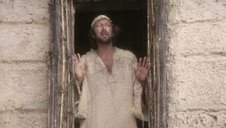
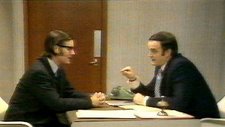
Death by pythons
 You always talk, you Americans. You talk and you talk and say 'let me tell you something' and 'I just wanna say this'. Well, you're dead now, so shut up! -Monty Python's Mr. Death
The Reaper's not a pleasant house-guest, but he's nothing to fear.
But the funnier scene in Meaning of Life (especially if you've encountered Leo Buscaglia's "Freddy the Leaf") is the one just preceding Mr. Death's arrival.
Thursday, May 14, 2009
How you play
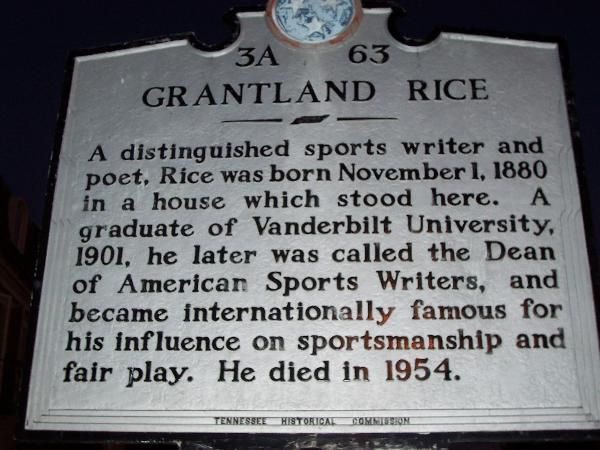
He's probably Murfreesboro, Tennessee's most accomplished son, but whenever I ask many locals - and not just students, who often are in but not of the place of their matriculation - if they've noticed his commemorative marker at the corner of College and Spring, which I drive by every day on my way to school, most say "Who?" Grantland Rice, Dean of American Sports Writers, baseball poet, and champion of fair play and good sportsmanship, that's who. I thought of him last night at my daughter's softball game, when I was tabbed to be Official Scorer.*
It's important to read the signs along your way. And it really does matter how you play the game.
 .
.
It's important to read the signs along your way. And it really does matter how you play the game.
.- *"For when the One Great Scorer comes
- To write against your name,
- He marks - not that you won or lost -
- But how you played the Game."
Monday, May 11, 2009
"The Last Pitch"
 Grades are in! Time to refocus on my next work-in-progress, a tighter and more "publishable" version of my "Baseball in Literature and Culture" conference contribution, noted here a while back. (That's tighter as in more concise and coherent, not more sloshed or stupid. Gotta set the bar high.)
As noted: at the conference in March I paid tribute to John Updike and his classic New Yorker tribute to the great Ted Williams, "Hub Fans Bid Kid Adieu." It was my small way of bidding "Rabbit" adieu. Ted, we learned from conference speaker and former MLB star Mudcat Grant, was one of the too-few white stars who welcomed baseball's integration and were kind to African-American ballplayers.
So this will be an homage to Williams and Updike, and a consideration of baseball as mirror to society and culture, and a meditation on death. And I promise, it will be cheerful. Stay tuned.
Subscribe to:
Posts (Atom)




 Charles Darwin (

 Posts
Posts