Tuesday, November 24, 2009

MVP(x2)

NEW YORK — Albert Pujols was unanimously voted National League MVP on Tuesday, becoming the first player to repeat since Barry Bonds won four in a row from 2001-04. Pujols received all 32 first-place votes...

Warm up that hot stove, pass the pumpkin pie, and speak to me not of pigskins! Now how many days 'til Spring Training? (About 80, I think.)

That's a lot of downs, but my football boycott continues.

Vince who?

happy ending

"Call no man happy 'til he is dead." We talked about that in Happiness 101 in September. I disputed it then, and still do. It's just too dispiriting and irrelevant. What's the point of trying to be happily expired?

But I see no contest at all over the question of whether you can be happy and a scoundrel. I can't be, but of course you
can... if you're that sort of person.

Sure, from my point of view (and from yours, I hope), the happiness of bad people is a degraded and inferior brand. Aristotelian
eudaimonia is not supposed to be subjective, but people's estimations of their own well-being certainly are. Plenty of people are as bad as they want to be, and they seem plenty happy too. While that's an affront to the rest of us, it's just too bad. But I don't guess many of the rest of us will be lining up to join the scoundrels club, anyway. The institutions of morality are safe. We're all gonna be what we're gonna be.

So, Christine Vitrano, you're right too: "the happy tyrant, the happy hermit, and the happy immoralist" are perfectly possible, fairly-frequently actual human types. I hope Hitler wasn't overly happy but I fear he may have been, more often at least than most of his victims; and I wish my worldview allowed me the consolation of thinking that he finally got his. It doesn't. (Julia Sweeney: "You mean he just... died?!" Evidently, Craig.)

But the penultimate little essay in our final text hits just the right note of ambivalence, with Woody Allen's
Crimes and Misdemeanors. Even the most upstanding of us, thinking ourselves "good" and decent and entitled to happiness, are capable of compromising our integrity and our self-respect in its pursuit, in horrible and harmful ways.

So? It's important to live well, but don't under-rate the importance of living with an eye to being well thought of after we're gone. (A point his character in another film makes, while standing alongside a classroom skeleton and noting that we're all going to "thin out"; when we do, it would be nice to retain at least a deserved reputation for having acted with a little integrity as moral agents while we still could.) That's not the same as being happy, but maybe it's a condition of being worthy, in one's own eyes, of being happy.

If that isn't a happy ending, isn't it a good place to begin thinking about our ends? As we said back when we began, "each of us must take responsibility for assessing the conditions of our own flourishing, must be open to the possibility of our good coming from the last places we'd ever expect, and should be prepared to jettison others' expectations (and sometimes our own)." And then? Play the scene. It's real life, not Hollywood.

Monday, November 23, 2009

Dawkins' rainbow

Another of the books we'll spend time with in "Atheism & Spirituality": Richard Dawkins' 1991 ode to the joys and wonders of science, Unweaving the Rainbow: Science, Delusion, and the Appetite for Wonder. Dawkins explicitly rejects the loose charge of nihilism and passionless materialism, and rises to make a Sagan-esque case for science as a richer source of spirituality than any mainstream religion. (reviews)

Here he is reading a selection from its early pages, one that he and others have said they'll stipulate for inclusion in their funeral services. I don't like to think too much about that myself, but I suppose I wouldn't mind including it either. (Well, I won't be minding anything, will I?-- Unless I can manage a Tom Sawyer-style appearance, correcting exaggerated reports of my demise...)

Sunday, November 22, 2009

vital question

"The really vital question for us all is, What is this world going to be? What is life eventually to make of itself?"

--William James, Pragmatism

In 1938, some people thought we'd be living in a bubble by now. I'm glad they missed that call. Maybe we want to speculate not so much about the particular details of the material culture of tomorrow, but should concern ourselves with what kinds of people we'll be. Will we still be killing one another over our different ideas about what life ought eventually to make of itself?

On this day in 1963, most Americans would have said the prospects were dim. How much more sordid (but also splendid) history has passed in four-plus decades. Let us hope, and work, for the best that is yet to be.

Saturday, November 21, 2009

critical thinking

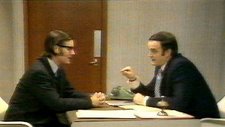
We were talking in Happiness 101 about the decline of critical thinking among the young, the devout, and the credulous... prompted by popular worries about a looming apocalypse, the antichrist, etc. J & M don't really want to be part of the solution.


happy rats

Rats are happier when they've been habituated to the "positive stress" of exercise*: a lesson for laggards and misanthropes (and devotees of Schopenhauer and Nietzsche).

New research has undermined the simplistic view of serotonin as the “happy” brain chemical... rats taught to feel helpless and anxious, by being exposed to a laboratory stressor, showed increased serotonin activity in their brains. But rats that had run for several weeks before being stressed showed less serotonin activity and were less anxious and helpless despite the stress.

Anxiety in rodents and people has been linked with excessive oxidative stress, which can lead to cell death, including in the brain. Moderate exercise, though, appears to dampen the effects of oxidative stress... rats that had exercised were relatively nonchalant under stress. They didn’t run for dark corners and hide, like the unexercised rats. They insouciantly explored.

*This goes for moderate walker-rats, too, not just gym rats. The best exploring is pedestrian.

Friday, November 20, 2009

natural religion


Dewey’s epitaph, on the UVM campus in Burlington, Vermont:

John Dewey
Philosopher
Educator
Class of '79

“The things in civilization we most prize are not of ourselves. They exist by grace of the doings and sufferings of the continuous human community in which we are a link. Ours is the responsibility of conserving, transmitting, rectifying and expanding the heritage of values we have received, that those who come after us may receive it more solid and secure, more widely accessible and more generously shared than we have received it.”

A Common Faith, conclusion

Thursday, November 19, 2009

Question everything

Turned out to be George Carlin Day in Happiness 101, we didn't even get around to the Experience Machine. But that's ok, I think we're all sold on reality-- its necessity, not necessarily its superiority-- already.

George was too, and in his own words (and by the testimony of friends like Tony Hendra) he liked people... to a point. Not an unreasonable attitude at all. And wasn't George a (more-or-less) happy pessimist? A much better one than Schopenhauer, in fact, because he was (deliberately) funny.

So here's one more Carlin clip, the one I alluded to in class. He's not going for laughs here, this is about our future. He was a comedian with a conscience, and these are among his last public words. Characteristically profane, but from a distinctively humane source.

rats

Poor old Schopenhauer (1788-1860), Scrooge and Sourpuss, victim of his own wan and withering emotions. At least Nietzsche eventually got over the petulant, purposeless rage against fate that kept his former hero sunk in a lifetime of pessimism, isolation, and despair. But from the vantage of mellow Jamesian meliorism, both resembled rodents.

"The mood of a Schopenhauer or a Nietzsche... though often an ennobling sadness, is almost as often only peevishness running away with the bit between its teeth. The sallies of the two German authors remind one, half the time, of the sick shriekings of two dying rats."

But Schopenhauer was not a total scrooge, at least towards his beloved little poodles (his favorite was "Atman") and one or two other human beings. That's why Alain de Botton chose him to exemplify "consolation for a broken heart."

His trouble was that he never learned to enjoy the passage of time. Might as well enjoy the ride, Artie. Give us a smile. "The present may be compared to a small dark cloud which the wind drives over the sunny plain," sure. But why not compare it to sunshine breaking through clouds? Sometimes it's like that, too.

JT does agree, though: time isn't really real, "nothingness itself is therefore the only objective element in time." So... embrace your subjectivity. Arguably, that's exactly what Schopenhauer did. His World as Will and Idea was an extrusion from the recesses of his subjective melancholy, and it gave him some considerable satisfaction to extrude it.

Schopenhauer deserves an award for the Most Howling Non-Sequitur by a supposedly-brilliant mind. "The hours pass the quicker the more agreeably they are spent, and the slower the more painfully they are spent... We become conscious of time when we are bored, not when we are diverted. [This proves] that our existence is most happy when we perceive it least, from which it follows that it would be better not to have it."

He's not wrong, though, to note that unremediated evil and suffering "can never be annulled, and consequently can never be balanced." There's no remedy for past suffering. As in bodily health, we must be pro-active. Practice preventive medicine, and pursue "wellness." Still, to call this world-- or even Schopenhauer's 19th century-- "the worst of all possible worlds," is to betray a dearth of imagination.

I don't disagree either, though, with his pronouncement that stoical equanimity too easily collapses into cynical renunciation.

The bit about how disgusted unhappy people are made by the spectacle of "one whom they imagine happy" scores no points against happy people.

Arthur would have been happy to greet the apocalypse, and would have been first in line for 2012. Of course Pompeii, the Lisbon earthquake, et al barely scratched the surface of possible cataclysm. He wishes.

His most sympathetic human views centered on art, which he actually said helps us "transcend egotistical interests and empathize with universal emotions."

Metaphysician, heal thyself.


Wednesday, November 18, 2009

stuff

Julia Annas analyzes the results of a thought experiment in which students who'd first said a happy life consists in a large salary, a nice house, an SUV etc., decide on second thought that a sudden, unexpected cash windfall would not make them happy after all:

"What this shows is that it was not really the material things, the stuff, that they imagined would make their lives happy. Rather, they thought of a happy life as one in which they earned the money, made something of their lives... Just having the stuff was not all they wanted."

Indeed. "How many people really think that stuff alone will make them happy?"

Too many, no doubt. But whatever they think, stuff happens.

Happiness

Loading...

KurzweilAI.net Accelerating Intelligence News