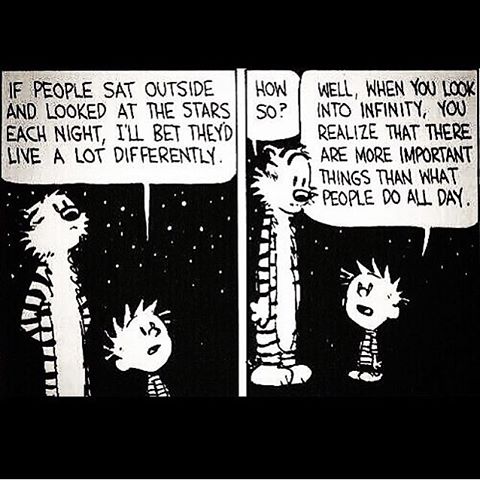
We are stardust...
Showing posts with label meaning. Show all posts
Showing posts with label meaning. Show all posts
Monday, June 25, 2012


Saturday, October 30, 2010
really hard
Two weeks from today the Tennessee Philosophical Association gathers once again at Vanderbilt. I'm expected to have something to say about John Rawls. As a past president of this organization I have to say: it is a great pleasure not to be in charge of organizing it this year, though the '07 symposium was great fun. (Just wish the Vandy video-tapers hadn't lost our taped tribute to John Lachs!)
I'm really looking forward to the keynote the night before from Duke's Owen Flanagan. He wrote The Really Hard Problem: Meaning in a Material World. If I get to do that "Humanism and Meaning"* course someday I may use it.
Flanagan says of Rawls (and Aristotle, and eudaimonia or human flourishing):
==
I'm really looking forward to the keynote the night before from Duke's Owen Flanagan. He wrote The Really Hard Problem: Meaning in a Material World. If I get to do that "Humanism and Meaning"* course someday I may use it.
Flanagan says of Rawls (and Aristotle, and eudaimonia or human flourishing):
"The project of human ecology conceived as eudaimonics then becomes seeking the world most beneficial to all human beings, including future ones."Sounds like a good plan to me.
==
*This course would resemble the "Atheism & Spirituality" course from last Spring, but this time with even greater attention to the reasons for affirming humanism (naturalism, atheism) rather than for rejecting theism. We'd explore and critique the claim that a humanist worldview is as meaningful to its adherents as theism is to theists, with John Dewey's A Common Faith, Andre Comte-Sponville's Little Book of Atheist Spirituality, Bertrand Russell's "A Free Man's Worship" and "Why I'm Not a Christian," and more recent voices as well. What makes life worth living, for those who do not seek for meaning beyond it?Sound like a good course to you? Vote for it in the Fall '11 survey.
Thursday, May 20, 2010
"odd and pixeled"

Reminded me of the "biotech & ethics" Friday chats we did a couple years back: rapid-fire, a bit choppy, but fun and challenging and quickly over.
Here was my little exchange. (The excisions marked by [...] indicate moments when all those other unseen chatters rushed in to interrupt with their own agendas. You obviously couldn't do this in the flesh, it would be too much like a presidential press conference.)
And I do totally agree: many of us don't feel a need for Jesus to furnish our lives with meaning, though we admire his message-- which was not exclusively his, of course-- of hope and charity and love and forgiveness etc. But like William James and Adam Gopnik I must also acknowledge the "double feeling" of so many others for whom sweet reason seems not to be enough.3:35[Comment From Osopher]Thanks for clarifying the end of the essay. But it still bothers me that you evoke a "mystery" surrounding this man, rightly credited by Jefferson with moments of moral sublimity but also documented by Bart Ehrman and others as having been almost uniformly misunderstood. So my question: what do you see as the unsolved mystery about Jesus of Nazareth?3:36Adam Gopnik: By "unsolved mystery" I meant only that there are aspects of the Jesus myth that are just never going to be susceptible to rational judgment, and that faith, as everyone says, remains a leap -- foolish or necessary -- but a leap past reason. [...]3:38[Comment From Osopher]So the mystery might be more about us: why do so many find reason so uncongenial?3:39Adam Gopnik: Because our lives are bounded by the certainty of death, I suppose, and what reason can give us seems, to some -- to so many -- unsatisfying. I'm with Darwin on this one -- enough in life to give anyone meaning, if we make it hard enough -- but I understand the opposite feeling. Much the best account of this, I think-- this double feeling --is in William James's "Varieties Of Religious Experience" [...]3:42[Comment From Osopher]Totally agree about Darwin and James. Thanks for the chat and for the review, I've got to go and pick up the kids now.3:43Adam Gopnik: Pleasure sharing views; even in this odd and pixeled forum.
It is indeed a pleasure sharing views. But I don't think I'll be joining your "mafia family" (an avatar-driven online game, I presume? ), Adam. Thanks for the invite, but I already feel a little guilty for the time I stole to join you online yesterday. But only a little.
Wednesday, January 20, 2010
glee, voodoo
Rebecca Goldstein's 36 Arguments has a fan on Terry Gross's "Fresh Air," whose reviewer praises its "gleeful gravitas": A philosopher by training, (she holds a Ph.D. from Princeton), Goldstein writes about what happens when worlds collide: the realms of the ethereal vs. the everyday; of erudition vs. gut instinct; of ration vs. lust. Her novels tackle the Big Questions of Life and unapologetically reference philosophers like Spinoza and William James. Best of all, Goldstein gets away with this high-hatting because she's so funny and she knows how to tell an engrossing story... (Also: Janet Maslin's NYT review)
Also on NPR today: Voodoo in a nutshell is about the idea that everything material has a spiritual dimension that is more real" than physical reality. So the Haitians are Platonists, as well as animists (they think the rocks and trees and fault-lines all have souls)? Whatever they are, Christopher Hitchens proposes that the vital next stage—beyond mere charity and rescue—will be to try and liberate Haiti's people from fear of witch doctors of all stripes...
Now, who will liberate us from that evil moron Pat Robertson? Not, I think, Rabbi Rami's interfaith breakfast buddies, or Rami's own pantheism. But I agree with his last word on the subject: To me there is no greater meaning or message or promise in the Haitian tragedy. There is only suffering and people seeking to take advantage of that suffering, and people seeking to alleviate that suffering.
Also on NPR today: Voodoo in a nutshell is about the idea that everything material has a spiritual dimension that is more real" than physical reality. So the Haitians are Platonists, as well as animists (they think the rocks and trees and fault-lines all have souls)? Whatever they are, Christopher Hitchens proposes that the vital next stage—beyond mere charity and rescue—will be to try and liberate Haiti's people from fear of witch doctors of all stripes...
Now, who will liberate us from that evil moron Pat Robertson? Not, I think, Rabbi Rami's interfaith breakfast buddies, or Rami's own pantheism. But I agree with his last word on the subject: To me there is no greater meaning or message or promise in the Haitian tragedy. There is only suffering and people seeking to take advantage of that suffering, and people seeking to alleviate that suffering.
Tuesday, October 27, 2009
epicurean good
"When we say, then, that pleasure is the end and aim, we do not mean the pleasures of the prodigal or the pleasures of sensuality, as we are understood to do by some through ignorance, prejudice, or willful misrepresentation. By pleasure we mean the absence of pain in the body and of trouble in the soul. It is not an unbroken succession of drinking-bouts and of merrymaking, not sexual love, not the enjoyment of the fish and other delicacies of a luxurious table, which produce a pleasant life; it is sober reasoning, searching out the grounds of every choice and avoidance, and banishing those beliefs through which the greatest disturbances take possession of the soul. Of all this the end is prudence. For this reason prudence is a more precious thing even than the other virtues, for a life of pleasure which is not also a life of prudence, honor, and justice; nor lead a life of prudence, honor, and justice, which is not also a life of pleasure." Epicurus (341-270 B.C.E.)
P.S. Happy birthday, Older Daughter!
Sunday, July 26, 2009
A deathbed non-conversion
"I would love to believe that when I die I will live again, that some thinking, feeling, remembering part of me will continue. But as much as I want to believe that, and despite the ancient and worldwide cultural traditions that assert an afterlife, I know of nothing to suggest that it is more than wishful thinking...the world is so exquisite, with so much love and moral depth, that there is no reason to deceive ourselves with pretty stories for which there's little good evidence. Far better, it seems to me, in our vulnerability, is to look death in the eye and to be grateful every day for the brief but magnificent opportunity that life provides...Five thousand people prayed for me at an Easter service at the Cathedral of St. John the Divine in New York City, the largest church in Christendom. A Hindu priest described a large prayer vigil for me held on banks of the Ganges. The Imam of North America told me about his prayers for my recovery. Many Christians and Jews wrote me to tell about theirs. While I do not think that, if there is a god, his plan for me will be altered by prayer, I'm more grateful than I can say to those, including so many whom I've never met, who have pulled for me during my illness. Many of them have asked me how it is possible to face death without the certainty of an afterlife. I can only say that it hasn't been a problem. With reservations about feeble souls, I share the view of a hero of mine, Albert Einstein: I cannot conceive of a god who rewards and punishes his creatures or has a will of the kind that we experience in ourselves. Neither can I, nor would I want to, conceive of an individual that survives his physical death. Let feeble souls, from fear for absurd egotism, cherish such thoughts. I am satisfied with the mystery of the eternity of life and a glimpse of the marvelous structure of the existing world, together with the devoting striving to comprehend a portion, be it ever so tiny, of the Reason that manifests itself in nature." Carl Sagan
Sunday, July 19, 2009
No Greater Challenge
Captain Picard would've been a good NASA philosopher.
This is the scene in which young Ensign Wesley Crusher tells Picard that "William James won't be on my Starfleet exams." Picard answers, "Nothing really important will be. Open yourself to the past—history, art, philosophy—and all of this might mean something."
Out of nostalgia (I guess) I've been following Wil ("Wesley") Wheaton's tweets. But I'm going to have to let him go. He actually thought it worthwhile, the other day, to inform the universe that he hates (literally) biting his tongue.
He won't miss me, he'll still have 968, 790 followers to regale with such riveting bits of ephemera from a mid-scale ex-celeb's stream of consciousness.
What would Jean-Luc say?
Tuesday, July 14, 2009
"Waking Life"
"I am a philosopher. (As Kurt Vonnegut writes in Timequake, 'I have to be.') I am not a spiritual thinker, much less a spiritualist or a religious advocate of any kind. But it seems to me, at least as a philosopher, that if spirituality means anything it means thoughtfulness... Spirituality, like philosophy, involves those questions that have no ultimate answers... [it] puts at arms' length all of the clever philosophy that scoffs at the big questions or reduces them to mere puzzles and paradoxes." Robert C. Solomon, Spirituality for the Skeptic
Thursday, July 9, 2009
What's important
The family deserted me night before last, invited by friends to dinner and a swim across town.
I'm not complaining. Such occasions offer the rare, golden opportunity to hole up in my Little House for precious undisturbed hours of dedicated work. Or so I choose to call it.
I finally hauled in for a late leftover-swordfish salad dinner(much better than it sounds) at around 9, just in time to dine with ESPN's Baseball Tonight crew, John Kruk and Buck Showalter. They nattered on with great seriousness about such pressing matters as Manny Ramirez's latest display of self-regard and team indifference (he flung his bat after a called third strike) and Ryan Braun's allegedly-insolent suggestion that maybe his Brewers could use more pitching.
I was enjoying my dinner and all the Inside Baseball gossip-trivia, right up until the old green-eyed hydra Meaninglessnessreared up and challenged me to justify spending even a moment on such minutiae. Hardly cosmic, this overwrought attention to overpaid, uneducated athletes and their predictably egoistic bad behvior. Was I wasting my time? Yes, of course. But I mean, was I really wasting my time? What's "important," anyway?
"Wherever a process of life communicates an eagerness to him who lives it, there the life becomes genuinely significant. Sometimes the eagerness is more knit up with the motor activities, sometimes with the perceptions, sometimes with the imagination, sometimes with reflective thought. But wherever it is found, there is the zest, the tingle, the excitement of reality; and there is "importance" in the only real and positive sense in which importance ever anywhere can be." -William James, "On a Certain Blindness in Human Beings"
Well, that 's a relief. How 'bout that Albert Pujols?! Wonder how he'll do in the home-run derby next week?
But wait. Shouldn't it give us pause that some things make some of us tingle but not others? And that other people tingle to things we could care less about?
Maybe just a moment's pause, time to reflect that importance is fundamentally, unapologetically a subjective phenomenon. If we're going to insist on ultimate, objective, impersonal importance, we'll be leaving ourselves out of the picture. I'd rather not do that.
But I'll also probably not make a habit of tuning in regularly to John and Buck, either. There are more important unimportant diversions to attend to. Like, say, Joe Torre's Yankee Years...

Subscribe to:
Posts (Atom)


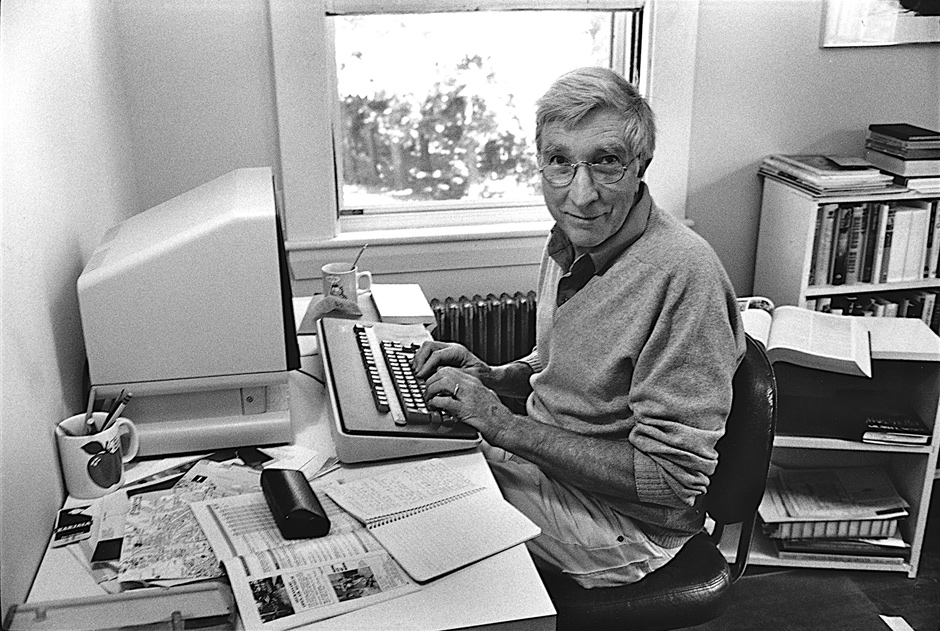


 Charles Darwin (

 Posts
Posts