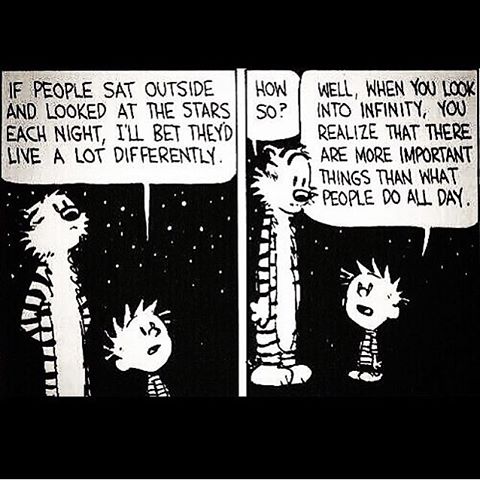
A student in CoPhi yesterday posted the lyrics of a vulgar song by the old punk band The Dictators, purporting to express the meaning of life. I found it a bit reductive. Here's a more expansive view, from the conclusion of Bertrand Russell's 1930 Conquest of Happiness:
The happy manor woman is
a citizen of the universe, enjoying freely the spectacle that it offers and the joys that it affords, untroubled by the thought of death because he feels himself not really separate from those who will come after him. It is in such profound instinctive union with the stream of life that the greatest joy is to be found.
The "secret" is this:
Let your interests be as wide as possible , and let your reactions to the things and persons that interest you be as far as possible friendly rather than hostile.
Well, it’s nothing special. Try and be nice to people, avoid eating fat, read a good book every now and then, get some walking in and try and live together in peace and harmony with people of all creeds and nations.
Fundamentally that's all the same advice, isn’t it? Someone should put it in a song.
It must be something like survivors' guilt, combined wth vestigial superstition, that makes people (like those in Joplin MO) come out of a tornado offering prayers to God for not destroying them too.
"Parishioners turned to scripture to comprehend the destruction and praised God for the lives not lost." New York Times
Oh Lord please don't burn us don't kill or toast your flock Don't put us on the barbecue or simmer us in stock, Don't bake or baste or boil us or stir-fry us in a wok. Oh, please don't lightly poach us Or baste us with hot fat. Don't fricassee or roast us Or boil us in a vat, And please don't stick thy servants, Lord, In a Rotissomat"
--Composed by Eric Idle and John Du Prez, authored by Graham Chapman and John Cleese
Really enjoyed Kayla's report on transcending gender in FoL today, and the "spacecollective" video that so nicely anticipated Carl Sagan Day this weekend:
Here's another:
How we got from male-female yin and yang to outer space to lumberjacks, I'm not sure. But here you go, Kevin:
We had a little fun in the Future class yesterday, with a useful quote from the Kung-fu Panda about history and mysteries and the gift of the present. (I know, it's not that funny. But Older Daughter loves it.)
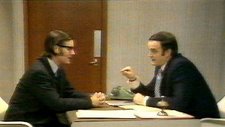
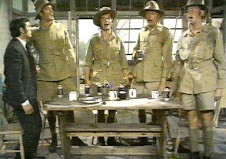
Today it'll be Intro to Philosophy's turn for howls of derisive laughter. Or not. But in case you miss any of the Bruces' scintillating dialogue, here are a few of the less objectionable words:
Second Bruce
I'd like to welcome the pommy bastard to God's own earth, and I'd like to remind him that we don't like stuck-up sticky-beaks here.
All
Hear, hear! Well spoken, Bruce!
Fourth Bruce
Now, Bruce teaches classical philosophy, Bruce teaches Haegelian philosophy, and Bruce here teaches logical positivism, and is also in charge of the sheepdip.
Third Bruce
What's does new Bruce teach?
Fourth Bruce
New Bruce will be teaching political science - Machiavelli, Bentham, Locke, Hobbes, Sutcliffe, Bradman, Lindwall, Miller, Hassett, and Benet.
Second Bruce
Those are cricketers, Bruce!
Fourth Bruce
Oh, spit!
Third Bruce
Howls of derisive laughter, Bruce!
Fourth Bruce
In addition, as he's going to be teaching politics, I've told him he's welcome to teach any of the great socialist thinkers, provided he makes it clear that they werewrong.
They all stand up.
All
Australia, Australia, Australia, Australia, we love you. Amen!
They sit down.
Fourth Bruce
Any questions?
Second Bruce
New Bruce - are you a pooftah?
Fourth Bruce
Are you a pooftah?
Michael
No!
Fourth Bruce
No right, well gentlemen, I'll just remind you of the faculty rules: Rule one - no pooftahs. Rule two, no member of the faculty is to maltreat the Abbos in any way whatsoever - if there's anybody watching. Rule three - no pooftahs. Rule four - I don't want to catch anyone not drinking in their room after lights out. Rule five - no pooftahs. Rule six - there is no rule six! Rule seven - no pooftahs. That concludes the reading of the rules, Bruce.
First Bruce
This here's the wattle - the emblem of our land. You can stick it in a bottle or you can hold it in your hand.
All
Amen!
Fourth Bruce
Gentlemen, at six o'clock I want every man-Bruce of you in the Sydney Harbour Bridge room to take a glass of sherry with the flying philosopher, Bruce, and I call upon you, padre, to close the meeting with a prayer.
I was looking forward to projecting all this onto the impressive new 25-foot screen in our formerly low-tech classroom, but-- and isn't this funny?!-- the installers didn't hang it correctly. It fell over the weekend and crushed our lectern. Ha. Ha.Ha.
I'd complain... but if you complain it does no good, you might as well not bother. (etc.)
Speaking of philosophy and sports (and health care and consumerism and Karl Marx), here come the Germans! And the Greeks!! I'll bet they don't dope on steroids...
Strolling through George Washington's walnut grove at school this week (sprouted from walnuts gathered decades ago at Mount Vernon), I finally realized: it's Fall. Freddie the Leaf time.
Thomas spoke movingly the other day of his Dad's health challenges, after a serious automobile accident years ago, and of his attempts to apply some of the happiness strategies we've discussed this semester (savoring, listing points of gratitude, etc.) in a therapeutic way.
I was reminded of one of my favorite novels, Wallace Stegner's Angle of Repose. The hero of that story is an older man, bound to a wheel-chair, but still sharp and imaginatively free. His physical mobility lost, he turns to family history to occupy his days and fill his heart. In the process he learns essential things about his grandmother, his son, and his own place in the strata of time.
And then, something completely different: Will showed some of my favorite Python clips including the Bright Side crucifixion scene and the Galaxy Song. If I ever find myself confined to quarters, I'm pretty sure the Pythons will still be good therapy.
A midterm presentation this morning on futbol and philosophy was all the excuse I needed to run this clip. (I wonder if any of these guys can play left field? The Cards could use a defensive replacement in the late innings there.)
"Make your mind as vast as the sky and you will find that the waves of afflictive emotions have lost all the strength you had attributed to them." M. Ricard
So that's how you do it. Sounds simple enough, why didn't I think of that? The brain is wider than the sky...
The space shuttle Atlantis, last Tuesday. If thinking of ourselves as a mote of dust caught in a sunbeam, a pale blue dot etc. makes you feel sort of insignificant, maybe this image is a corrective. Sure, we're small. But we're going somewhere. And as Dr. Seuss knew, a person's a person no matter how small.
The Fall semester has about found its legs now, two weeks in. I'm doing something a little different in my Intro classes: on Fridays we're using Open Court's Monty Python and Philosophy, to supplement the week's more conventional approach. This week we read about "The Life of Brian" and took a look at a few clips, most pointedly the one in which Brian Cohen -- the mistaken Messiah -- insists to the multitude at his window that "you're all individuals" who don't need to follow anyone. I usually trot that clip out when explicating Emerson's Self-reliance, but it turns out to be a perfect comment on Plato's Euthyphro too.
The logic & critical thinking class has been fun, stocked as it is with lots of pre-law students who love to argue. And, as Monty Python reminds us, an argument isn't just saying "no it isn't!" (Yes it is!) (No, it ISN'T!!)
They who know the truth are not equal to those who love it, and they who love it are not equal to those who delight in it. Confucius
Springs
"The worm at the core of our usual springs of delight can tun us into melancholy metaphysicians. But the music can commence again, and again and again, at intervals."
"The really vital question for us all is, What is this world going to be? What is life eventually to make of itself?"--William James
I'm a philosophy prof at a large state university in middle Tennessee. This is my personal blogsite, not sponsored by or otherwise officially related to my school; views expressed are my own.
“We Humanists behave as well as we can, without any expectation of rewards or punishments in an Afterlife. We serve as best we can the only abstraction with which we have any real familiarity, which is our community.” Kurt Vonnegut Jr.-his last speech, April '07
Big library
Read, return, repeat
All you need
The delightful future
is inclusive, kind, peaceful, loving, hopeful, and diverse.
"Hello, babies. Welcome to Earth. It's hot in the summer and cold in the winter. It's round and wet and crowded. At the outside, babies, you've got about a hundred years here. There's only one rule that I know of, babies—God damn it, you've got to be kind." God Bless You, Mr. Rosewater(and see Mr. Rogers, below)
The only real "you" is the one that comes and goes, manifests and withdraws itself eternally in and as every conscious being. For "you" is the universe looking at itself from billions of points of view, points that come and go so that the vision is forever new... when you know for sure that your separate ego is a fiction, you actually feel yourself as the whole process and pattern of life.”Alan Watts "The cosmos is within us. We are made of star-stuff. We are a way for the universe to know itself." Carl Sagan
A net for catching days
“How we spend our days is, of course, how we spend our lives. What we do with this hour, and that one, is what we are doing. A schedule defends from chaos and whim. It is a net for catching days. It is a scaffolding on which a worker can stand and labor with both hands at sections of time. A schedule is a mock-up of reason and order—willed, faked, and so brought into being; it is a peace and a haven set into the wreck of time; it is a lifeboat on which you find yourself, decades later, still living.” Annie Dillard, The Writing Life... Popova on Dillard
“It is necessary to write, if the days are not to slip emptily by. How else, indeed, to clap the net over the butterfly of the moment? For the moment passes, it is forgotten; the mood is gone; life itself is gone. That is where the writer scores over his fellows: he catches the changes of his mind on the hop.” Vita Sackville-West
“I’m a full-time believer in writing habits, pedestrian as it all may sound. You may be able to do without them if you have genius but most of us only have talent and this is simply something that has to be assisted all the time by physical and mental habits or it dries up and blows away. I see it happen all the time. Of course you have to make your habits in this conform to what you can do. I write only about two hours every day because that’s all the energy I have, but I don’t let anything interfere with those two hours, at the same time and the same place. This doesn’t mean I produce much out of the two hours. Sometimes I work for months and have to throw everything away, but I don’t think any of that was time wasted. Something goes on that makes it easier when it does come well. And the fact is if you don’t sit there every day, the day it would come well, you won’t be sitting there.” Flannery O'Connor
Updike on waiting for inspiration
When asked in 1978 about his writing process, Updike said, “I’ve never believed that one should wait until one is inspired because I think that pleasures of not writing are so great that if you ever start indulging them, you will never write again.”
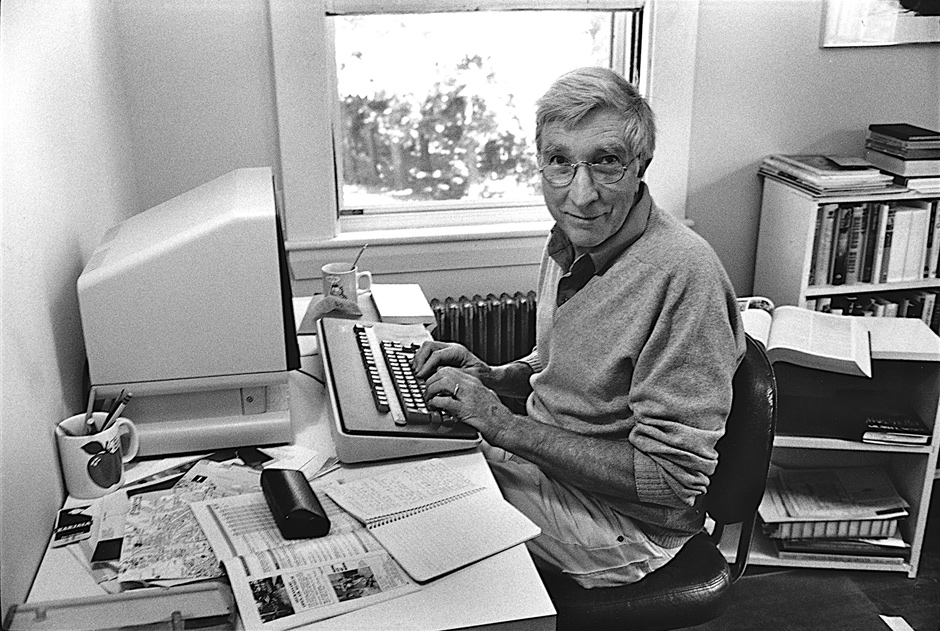
After the birth of his third child, he had rented an office above a restaurant in Ipswich, and spent several hours each morning writing there. Throughout his 50-year career, he remained devoted to that schedule, writing about three pages every morning after breakfast, sometimes more if things were going well. He said: “Back when I started, our best writers spent long periods brooding in silence. Then they’d publish a big book and go quiet again for another five years. I decided to run a different kind of shop.” WA
Baseball by John Updike
It looks easy from a distance, easy and lazy, even, until you stand up to the plate and see the fastball sailing inside, an inch from your chin, or circle in the outfield straining to get a bead on a small black dot a city block or more high, a dark star that could fall on your head like a leaden meteor.
The grass, the dirt, the deadly hops between your feet and overeager glove: football can be learned, and basketball finessed, but there is no hiding from baseball the fact that some are chosen and some are not—those whose mitts feel too left-handed, who are scared at third base of the pulled line drive, and at first base are scared of the shortstop's wild throw that stretches you out like a gutted deer.
There is nowhere to hide when the ball's spotlight swivels your way, and the chatter around you falls still, and the mothers on the sidelines, your own among them, hold their breaths, and you whiff on a terrible pitch or in the infield achieve something with the ball so ridiculous you blush for years. It's easy to do. Baseball was invented in America, where beneath the good cheer and sly jazz the chance of failure is everybody's right, beginning with baseball.
“Every morning," reported his friend Miles Malleson, "Bertie [Russell] would go for an hour’s walk by himself, composing and thinking out his work for that day. He would then come back and write for the rest of the morning, smoothly, easily and without a single correction." Gymnasiums of the Mind
"...from his university days he would walk at least 20 miles every Sunday, and recounts how some of his peers at Cambridge walked much more." The Connection Between Walking and Thinking
"...thinking is generally thought of as doing nothing in a production-oriented culture, and doing nothing is hard to do. It’s best done by disguising it as doing something, and the something closest to doing nothing is walking. Walking itself is the intentional act closest to the unwilled rhythms of the body, to breathing and the beating of the heart. It strikes a delicate balance between working and idling, being and doing. It is a bodily labor that produces nothing but thoughts, experiences, arrivals. After all those years of walking to work out other things, it made sense to come back to work close to home, in Thoreau’s sense, and to think about walking.
Walking, ideally, is a state in which the mind, the body, and the world are aligned, as though they were three characters finally in conversation together, three notes suddenly making a chord. Walking allows us to be in our bodies and in the world without being made busy by them. It leaves us free to think without being wholly lost in our thoughts." Rebecca Solnit, Wanderlust... On a childhood of reading and wandering
"I want death to find me planting my cabbages, not concerned about IT or - still less- my unfinished garden" Montaigne
(I would always have a man to be doing, and, as much as in him lies, to extend and spin out the offices of life; and then let death take me planting my cabbages, indifferent to him, and still less of my gardens not being finished.)
I believe, in truth, that it is those terrible ceremonies and preparations wherewith we set it out, that more terrify us than the thing itself... we seem dead and buried already. … Happy is the death that deprives us of leisure for preparing such ceremonials.
“If you could forget mortality... You could really believe that time is circular, and not linear and progressive as our culture is bent on proving. Seen in geological perspective, we are fossils in the making, to be buried and eventually exposed again for the puzzlement of creatures of later eras. Seen in either geological or biological terms, we don't warrant attention as individuals. One of us doesn't differ that much from another, each generation repeats its parents, the works we build to outlast us are not much more enduring than anthills, and much less so than coral reefs.Here everything returns upon itself, repeats and renews itself, and present can hardly be told from past.” Wallace Stegner, Crossing to Safety
“At the core of every habit is a neurological loop with three parts: A cue, a routine and a reward. To understand how to create habits — such as exercise habits — you must learn to establish the right cues and rewards.” nyt
My first landlord was an old zoologist at the University of Missouri named Winterton Curtis (1875-1965). He was one of the scientific experts not allowed to testify at the Scopes Trial in Dayton TN in 1925. My parents (and I) rented rooms from him in his home on Westmount in Columbia Missouri while Dad attended Veterinary school at Mizzou in the early '60s, and later maintained a cordial friendship with him. He used to visit when I was a kid and pull dollar bills from my ears. Dad thought that must be why I was always so fascinated by the concept of evolution.
The humanistic philosophy of life, which flowered in Greece and which has blossomed again, is not the crude materialistic desire to eat, drink, and be merry. It is a spiritual joy in living and a confidence in the future, which makes this life a thing worthwhile. The otherworldliness of the Middle Ages does not satisfy the spiritual demands of modern times. Science and Human Affairs From the Viewpoint of Biology
Of the Scopes Trial itself, he wrote of the 1925 Dayton Tennessee spectacle:
The courtroom audience impressed me as honest country folk in jeans and calico. “Boobs" perhaps, as judged by Mencken, and holding all the prejudices of backwoods Christian orthodoxy, but nevertheless a significant section of the backbone of democracy in the U.S.A. They came to see their idol “the Great Commoner” and champion of the people meet the challenge to their faith. They left bewildered but with their beliefs unchanged despite the manhandling of their idol by the “Infidel” from Chicago.... A Defense Expert's Impressions of the Scopes Trial
"And maybe this is what I have learned more than anything from my great-great-grandfather: to keep my eyes and my mind open, to enjoy the wonders of nature and never cease to ask questions." Sarah Darwin, foreword to "A Modest Genius: The story of Darwin's life and how his ideas changed everything" by Hanne Strager
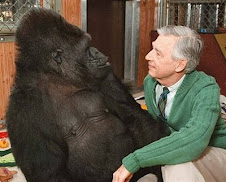
...but I'll be your friend. “The thing I remember best about successful people I've met all through the years is their obvious delight in what they're doing and it seems to have very little to do with worldly success. They just love what they're doing, and they love it in front of others.” Mr. Rogers, echoing Mr. Vonnegut (above), also said “There are three ways to ultimate success: The first way is to be kind. The second way is to be kind. The third way is to be kind.” ― Fred Rogers
1. William James 2. John Stuart Mill 3. John Dewey 4. David Hume 5. Michel de Montaigne 6. Bertrand Russell 7. Ralph Waldo Emerson/Henry David Thoreau (a tie, and a couple) 8. Aristotle (mostly because he contradicts Plato)
Where are the women? Up until relatively recently, they weren't invited into the conversation. But I'm doing my homework. Thanks to Jennifer Michael Hecht's wonderful Doubt: A History, I know the names of some 19th century women who'd likely have become favorites of mine and many others, in a better world: Hypatia Bradlaugh Bonner, Annie Besant, Ernestine Rose, Etta Semple, Helen Hamilton Gardener...
Great nickname for the pitcher who shut out Hillwood in the postseason opener!
It's her time
The clock on my office wall
Hobbes
He walked much and contemplated, and he had in the head of his cane a pen and ink-horn, carried always a note-book in his pocket, and as soon as a thought darted, he presently entered it into his book, or otherwise he might perhaps have lost it."
"It cannot be always seaside...
...even as it cannot be always May, and through the gaps thought creeps in." H.G. Wells




 Charles Darwin (

 Posts
Posts