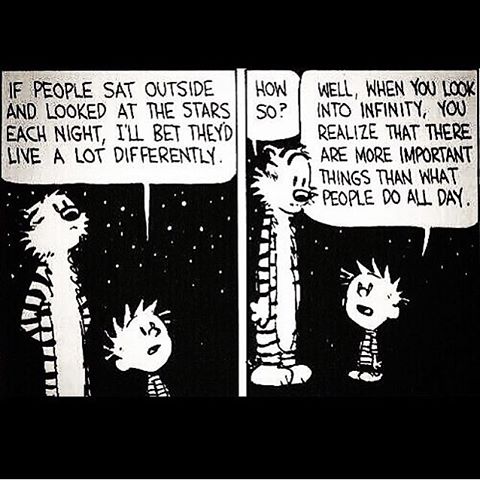
We're talking, in addition to Epicurean happiness and relativism and "enhancement,"about Pyrrho and extreme (though allegedly-therapeutic) skepticism in CoPhi today. With all our talk about Platonic cats I'm reminded of a scene in Douglas Adams' Hitchhikers' Guide to the Galaxy. The nameless "man who rules the Universe" turns out, in that fable, to be a kind of Pyrrhonian.
And here's where I'll switch metaphors, from cats to fish, to suggest a useful mnemonic: Pyrrhonian skeptics, given the right mispronunciation, are like those toothy flounders who (it is popularly believed) will devour everything (beliefs included) in their path. Or will seem to, at least in your mind.
Showing posts with label skepticism. Show all posts
Showing posts with label skepticism. Show all posts
Monday, September 10, 2012


Thursday, March 18, 2010
"Poetic Atheism"
Jennifer Hecht's latest contribution to a new blog called Unreasonable Faith*:
...I don’t believe in anything supernatural. I don’t think the universe can think. I don’t believe there is some special being that is separate from the universe and knows about us and cares about us and made us. All of that is the imaginative fantasy of one group of animals on planet Earth...
What comes into being when matter and energy fall into such patterns that they look up and say hi and write symphonies? Art happens. It’s very strange and wonderful.
The truth may be real but it is not “matter of fact.” What in fact we have here is a billion fantastically sexy weird interesting stories all going on at once in a great cacophony of experience. How do we make sense of what it is to be human, to be this thing, this sentient matter?
Well I certainly don’t think the magic of consciousness should be considered evidence for something hidden, something else. The magic of consciousness is magic enough. Nothing is gained by adding fantastical imaginative inventions to the wonders that actually are.
But the truth, the what actually is is very strange and overloaded and wondrous indeed...
==
*owned by former evangelical Christian Daniel Florien, who explains what made him a skeptic:
- I read widely outside of evangelical Christianity with an open mind. Just reading isn’t good enough — without an open mind, everything confirms your own beliefs. I decided truth was more important than my current beliefs. I was warned this was dangerous. It was indeed.
- I studied science with an open mind. I came to believe in an old earth, then finally evolution. This was a long process of removing layer after layer of propaganda.
- I looked for evidence for many of the claims I believed and realized that there was no reputable evidence at all. I could believe Jesus was resurrected, or that Moses parted the Red Sea, but there was no evidence outside oral stories recorded by unknown biased authors many decades (or, as with Moses, many centuries) after the fact.
- I researched the history and authorship of the Bible from a secular perspective. After I realized the messy history of the Bible, and saw all the contradictions and absurdities, I could not believe in inspiration much less infallibility, and any faith I still had crashed down.
- I learned to think critically and, with much trepidation, finally applied it to my own religion. After years of struggling, I finally accepted I was in a cult called evangelical Christianity.
- I asked hard questions and got tired of the final answers being “it’s a mystery,” which really meant, “it doesn’t make any sense to me either, but that’s what the Bible says.”
- I learned about probability. Things I thought could not happen without divine intervention ended up being within the laws of probability. Coincidence really exists.
Sunday, January 17, 2010
Carl Sagan's cosmic spirituality
The Carl Sagan Collection, from the archives of the Committee for Skeptical Inquiry, CSI (formerly known as CSICOP), includes an excerpt from Varieties of Scientific Experience:

...Thomas Paine asks, “From whence then could arise the solitary and strange conceit that the Almighty, who had millions of worlds equally dependent on His protection, should quit the care of all the rest and come to die in our world because, they say, one man and one woman ate an apple? And on the other hand, are we to suppose that every world in the boundless creation had an Eve, an apple, a serpent, and a Redeemer?”
Paine is saying that we have a theology that is Earth-centered and involves a tiny piece of space and when we step back, when we attain a broader cosmic perspective, some of it seems very small in scale. And in fact a general problem with much of Western theology in my view is that the God portrayed is too small. It is a god of a tiny world and not a god of a galaxy, much less of a universe.

Paine is saying that we have a theology that is Earth-centered and involves a tiny piece of space and when we step back, when we attain a broader cosmic perspective, some of it seems very small in scale. And in fact a general problem with much of Western theology in my view is that the God portrayed is too small. It is a god of a tiny world and not a god of a galaxy, much less of a universe.
Now, we can say, “Well, that’s just because the right words weren’t available back when the first Jewish or Christian or Islamic holy books were written.” But clearly that’s not the problem; it is certainly possible in the beautiful metaphors in these books to describe something like the Galaxy and the universe, and it isn’t there. It is a god of one small world; a problem, I believe, that theologians have not adequately addressed.
Now, I don’t propose that it is a virtue to revel in our limitations. But it’s important to understand how much we do not know. There is an enormous amount we do not know; there is a tiny amount that we do. But what we do understand brings us face to face with an awesome cosmos that is simply different from the cosmos of our pious ancestors.
Does trying to understand the universe at all betray a lack of humility? I believe it is true that humility is the only just response in a confrontation with the universe, but not a humility that prevents us from seeking the nature of the universe we are admiring. If we seek that nature, then love can be informed by truth instead of being based on ignorance or self-deception. If a Creator God exists, would He or She or It or whatever the appropriate pronoun is, prefer a kind of sodden blockhead who worships while understanding nothing? Or would he prefer his votaries to admire the real universe in all its intricacy?
I would suggest that science is, at least in part, informed worship. My deeply held belief is that if a god of anything like the traditional sort exists, then our curiosity and intelligence are provided by such a god. We would be unappreciative of those gifts if we suppressed our passion to explore the universe and ourselves. On the other hand, if such a traditional god does not exist, then our curiosity and our intelligence are the essential tools for managing our survival in an extremely dangerous time. In either case, the enterprise of knowledge is consistent surely with science; it should be with religion, and it is essential for the welfare of the human species.
Tuesday, July 14, 2009
"Waking Life"
"I am a philosopher. (As Kurt Vonnegut writes in Timequake, 'I have to be.') I am not a spiritual thinker, much less a spiritualist or a religious advocate of any kind. But it seems to me, at least as a philosopher, that if spirituality means anything it means thoughtfulness... Spirituality, like philosophy, involves those questions that have no ultimate answers... [it] puts at arms' length all of the clever philosophy that scoffs at the big questions or reduces them to mere puzzles and paradoxes." Robert C. Solomon, Spirituality for the Skeptic
Subscribe to:
Posts (Atom)




 Charles Darwin (


 Posts
Posts