I've not dropped any coins into this bottomless well lately, but over the past two days I participated in a public event that merits blog-space if anything does.
Five good friends and I gathered as a panel symposium this afternoon to discuss a very special teacher, John Lachs, who has been educating Vanderbilt philosophy students since 1967. Last night he delivered a keynote address to the 39th annual meeting of the Tennessee Philosophical Association. Here's how I introduced him, followed by my contribution to the panel discussion:
Welcome to the 39th annual meeting of the TPA. We invite all of you who came out this evening for what promises to be an engaging, provocative keynote address by John Lachs, and those who came for the "spirited" reception to follow, to pick up a conference program near the entrance behind you. We’ll be at it all day tomorrow, starting at 9 am. We have sessions scheduled on a variety of topics. I’m particularly pleased that so many presenters heeded our suggestion and selected themes consonant with those of tonight’s speaker, and only regret that it won’t be possible to be everywhere at once tomorrow.
But tonight we’re all here, and I am delighted to introduce my mentor and friend John Lachs, one of the preeminent philosophers of his generation. Born in Hungary, educated at McGill and Yale Universities, he is Centennial Professor of Philosophy at Vanderbilt, where he has been for four decades now. He is the author of a great many articles and books including Intermediate Man, The Relevance of Philosophy for Life, In Love With Life, A Community of Individuals, and the forthcoming Leaving People Alone. He founded the Society for the Advancement of American Philosophy (SAAP). He is a respected public intellectual, enjoying lustrous name and reputation in this community and far beyond. Above all, he is an inspirational teacher who has shared the spark of his enthusiasm for learning and living with generations of grateful students – some of whom, I am pleased to note, have journeyed further than they otherwise would have for the opportunity to be here with him at this conference. Others, including a university president, have sent warmest regards and regrets.
It is unusual for the TPA keynote speaker to be met on his own turf. But this is a delightfully unusual evening. Join me in welcoming to the lectern, on his home field, Professor John Lachs. (10.26.07)
Welcome to our symposium on John Lachs, last night’s distinguished keynote speaker and – for each of us on this panel - an esteemed teacher, whose influence on our respective lives and careers in academia makes this opportunity to exchange reflections and reminisce about our mentor particularly gratifying.
The program notes that we were all graduate students here at Vanderbilt in the early ‘80s. We studied in Lachs’s seminars, were TAs in his ever-popular Intro to Ethics course, and worked closely with him in our respective paper chases. I’ll leave it to my colleagues each to express the specific nature and extent of Lachs’s impact on themselves, if they wish. (I don’t know what they’re going to say, they all preferred to approach this gathering in what I think we could call a Lachsian spirit of spontaneity.)
But I can tell you that his tutelage, and now his friendship, have profoundly marked me. I simply would not have succeeded without his patient sufferance and, when at last I got serious, his intense commitment to my success. But long before that, Lachs kindled the interest in American philosophy that is the core of my professional and philosophic identity. Gratitude alone seems insufficient as repayment. But, "from each according to ability..."
I'm also very grateful to my former classmates, now far-flung colleagues, for joining me here today. Some have traveled significant distances, and none missed a beat in accepting the invitation to do it. We’re all here because we want to profess in public our regard for a man whose instruction and example helped bring us to our calling.
For teaching is a calling, and of all my teachers it was Lachs whose enthusiastic practice of the academic philosopher’s vocation best exhibited what that can mean. He was (and is, and will continue to be) the opposite of the stereotypical university "free rider" he so deliciously pans in A Community of Individuals: the shirking recycler of the same old stale lecture material who knows only four good reasons to teach: May, June, July, and August. Lachs knows that "the aim of teaching is the creation of human beings," and that "its essential condition is inter-generational faith." Older people genuinely caring about younger people, generation after generation, sounds like a small achievement. It is not. It is how our species evolves, and – come to think of it – it is how people like us can best repay our gratitude to people like John Lachs: we can "pay it forward."
When I first started thinking about my remarks today I compiled a laundry list of categories into which I began sorting all the ways John Lachs’s style of caring has been important to me. There were at least a half dozen. But I’ve asked my peers to hold their opening remarks to about five minutes, so to set the right example for them I’m just going to mention one now myself: immediacy.
Lachs was always talking about immediacy. I didn’t really get it until one day in about 1986, at a SAAP meeting in Lexington, KY. Lachs had generously allowed some of us penurious grad students to share his hotel room. Before going down to Saturday morning’s opening session, Lachs caught me in the act of shamelessly enjoying a cartoon on television. He was amused, and I started to feel a bit embarrassed about this inadvertent display of what I thought must have looked like ripened immaturity on my part. But he simply affirmed my delight – another distinctive Lachsian word – in this particular form of immediacy. I got it; I finally began to understand what Lachs meant by saying that we have it in our power to regard our acts as so many ends, not just intermediate steps on the way to some perpetually-postponed future fulfillment. That moment nourished several themes that eventually coalesced in my work.
Others wanted to join this panel. One older Lachs alumnus who wanted to be here today was his colleague John Stuhr, whose son is a freshman at Emory University in Atlanta. It's Parent's Weekend there, and so this time the son won out.
Another who could not be here, owing to the especially-insistent demands of his own academic vocation, sent along some remarks that he requested we share. Here they are:
"In my intellectual development and professional choices, no one has been more instrumental and instructive than John Lachs. A masterful teacher and remarkable scholar who in rigor of thought and analysis maintains the essential human quality of sympathy and understanding. His scholarly work ranges through many fields of inquiry: naturalism, ethics, American philosophy, George Santayana, contemporary philosophical issues, many social and philosophical inquiries into the condition of human society, to name a few. He has a publication record that is hard to surpass, a teaching record that is unparalleled in my experience, and the ability to draw the interests of both graduate and undergraduate students.
He spoke at my inauguration as President of Richard Stockton College, and to this day, his remarks are the most requested from that occasion. He captured the essence of being a president in a few short remarks that will be found on the Stockton website for as long as I am president.
On a professional note, he is the model teacher/scholar we all hope to become. On a personal note, he is that faculty member who makes the unusual progression from being a mentor and advisor to being a friend and colleague who not only respects your independence and difference but also encourages it. No better friend and colleague can I imagine. And my sentiments are shared by all of his students, past and present. We are ever grateful." --Herman J. Saatkamp, Jr. President The Richard Stockton College of New Jersey
My time has expired. Up next...
(10.27.07)
There followed a parade of pals, who were in turns funny, perceptive, profound, and gracious. All expressed gratitutde for Lachs's example and instruction.
Lachs was in the room. Invited to comment on these proceedings, he averred that he now knows how it feels to attend one's own funeral. But we came not to bury. As another friend is fond of saying, we were simply saying some things that "needed to be brung out." I'm very glad we did.
Showing posts sorted by relevance for query john lachs. Sort by date Show all posts
Showing posts sorted by relevance for query john lachs. Sort by date Show all posts
Saturday, October 27, 2007


Tuesday, August 11, 2015
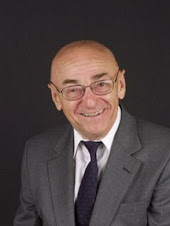
John Lachs
Today begins the long-awaited and richly-deserved tribute in Berlin to my old mentor John Lachs. To the organizers and to John I've written,
...about the demonstration that thought without action is hollow, when we find the philosopher only thinking it." John Lachs
I'd like simply to register my appreciation to the organizers of this gathering, and my enduring gratitude to John Lachs for igniting and repeatedly re-sparking my enthusiasm for philosophy over the years.
When some of my Vandy cohort alums and I organized a much-smaller tribute to John for the Tennessee Philosophical Association meeting in Nashville, in 2007, he made it clear that he wasn't through. Nearly eight years later, that's still very clear. I look forward to participating more tangibly again next time... several years hence.You're a perennial inspiration, John. Thanks again.
"There is something devastatingly hollow...
...about the demonstration that thought without action is hollow, when we find the philosopher only thinking it." John Lachs
Saturday, February 11, 2017
John Lachs podcast
"The greatest insight: quit telling people how they're gonna be happy. You don't really know..."
"Having just recently lost my wife I know death is real and not something we can remedy..."
 This fifth episode of the Philosophy Bakes Bread radio show and podcast features an interview with Dr. John Lachs of Vanderbilt University on the topic of stoic pragmatism. John teaches us about how to balance the need to cope with our limitations in life, while nevertheless making some progress every week or every day in ways large and small for making our lives better. Balance is the key.
(1 hr 7 mins)... Transcript
world was getting ready for the Second World War. And there was a tremendous amount of mayhem that was being committed, bombing in Hungary, bombings. I don’t mean the kind of bombings that we’re facing now from “Isis”, I mean the kind of bombing where airplanes fly above and drop a lot of bombs on you. And, I saw people die... Which naturally raises the question of what is this all about? What is life all about, what is a worthy life? Particularly given the fact that it might be ended at any time right then and there. So, my interest in philosophy did rise from that... There is, there is no question in my mind, but that there is meaning to life. But, it’s very difficult to discern what that meaning is. There’s no question in my mind that, that there’s the possibility of happiness in life. But then there’s also the reality of death. The nature of which we know, and the implications of which we don’t really understand. So, when I went to college, I knew that I wanted to deal with the problems of life and death, mainly death. And, I went around, went to the chemists. Were they interested in these? They weren’t interested at all. I went to the sociologists, no they weren’t interested. Eventually, I found the philosophers and they say “yeah, you sound like a philosopher”. So, I took that seriously and, started acting like a philosopher and thinking like a philosopher and being a philosopher. That’s the brief version of how I got to where I am. It’s been a wonderful journey, with full of frustration and full of significance. The frustration comes from the fact that after a while, as a philosopher, you realize that really we don’t have clear answers. That we, the one thing we know, the one thing we know is we really don’t know all that much. That leads us back of course to Socrates and Plato, and I’m a great admirer of those folks. Although the problem with many philosophers is that they begin by saying, “oh, we don’t know”, but if you don’t watch out, in a matter of no time at all, they’ll be telling you all the things they do know. So, you have to be pretty careful, and you have to be pretty skeptical. And, if you’re careful and you’re skeptical, you may actually get some answers that are not certain, but probable. How probable? Not very, but that’s okay because so long as there’s another day, we’ll keep on thinking about it...
Dr. Weber: Well, you know, John you know when I met you, my sense was that you were one of the happiest people I think I’d ever seen. And, I think a lot of people have the sense that you’re an optimistic guy, that you think well about, you know the long, big picture history, and you have often talked about how there’s a lot of progress. Is this something that philosophy taught you or is this something you think you found in thinking philosophically about the world?
And, if I’m misinterpreting you, tell me, or do you think that you think differently from then or how would you think about happiness today for you?
Dr. Lachs: I continue to believe that life is such that it’s worth living, and that good things will be made available or can be made available by one’s self and one’s loved ones. Day by day, I’m not optimistic about the ultimate outcome on a personal level, because having just recently lost my wife, I know that death is very real and not something that we can remedy easily or at all. So, one can be, I think it’s really important to keep in mind that one can be optimistic and happy in a short-run and quite glum about the ultimate outcome in the long-run...
Dr. Weber: Well what would say is the greatest insight from philosophy that you found for trying to be happy?
Dr. Lachs: The greatest insight didn’t relate to my happiness, I am by nature somebody who is rather happy. The greatest insight is how immensely different people are, and how amazingly different the things that make them happy. I’ll give you one example which is my favorite example. I am so happy teaching students. It’s wonderful, they are full of energy, full of life. So many people can’t wait to get out of the classroom and get into the administration. Now, if you ever wanted to find something that would make my life not worth living, it would be to make me dean. [Laughter]. At the same time, I readily admit that some people find it absolutely wonderful, and power to them! May they go ahead and pursue their happiness. But, that ain’t mine. [Laughter]. So, you know there are people who take the weirdest things, the strangest things, the most incredibly different kinds of things and convert them into the patterns of a life. And, they’re happy! And that’s really all there is to be said about it, if you, have to step back, and that’s what Meddling is all about, you have to step back and quite telling people how they’re going to be happy because you don’t really know.
Dr. Weber: So, John was talking about one of his latest books, On Meddling as a critique of people meddling in others affairs, right?
Dr. Lachs: Yeah, and they do that with so much pleasure... (continues)
==
Notes
- John Lachs, Stoic Pragmatism (Nashville, TN: Vanderbilt University Press, 2012).
- Epictetus, Handbook, or Enchiridion (Indianapolis, IN: Hackett Publishing, 1983).
Monday, February 9, 2015
John Lachs's Practical Philosophy
I'm delighted to learn of an international conference in the works for next August 11-13 in Berlin, honoring my old Vanderbilt mentor and friend John Lachs.
"Johns Lachs's practical philosophy" deserves all the attention and support it can get. The list of speakers is already impressive, beginning with the honoree himself.
I hope it's not true that the plug's being pulled on John's legendary Intro Ethics course, a casualty of meddlesome administrative undersight. If so, Vandy does indeed have an ethics problem.
Speaking of meddling: the Daily Beast ran a nice piece on Lachs's latest book recently. It continues to sound the affirming theme present in all of them.

"Johns Lachs's practical philosophy" deserves all the attention and support it can get. The list of speakers is already impressive, beginning with the honoree himself.
I hope it's not true that the plug's being pulled on John's legendary Intro Ethics course, a casualty of meddlesome administrative undersight. If so, Vandy does indeed have an ethics problem.
Speaking of meddling: the Daily Beast ran a nice piece on Lachs's latest book recently. It continues to sound the affirming theme present in all of them.
Monday, June 20, 2016
Immediacy and the Future
“Parents are betting on their children, and their children after them, and theirs… If you don’t believe in the future, unreservedly and dreamily… I don’t see how you can have children.” Michael Chabon
“One thing that makes us unique as a species is that for the last five or ten thousand years we have been the beneficiaries of conscious planning by our parents and cultures. Today we are actively concerning ourselves with what the world is going to be like in the future. We have strong beliefs about this. They play a role in what homo sapiens is going to be like a thousand years from now.” Dan Dennett
In 2007 it was my great privilege to organize a session of the Tennessee Philosophical Association’s annual meeting, dedicated to honoring the distinguished personage and career of John Lachs. Several of my old Vanderbilt cohort and I, who began learning from Lachs early in the 1980s, took turns fondly recalling those years and their enduring imprint. We reminisced, we laughed, we expressed our deep and lasting thanks for his tutelage, his inspiration, and his continuing example of how to discharge the professorial vocation with humanity, diligence, and care. We shared our appreciation of his commitment to making philosophy relevant for life, and our gratitude for his specific and sometimes heroic vocational advocacy on our behalves. Adjectives like energetic, genuine, generous, affable, gregarious, open-minded, inspiring, andbeloved were floated and affirmed.
For my part, I recalled how Lachs made the abstraction of “immediacy” real for me during some downtime at my first Society for the Advancement of American Philosophy (SAAP) conference- a tangible Lachs legacy, now in its fifth decade – in Lexington, Kentucky in the mid-’80s. He’d generously, typically transported some other penurious grad students and me up from Nashville in his own vehicle, and housed us in his hotel room. We were packed like sardines, and grateful to be there.
Before we headed down to Saturday morning’s session, Lachs caught me in the act of shamelessly enjoying an old cartoon (I think it was the Roadrunner and his perpetually frustrated antagonist Wile E. Coyote) on television. He was amused, and I started to feel a bit embarrassed about this inadvertent display of what I thought must have looked like ripened immaturity on my part. But he simply registered and reinforced my delight – “delight” is a distinctive Lachsian word to which my subconscious would soon stake proprietary claim – in this particular form of immediacy.
A lightbulb went off, inside, and I finally thought I got it; I began to understand what Lachs meant by saying that we have it in our power to regard our acts as so many ends, not just intermediate steps on the way to some perpetually-postponed future fulfillment. Oh, I thought, so immediacy isn’t just another technical notion from the philosophers’ shop. It can be about mundane personal enthusiasm and simple delight in everyday experience, too.
For my part, I recalled how Lachs made the abstraction of “immediacy” real for me during some downtime at my first Society for the Advancement of American Philosophy (SAAP) conference- a tangible Lachs legacy, now in its fifth decade – in Lexington, Kentucky in the mid-’80s. He’d generously, typically transported some other penurious grad students and me up from Nashville in his own vehicle, and housed us in his hotel room. We were packed like sardines, and grateful to be there.
Before we headed down to Saturday morning’s session, Lachs caught me in the act of shamelessly enjoying an old cartoon (I think it was the Roadrunner and his perpetually frustrated antagonist Wile E. Coyote) on television. He was amused, and I started to feel a bit embarrassed about this inadvertent display of what I thought must have looked like ripened immaturity on my part. But he simply registered and reinforced my delight – “delight” is a distinctive Lachsian word to which my subconscious would soon stake proprietary claim – in this particular form of immediacy.
A lightbulb went off, inside, and I finally thought I got it; I began to understand what Lachs meant by saying that we have it in our power to regard our acts as so many ends, not just intermediate steps on the way to some perpetually-postponed future fulfillment. Oh, I thought, so immediacy isn’t just another technical notion from the philosophers’ shop. It can be about mundane personal enthusiasm and simple delight in everyday experience, too.
Lachs has said the aim of teaching is the creation of human beings, and that its essential condition is inter-generational faith. Older people genuinely caring about younger people, generation after generation, sounds like a small achievement. It is not. It is how our species evolves, when we “pay it forward” and invest our present labors and lives in contributing to the creation of our successors. That form of futurity does not in any way detract from our ability to revel in immediacy and enjoy life in an ever-expanding “now.”
When it was his turn to speak, at our 2007 fete, Lachs said he felt a bit like a guest at his own funeral. He didn’t have to add, Twain-like, that reports of his professional demise were greatly exaggerated. None of us is surprised that, nearly a decade later as of this writing, he is still going strong. He’s the proof of Cicero’s sagacious statement that “the fruit of growing older is the memory of abundant blessings previously acquired.” With such an attitude, and a collection of gathered moments, the accumulation of years “sits light upon me, and not only is not burdensome, but is even happy.”
I now teach a Philosophy of Happiness course at Middle Tennessee State University. Lachs is the reason why. Like David Hume he radiates a sane life-work balance. Be a philosopher, even be a Stoic and a Pragmatist, but stay human and be happy. Love life to its very end.
In 2008, my Dad was diagnosed with late-stage leukemia. In his waning days that summer he picked up and annotated the inscribed copy of Lachs’s In Love With Life: reflections on the joy of living and why we hate to die (Vanderbilt, 1998 ) I’d given him in much earlier and healthier days. Dad wrote that it “took on much greater significance when thoroughly digested in 2008.” He died that September.
Great!! indeed. Lachs has opened my eyes, to immediacy and to so much else over the years. He is a quintessential humanist, personifying an infectious love of life while repudiating false solace in overly-simple answers to its persistent, inequitous existential riddles. He embodies, enjoys, and demonstrates the liberty of a free mind and heart for whom work and play converge in philosophy.Lachs: “The lesson is clear. Love life so long as there is something worth loving… But at some point, wanting more life runs into the chill reality that the kind of life we can get is no longer worth the cost. This does not mean that we surrender our love of life. As in a broken love affair, we give up the loved one, not the love. With anguish or with quiet resignation, we face the fact that the days of love are gone.”
Dad: “Well expressed!”
Lachs: “All it takes to overcome tiredness with life is to open open our eyes. The world is throbbing with energy and promise, and if we can view it as kin to us, as our home, as in some sense ours, its movement will forever hold our gaze. The fascination abides even if we are too weak to do much more than see what happens next. We need simply to immerse ourselves in the energy of life all around us, as fish do swimming in the throbbing sea.”
Dad: “great!!”
He’s the right kind of Stoic, not the sort who ridicules positive thinking, disparages optimism, and counsels a general attitude to life of indifference (see Oliver Burkeman’s The Antidote: Happiness for People Who Can’t Stand Positive Thinking). Lachs knows we don’t have to “chase after enjoyable experiences,” we just have to be ready to catch them when they come.
==
Lachs likes to say that if you can accept constructive criticism you’ll go far. He solicits it himself, with zest and without resentment. He doesn’t particularly need it now, from me; he’s gone far, far beyond mere professional distinction, by any reasonable measure of intellectual, pedagogical, or humanitarian excellence.
But I would like to raise one small point of dissent, with respect to Lachs’s treatment of William James’s concept of “moral holidays”; and another point of general concern, regarding his approach to balancing immediacy and temporality.
Lachs says James recommends against moral holidays, I say he doesn’t. More on that shortly.
And, Lachs says we mustn’t spend much time or energy worrying about the future, on pain of compromising our attention to present satisfactions. I agree that we mustn’t sacrifice immediacy, but I’m concerned that this way of putting the issue invites recklessness on a warming planet and in a fractured democracy.
To begin with with my second point of concern. We should use the past the way we use food, Lachs has said, for the sustenance of life. The same surely applies to our orientation towards the future, whose very possibility depends on our ability and will to live sustainable lives and create conditions enabling our immediate successors to do likewise. But what can it mean to use the future, to sustain life in the present?
One powerful use, suggested by a visionary organization called the Long Now Foundation but implicitly spurned by Lachs, is to use and deploy tangible symbols of our possible commitment to a self-sustaining world to help actuate that commitment as persistent and real.
“The attitude of seeking fulfillment in the future and viewing each present act as means to later joys,” he wrote in Intermediate Man, “tends to destroy the natural satisfaction that attends the exercise of each of our parts.” It’s an attitude, he was saying, that deprives us of immediacy and its intrinsic rewards, and encourages us to fret about things far beyond our control. He was already anticipating his own later stance as a pragmatic stoic, who’s learned the futility of ceaseless effort directed at outcomes we’ll never know or enjoy.
“Once attention is shifted from the future and we begin to enjoy activities at the time we do them and for what they are, we have transcended the mentality that views life as a process of mediation toward distant ends.”
There’s the rub, for me. Of course we owe it to ourselves to enjoy our lives and not let them slip away in dark clouds of distress over all the possibilities for future failure that may cross our worried minds. We owe it to our children to show them how to do that, or at least inspire them to pursue happiness themselves and pay it forward in their own turn. But we also owe it to ourselves and them to dream a little dream of a flourishing future for all our descendants.
We’re ennobled when we keep an eye on the future, and diminished when we don’t. The great challenge of living is to enjoy our lives while not forgetting that they are indeed part of an ongoing process, while not allowing ourselves to transcend the mentality that views life as a chain we’re privileged to link up with, and for which we bear generational responsibility for sustaining and extending to the best of our capacity.
It may sound a bit grim, that focus on perpetual responsibility for the future. It isn’t, if we allow our speculations and dreams about distant ends and the possible futures we’ll never know at first hand to expand our catalog of positive possibility.
And it isn’t, if we give ourselves permission to take regular breaks from the feeling of burdensome responsibility and relax for a little while into pure immediacy. William James called those breaks moral holidays, and (contrary to Lachs’s suggestion) he was all for them. “I fully believe in the legitimacy of taking moral holidays,” James proclaimed, not because the world’s fate is in better hands than ours – Josiah Royce’s Absolute conviction – but precisely because it isn’t.
“I just TAKE my moral holidays,” because pragmatic empiricism does not give them to us in the way of Absolute Idealism. Lachs contends in a footnote (Stoic Pragmatism 99, 8) that James “does not say that the holidays of which he speaks are moral holidays, and he generally shies away from endorsing breaks in our earnest efforts to improve the world.” Does he? I generally read James as wholly and unreservedly endorsing the attitude of his German shopkeeper “who for five or six months of the year spends a good part of every Sunday in the open air, sitting with his family for hours under green trees over coffee or beer and Pumpernickel, and who breaks into Achs andWunderschons all the week as he recalls it.” His “contentment in the fine weather, and the leaves, and the air, and himself as a part of it all” is a springboard of renewal that propels him cheerfully back to work, back, as we say, to “reality.” But he knows that his recreation is at least as real as his work (which would suffer as surely as he would without his springboard).
The visionaries of the Long Now Foundation dream of a day, possibly a day in the year 12,017 or so, when tourists on holiday will journey to a destination that houses an ancient clock. There they will marvel at the foresight and mentality of people who taught themselves, ten thousand years in the past, to transcend a life of pure and exclusive immediacy.
Lachs also favors moral holidays, of course, and cares deeply about the future – especially the immediate future of his students. I would simply invite him to widen his appreciation of the implicit purview of that care in its most expansive natural scope, and enjoy the view from circa 12,017 now, in our present, while it’s still one of our constructively-motivating possibilities. If ten-thousand years feels like an overshoot, consider again that Dennett epigraph above. So many of our long-gone benefactors of millennia past held us in their regard, even as they boggled to imagine the detailed shapes of our lives. They didn’t need the details, but implicitly knew we needed their regard. They knew their present could become our past, our present their future.
Here’s another slant on this issue. I recently returned from Ecotopia, the bicycling mecca of the great American northwest,, mythic Portlandia, aka Portland, Oregon. The city played genial host for this year’s Society for the Advancement of American Philosophy (SAAP) conference. Being there was wonderful, a much-anticipated moment of professional engagement and personal renewal that was on most counts sufficient unto the day. Of course it evoked many previous occasions of the same sort, and ended in explicit anticipation of the next such gathering a year hence.
But therein lies a more exposed portion of the partially-occluded philosophical knot we’re tugging here. Being in the moment, and being happy to be there, is much of what Lachs means by immediacy. Waiting for a moment, anticipating it, wishing and longing for it, may pull us away from countless potential moments of immediacy nearer to hand. It may also warm a cold winter’s night, though, and bring a different kind of immediacy – the immediacy of expectation and hope.
This question of how to balance a quest for personal immediacy with a sense of responsibility to the future has long teased and tormented philosophers. I don’t think it’s detracted at all from my own enjoyment of the present, which for a professional academic necessarily involves this form of tease and torment. Rather, it has linked many presents and brought many futures closer. It’s been one of the streams I fish in, a tributary of the great Transcendentalist river Thoreau and Emerson paddled.
Deadlines are arbitrary, in the larger scheme. But for us practiced procrastinators who love “later” too much, they’re indispensable. They’re the point of temporal convergence when there must be a reckoning, when we must toe the line.
Henry knew. “In any weather, at any hour of the day or night, I have been anxious to improve the nick of time, and notch it on my stick too; to stand on the meeting of two eternities, the past and future, which is precisely the present moment; to toe that line.”
Did he meet all his deadlines? No. Who does? “I love deadlines,” said Douglas Adams. “I love the whooshing noise they make as they go by.” But we’ll all meet the last one, too many (like Adams) much too soon. That ought to put a little more resolution in a procrastinator’s step and keep him moving, not to toe the line but to extend it and finally transcend it.
If every day is Doomsday, as Emerson said one day, then every moment is a deadline. “One of the illusions of life is that the present hour is not the critical, decisive hour.”
We can’t really be thinking that every moment, we’d die too soon of stress and worry. But there are days, deadline days, when it’s a good thought to hold in mind. “Write it on your heart that every day is the best day of the year,” and get on with it.
Isn’t the future an inscrutable abstraction? Well, futurity may be. But living and breathing future humans are concrete possibilities, dependent largely on us until doomsday dooms us all. My mentor Lachs has always understood that, acting with tireless solicitude for the students he’s tacitly but unmistakably treated as tangible emissaries of the future, visiting us here in what will become (barring that rumored imminent doomsday) their past.
Balancing immediacy and futurity would then seem to be a matter of sensing where we are, in the present, with regard to past and future. John McPhee’s Bill Bradley had that sense on the basketball court for Princeton, as chronicled by John McPhee in A Sense of Where You Are(1965) and revisited by Dreyfus and Kelly in All Things Shining (2011). It’s a special quality of attention to what’s going on right now, that sets up smart choices going forward. Shoot, pass, or dribble? Doing the right thing next depends on how well we attend to what’s happening now. Immediacy with a shot-clock: great metaphor! And what great inspiration for writers and scholars, to grasp the ultimate payoff of so many separate moments strung together:
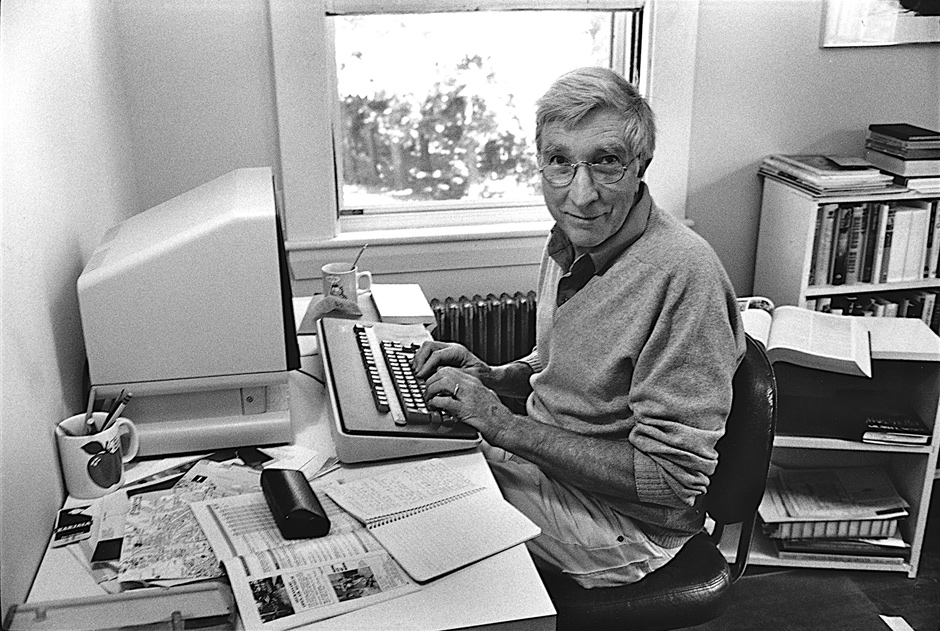
McPhee has published more than 25 books, even though he rarely writes more than 500 words a day. He once tried tying himself to a chair to force himself to write more, but it didn’t work. He said, “People say to me, ‘Oh, you’re so prolific.’ God, it doesn’t feel like it — nothing like it. But, you know, you put an ounce in a bucket each day, you get a quart.”
And that’s how the present appropriates the future, a moment at a time, a day at a time, a sentence at a time. It’s not one or the other, now or then, present or future, but all in due course. Next follows next. John Dewey rightly said we must live in our own time, “extracting the full meaning of each present experience” in preparation for the future. But he also concluded A Common Faith with a stirring recognition that we’re all linked to the “continuous human community,” inseparably tied to its future and bound by our stake in civilization to bear a responsibility for those who will live after us.
Samuel Scheffler calls this the “collective afterlife” of humanity on earth, and in Death and the Afterlife makes explicit what Dewey hinted at, that our investment in the future matters more to us than we typically know.
We should not be so preoccupied with the future that we neglect present joys and satisfactions, but neither should we be so fixated on those that we fail to notice how greatly those joys and satisfactions wordlessly presuppose life’s continuation long after we’re gone. Scheffler’s Doomsday Scenario thought experiment makes clear just how hollow and imperiled our immediate present would be, were we to learn that our species literally lacked a future.
Short of Doomsday, it would be too easy at this odd moment in the civic life of our democracy, to surrender to despair over the prospects of our species and the democratic experiment. But surely that’s precisely why we need to cultivate both immediacy and the long view.
Let’s try one more slant on immediacy. In Spring, when I was a young man, my fancy turned always to the crack of the bat and the thrill of the grass. Still does, and did again recently with Spring Training beaming on the radio from places like Fort Myers FL and Surprise AZ, and sunshine beaming brightly in my own backyard in the middle of Spring Break.
It’s always made me feel like a kid again, with nothing in the moment more urgent than the next pitch, hit, out, batter, inning. If my team didn’t win it was a shame, but there was always hope for tomorrow’s next game, and eventually for next year. Sometimes “we” won, sometimes lost, sometimes it rained, but the unfiltered immediacy of the sounds and conjured images crackling through those “50,000 red-hot watts” was hot indeed. It was almost better than being there.
Yearning to recapture the vital immediacy of that childlike devotion, I keep tuning in every Spring. It’s so much easier, now that all the teams’ radio broadcasts (not just the “home teams’) are readily available via the internet. So are most of the telecasts, but I’m not interested in crowding the game into a small screen. In my imagination it’s so much better, so much bigger than life. Immediacy is also like that, so much enhanced by the power of personal imagination.
The kind of philosophical writing Lachs says (in “The Personal Value and Social Usefulness of Philosophy”) he’s always aspired to, “with the beauty and inventiveness of Mozart’s music,” is similarly enhanced by the imagination’s quest to trap the immediacy of our best moments and days.
“It is necessary to write,” wrote Vita Sackville-West, “if the days are not to slip emptily by. How else, indeed, to clap the net over the butterfly of the moment?” It’s a bracing thought, which itself threatens constantly to flit away. Sometimes there are just too many butterflies to track.
Tracking butterflies is another lovely metaphorical way of thinking about immediacy, though “tracking” may imply more deliberation and conscious intention than is desired. Less spontaneity and receptivity. The best experiences of immediacy seem just to happen, unsought, unsolicited, unexpected but very welcome. They flow. Or flit on the wind. No one, no thing, no visible chain of interference or interpretation interposes between you and the object(s) of your experience, when your net is working.
Writing is a highly directed and intentional activity, but it is possible occasionally to fall into a rhythm of words that seems to flit and flow without excess effort or angst. When that happens, writing is itself another fly for the net.
I don’t mean that genre of involuted, tortured, self-conscious, overly self-involved post-modern hand-wringing that some indulgent writers perpetrate. I don’t mean writing about writing at all, necessarily. I do mean writing that recognizes its own intrinsic value, undertaken both for its own sake and for the sake of noticing and attending to the world beyond pencil and keyboard.
The aforementioned All Things Shining includes an interesting discussion of blogging as a species of writing that can feel direct and immediate and attentive, but become something else – something derivative and dull. I’m pondering that. It was in the butterfly spirit that I began posting my daily dawn reflections several years ago, to capture more moments. How many butterflies get away, for every one snared? How many must you snare, to gain immediacy and claim attentive success? If one day in a hundred that would have slipped by gets caught, isn’t that good?
Lachs agrees, I think, that for animals like ourselves it may just be good enough. The point is not to capture all the butterflies, all the moments, an unreasonable aspiration for finite and imperfect creatures, but to capture those we can and in the process make vital connection with others of our kind. In a season of recurrent political bluster and the repeated threat of self-imposed isolation, we must insist on building not walls but bridges.
And, we must insist on accepting and enjoying, but possibly never finally “solving,” the puzzle of our complex relationship with time. Older Daughter neatly punctuates the point when she reminds me of what the Panda said: “the past is history, the future’s a mystery, today’s a gift. That why it’s called the present.”
Albert Camus’s rebel was not wrong to say that “real generosity towards the future lies in giving all to the present,” so long as we understand that present-mindedness only becomes generous when their present matters to us too.
Our goals must not be cosmic, Lachs has said [SP 33]. Perhaps not, but our sensibility and our intelligence had better be. “Our future depends powerfully,” said Carl Sagan, “on how well we understand this cosmos in which we float like a mote of dust in the morning sky…”
==
Lachs’s stoic/pragmatic commitment to immediacy, it should be noted, is resonant with the kind of altruism and empathy we get from Buddhist Matthieu Ricard. In his 2004 “Habits of Happinss” TED Talk RIcard says some of us believe only in “remembering the past, imagining the future, never the present.” I don’t know anyone who really says that, but many of us act as though we believe it most of the time. That was also Kierkegaard’s point, when he complained of the mania of busy-ness. We don’t stop to smell the roses often enough, forget the clock and the to-do list (Lachs’s “rat-race”) and just inhabit the moment attentively.
But that’s not to say that happiness is exclusive to right now, the present moment that’s here and gone in a wink. Ricard quotes Henri Bergson, “All the great thinkers of humanity have left happiness vague so that each of them could define their own terms.” Smart. When I find a way to articulate precisely what’s wrong with a pure presence that forgets past and future, I’ll finally have defined happiness my way and identified my happiness project. There is no single Project, Lachs knows, just so many projects mirroring so many human natures. Most of them have been allowed to gather dust.
The best projects integrate a capacity for attentive presence, a reminiscent fondness for the past of pleasant memory, and an active interest in what William James called our most vital question. “What is this world going to be? What is life eventually to make of itself?” Happy people delight in imagining the future, caring about it, building it – or at least not impeding or derailing it – in the present. They always have.
Phil Oliver
Berlin Practical Philosophy International Forum - http://berlinphilosophyforum.org/phil-oliver-immediacy-future/
==
E.Weber on JL's "Cost of Comfort" - https://t.co/HWY82BvZaC
==
E.Weber on JL's "Cost of Comfort" - https://t.co/HWY82BvZaC
Saturday, March 14, 2009
SAAP
 College Station, Texas. The Society for the Advancement of American Philosophy yields an unfortunate acronym, but as academic organizations go it's one of the best. It's a club I'm proud to belong to, even if it does accept someone like me as a member (that's a nod to Groucho and Woody, if you don't know the line). I started attending SAAP's annual March meeting when it was still just a few years old, in the '80s. This year's gathering is the 36th, and it's being held on the home turf of the colorful and distinguished American philosopher John J. McDermott, who - with my mentor John Lachs - was present at SAAP's creation. McDermott still sounds like a New Yorker, though he's been an institution at Texas A&M for decades.

It was McDermott's critical anthologies of the writings of William James and John Dewey that really drew me into the world of classical American philosophy, and thus into the sphere of John Lachs.
This year's conference has been memorable. I've particularly enjoyed sessions devoted to the Jamesian concept of "healthy-mindedness" - a tendency to seek the good in all things, and sometimes to see it where it ain't. James himself criticized un-self-critical healthy mindedness, but was willing to concede its usefulness - in measured doses - for life in general, and for some lives especially. Happiness and how to get it is one of philosophy's perennial preoccupations, and has lately been a cottage industry with good books on the subject from the likes of Jennifer Michael Hecht, Jonathan Haidt and many others. Classical American philosophy has always had its eye on this ball.
Norris Frederick, a philosopher from Charlotte, NC, presented a particularly illuminating talk on how James' approach to teaching informed his philosophy generally. In Talks to Teachers on Psychology, and to Students on Some of Life's Ideals, published over a century ago but still fresh and relevant, James observed:
Spinoza long ago wrote in his Ethics that anything that a man can avoid under the notion that it is bad he may also avoid under the notion that something else is good. He who habitually acts sub specie mali, under the negative notion, the notion of the bad, is called a slave by Spinoza. To him who acts habitually under the notion of good he gives the name of freeman. See to it now, I beg you, that you make freemen of your pupils by habituating them to act, whenever possible, under the notion of a good.
Healthy advice!
Another fine session featured James Pawelski, one of the clearest voices articulating Positive Psychology.
Mitchell Aboulafia discussed Barack Obama as Pragmatist-in-Chief.
And - most unsettling for some - Andrew Light of the Center for American Progress urged us to send our best students not to grad school and careers in academe, but into the world to save it. I'm very much in sympathy with this advice, even if it strikes some of my colleagues as a form of professional suicide. But remember Al Gore's scale: the whole planet on one side, some bars of gold on the other? It's time to save the planet.
The conference continues through tomorrow. My take-away: seek happiness, and encourage the best and brightest young minds to do that too... and oh, by the way, encourage the brightest of the bright to reclaim the mantle of "public intellectual" that has fallen dusty since Dewey's day, and try to save the world.
I'll do what I can.
Another fine session featured James Pawelski, one of the clearest voices articulating Positive Psychology.
Mitchell Aboulafia discussed Barack Obama as Pragmatist-in-Chief.
And - most unsettling for some - Andrew Light of the Center for American Progress urged us to send our best students not to grad school and careers in academe, but into the world to save it. I'm very much in sympathy with this advice, even if it strikes some of my colleagues as a form of professional suicide. But remember Al Gore's scale: the whole planet on one side, some bars of gold on the other? It's time to save the planet.
The conference continues through tomorrow. My take-away: seek happiness, and encourage the best and brightest young minds to do that too... and oh, by the way, encourage the brightest of the bright to reclaim the mantle of "public intellectual" that has fallen dusty since Dewey's day, and try to save the world.
I'll do what I can.

Tuesday, January 2, 2018
John Lachs on practical philosophy
"I'm all for technology but it's not a substitute." No, it's not. But the 2d-hand experience of virtual dialogue with the ever-delightful John Lachs, via the technology of Skype and YouTube, far exceeds the more common uses of this medium. Felines may share his philosophy, as John claims here, but their videos are no substitute either. Thanks for posting, Chris.
Tuesday, April 14, 2009
Lachs Lyceum: Critics for Hire
A student who lives a literal stone's throw from the recent tornado's path of destruction brought pictures today. They were stunning and sobering. The world of humanly-engendered upheaval seems to pale by comparison.
But that's where we live most of the time, and so it was heartening to be on the receiving end of a marvelous pep-talk from the incomparable John Lachs, at the first of our department's annual Lyceum lectures. Lachs reminded us:
Teaching the young involves activities that pull in different directions: the culture’s practices and values must be handed on, but they must also be criticized and suitably revised. In doing the former, teachers act as servants of the past, giving a favorable account of the fruits of long experience. In doing the latter, they labor for the future, presenting ideas for how our practices can be improved. The first activity is centered on sketching the geography of what exists and explaining the rules governing it; the second is about the ways the possible can bring improvement to the actual. The first without the second yields stagnation, the second without the first creates chaos. When properly related, the two preserve what is of value from the past even as they encourage active dreaming about a better future.
We are transmitters of what John Dewey called "the inherited resources of the race," but we're also instigators and subversives (or, less provocatively but no less crucially, ameliorators). That's in our job description:
Tenure in universities and colleges was instituted largely to protect faculty members in their vital activity of offering unpopular possibilities to their students, to administrators and to the public at large. Some may think that tenure confers on faculty members a right to speak and on institutions a collateral obligation not to fire them for the views they hold as professionals. This, however, is only a part of the story. The right conferred carries with it a duty: faculty members are not only permitted to speak their minds without retaliation, they must do so. By extending tenure, an institution of higher education hires critics and pledges to pay them for the trouble they give. Those who do not present possibilities constituting at least tacit criticisms of the status quo fail to meet the conditions of their employment.
So we'll continue to rattle the cages of those who would terminate our instigating mission, but we'll do it with a bit less trepidation than last week. Thank you, John. We needed that.
But that's where we live most of the time, and so it was heartening to be on the receiving end of a marvelous pep-talk from the incomparable John Lachs, at the first of our department's annual Lyceum lectures. Lachs reminded us:
Teaching the young involves activities that pull in different directions: the culture’s practices and values must be handed on, but they must also be criticized and suitably revised. In doing the former, teachers act as servants of the past, giving a favorable account of the fruits of long experience. In doing the latter, they labor for the future, presenting ideas for how our practices can be improved. The first activity is centered on sketching the geography of what exists and explaining the rules governing it; the second is about the ways the possible can bring improvement to the actual. The first without the second yields stagnation, the second without the first creates chaos. When properly related, the two preserve what is of value from the past even as they encourage active dreaming about a better future.
We are transmitters of what John Dewey called "the inherited resources of the race," but we're also instigators and subversives (or, less provocatively but no less crucially, ameliorators). That's in our job description:
Tenure in universities and colleges was instituted largely to protect faculty members in their vital activity of offering unpopular possibilities to their students, to administrators and to the public at large. Some may think that tenure confers on faculty members a right to speak and on institutions a collateral obligation not to fire them for the views they hold as professionals. This, however, is only a part of the story. The right conferred carries with it a duty: faculty members are not only permitted to speak their minds without retaliation, they must do so. By extending tenure, an institution of higher education hires critics and pledges to pay them for the trouble they give. Those who do not present possibilities constituting at least tacit criticisms of the status quo fail to meet the conditions of their employment.
So we'll continue to rattle the cages of those who would terminate our instigating mission, but we'll do it with a bit less trepidation than last week. Thank you, John. We needed that.
Wednesday, February 22, 2012
John Lachs lecture
John Lachs-"Why is Good Enough not Good Enough for Us?" Berry Lecture Thu, Feb 23, 7:30pm Vanderbilt Furman Hall 114
Monday, November 9, 2009
value of philosophy


A colleague and I are scheduled to tape an interview on campus tomorrow, to discuss (among other things) the value of philosophy to our students, to the university, and to the culture at large. Just in case we don't get all the right words out, here are two of my favorite sources on this topic-- Bertrand Russell and John Lachs:
The man who has no tincture of philosophy goes through life imprisoned in the prejudices derived from common sense, from the habitual beliefs of his age or his nation, and from convictions which have grown up in his mind without the co-operation or consent of his deliberate reason. To such a man the world tends to become definite, finite, obvious; common objects rouse no questions, and unfamiliar possibilities are contemptuously rejected. As soon as we begin to philosophize, on the contrary, we find that even the most everyday things lead to problems to which only very incomplete answers can be given. Philosophy, though unable to tell us with certainty what is the true answer to the doubts which it raises, is able to suggest many possibilities which enlarge our thoughts and free them from the tyranny of custom. Thus, while diminishing our feeling of certainty as to what things are, it greatly increases our knowledge as to what they may be; it removes the somewhat arrogant dogmatism of those who have never travelled into the region of liberating doubt, and it keeps alive our sense of wonder by showing familiar things in an unfamiliar aspect…
Philosophy is to be studied, not for the sake of any definite answers to its questions since no definite answers can, as a rule, be known to be true, but rather for the sake of the questions themselves; because these questions enlarge our conception of what is possible, enrich our intellectual imagination and diminish the dogmatic assurance which closes the mind against speculation; but above all because, through the greatness of the universe which philosophy contemplates, the mind also is rendered great, and becomes capable of that union with the universe which constitutes its highest good. Bertrand Russell, The Value of Philosophy
Teaching the young involves activities that pull in different directions: the culture’s practices and values must be handed on, but they must also be criticized and suitably revised. In doing the former, teachers act as servants of the past, giving a favorable account of the fruits of long experience. In doing the latter, they labor for the future, presenting ideas for how our practices can be improved. The first activity is centered on sketching the geography of what exists and explaining the rules governing it; the second is about the ways the possible can bring improvement to the actual. The first without the second yields stagnation, the second without the first creates chaos. When properly related, the two preserve what is of value from the past even as they encourage active dreaming about a better future. John Lachs, MTSU Lyceum address, 4.14.09
Friday, September 18, 2009
James bio - 2
Time for our next installment from Richardson's James biography.
 This week's reading includes young William's attempts to buck up his younger brother's spirits in a letter that evokes images he'd imbibed while traveling with scientist Louis Agassiz's South America expedition, in the 1860s (more on that, and more). I wrote about this once, while drawing a connection between John Dewey's naturalistic version of spirituality and James's.
In an uncharacteristic moment of self-revelation the stolid Yankee once apparently confided in his old student Max Eastman about a youthful "mystical experience" from his [John Dewey's] early stint in Oil City, Pennsylvania:
The essence of the experience was a feeling of oneness with the universe, a conviction that worries about existence and one's place in it are foolish and futile. "It was not a very dramatic mystic experience," Eastman continued. There was no vision, not even a definable emotion—just a supremely blissful feeling that his worries were over. Eastman quoted Dewey, ". . . to me faith means not worrying. . . . I claim I've got religion and that I got it that night in Oil City."
This melds very well with a homiletic, therapeutic, stoic, yet somehow joyous and de novo expression of James's unique view, dating from his prephilosophic youth but anticipating his most mature thought:
"Remember when old December's darkness is everywhere about you, that the world is really in every minutest point as full of life as in the most joyous morning you ever lived through; that the sun is whanging down, and the waves dancing, and the gulls skimming down at the mouth of the Amazon, for instance, as freshly as in the first morning of creation; and the hour is just as fit as any hour that ever was for a new gospel of cheer to be preached. I am sure that one can, by merely thinking of these matters of fact, limit the power of one's evil moods over one's way of looking at the cosmos."
I find it compelling, and not at all coincidental or incongruous, that the two great pragmatic meliorists of classical American Philosophy each achieved in their twenties the same quasi-stoic insight that, as we have noted, carried the world's oldest person happily through her many days. [The world's oldest person had just died when I wrote that; her position was quickly filled, of course. But it's not a job with a lot of long-term security.] The power of imaginative self-transcendence to conquer egoistic distemper, especially when coupled with the wide-open perspective of life as a self-replicating, self-correcting chain, is unrivaled. It has been conclusively "verified." The spirit of acceptance and the spirit of reform belong together. The mature James, for one, is full of admiration for the spirit of acceptance in whatever blissful forms it may assume in the actual lives of men and women. And he is full of expectancy and hope.
He wasn't so sunny while aboard ship during the Brazilian expedition: he became very depressed and homesick, and probably would at that time have been incapable of cheering himself with the letter he sent to Bob.
But the 23-year old James was already a kind of incipient Stoic, in 1865. He was much more of one when he got his land legs back under him. One of the more engaging graduate seminars I've participated in was "Pragmatism and Stoicism," jointly offered by John Lachs and John Stuhr at Vanderbilt.
It's hard for some people to get that link (Pragmatists and Stoics, not Lachs and Stuhr). Some think that Pragmatists are all about "go-go-go"-ing, trying to change the world and ameliorate its wounds, never noticing cliffs and sharp edges. Not so. A wise Pragmatist knows there's a time to put on the Stoic's hat and accept external conditions as they stand, while turning inward and conjuring some skimming gulls.
And a wise Jamesian is prepared to act on the belief that such an inward turn is freely available to us all.
But at 25, we learn in this week's reading of Robert Richardson, James has now added another vocation to his "reject" list-- "Medicine is busted," he told a friend-- and is one step closer to a breakdown and posssible suicide that would have been anything but stoically reasonable.
Here, in case you ever need cheering-up. A little YouTube might have done young WJ some good.
Friday, February 11, 2011
"shared governance"
My mentor John Lachs kicked the hornet's nest with a recent Chronicle of Higher Education piece.
No whine, just fact.
When I served as chair of the Vanderbilt University Faculty Senate, the chancellor met once a month with the senate's executive committee. The meetings were cordial, but it was clear that the chancellor used them to inform the senate of what he wanted. When the committee challenged some of his ideas, he summarily terminated the meetings, sending his provost to tell us each month what the chancellor had done. "Shared Governance is a Myth"In the comments section, angry and blustering administrators from across the land have crawled out of the woodwork to protest Lachs's candor. People who don't know him are quick to deploy ad hominem irrelevance, one even slurring him (of all people) as an "elitist." Comment #7 should shut them all up:
...based on my experience Professor Lachs is one of the most genuine, generous, affable, gregarious, open-minded, inspiring professors I've come across at 8 universities where I've either studied or taught. He's beloved by many students and faculty there. He's just a really cool guy, and not in the slightest way elitist.After nearly three years as a Senator I can corroborate Lachs's contention. We gather, we sit, we listen to administrators speak of welcoming our perspectives. And then they do what they were going to do. Challenges were not and are not welcome.
No whine, just fact.
Sunday, February 19, 2023
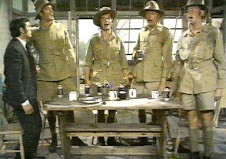
John Cleese: Talking About Life and Philosophy - The American Philosophical Association
From Volume 80, No. 2 of the Proceedings and Addresses of the American Philosophical Association:
One of the tasks of the APA Centennial Committee, chaired by John Lachs, was to create a broader public awareness for philosophy by calling attention to its personal value and social usefulness. The Committee enlisted the help of the actor, John Cleese, in bringing this about. Mr. Cleese has recorded a disk of short philosophical reflections that were written for use on radio stations throughout the country. The disc contains 22 spots ranging from 30 seconds to 1 minute in length.
We've converted the CD to MP3 files and shared them below. You can listen to each individually, or you can download the whole set as a zip file.
01 Survey
02 Scientific Life
03 In The Present
04 Information
05 The Meaning Of Life
06 Future Obligation
07 Somewhere Else
08 Tabloid
09 Starting Point
10 Worldly Good
11 Things That Matter
12 Fun
13 Quality Of Life
14 What To Fear
15 Dream
16 Kids Today
17 Decision
18 Silenced
19 Century
20 Neighbor Policy
21 To Die For
22 Reachable Stars
Monday, May 3, 2010
John McDaniel
Distressing news from our interim Dean this morning:
He was a great friend and unstinting source of encouragement to me personally, and a special breed of academic administrator-- equally at home in the worlds of literary scholarship and of the great American pastime (he was once a hot Pirates' prospect).
When word of his latest, now sorrowfully last, illness got around last Fall he held his head high and resolved to "take this one on like all the other afflictions that have come my way in recent times: one step at a time."
He told me how lucky I was to have been mentored by John Lachs. I was also very lucky to have learned from John McDaniel.
Obit
It is with great sadness that we announce the death this morning of John McDaniel. In his fortieth year of service to MTSU, he had served as dean of the College of Liberal Arts for more than a quarter century, and was widely known for his intelligence, wit, and wisdom. He leaves behind his wife Jean, sons Scott (Donetta) and Craig, and three granddaughters.Dean McDaniel was a great friend and lifeline to our department, at a time when many of his "superiors" would have been pleased to lose the philosophy program entirely. He stood with us.
He was a great friend and unstinting source of encouragement to me personally, and a special breed of academic administrator-- equally at home in the worlds of literary scholarship and of the great American pastime (he was once a hot Pirates' prospect).
When word of his latest, now sorrowfully last, illness got around last Fall he held his head high and resolved to "take this one on like all the other afflictions that have come my way in recent times: one step at a time."
He told me how lucky I was to have been mentored by John Lachs. I was also very lucky to have learned from John McDaniel.
Obit
Saturday, October 11, 2014
John J. Compton, "searcher after truth"
What a delight, the gathering at Vanderbilt yesterday of some of John J. Compton's old students and colleagues to honor the memory of the man one of us named "the most admirable person I've ever known." All recalled his generosity, kindness, optimism, exuberant high spirits, unflagging support, frequent smile and peeling punctuating laughter.
He was for many of us a role-model, professionally and temperamentally. He wrestled with the legacy of his famous Nobel laureate father Arthur Compton [papers... Wiki], a key participant in the Manhattan Project. He was unusually sensitive to moral complexity, a philosopher genuinely committed to asking all the hard questions and to really hearing discordant answers. As one colleague from Psychology put it, he defied the stereotype of philosophers who like argument merely for its own sake alone: he was an "illuminating" interlocutor, a searcher after truth.
My old mentor and John's colleague John Lachs was among those in attendance. He gave me an inscribed copy of his new book, a perfect reminder of just how grateful I and generations of Vandy philosophy students should be, for our generous allotment of search guides.

He was for many of us a role-model, professionally and temperamentally. He wrestled with the legacy of his famous Nobel laureate father Arthur Compton [papers... Wiki], a key participant in the Manhattan Project. He was unusually sensitive to moral complexity, a philosopher genuinely committed to asking all the hard questions and to really hearing discordant answers. As one colleague from Psychology put it, he defied the stereotype of philosophers who like argument merely for its own sake alone: he was an "illuminating" interlocutor, a searcher after truth.
My old mentor and John's colleague John Lachs was among those in attendance. He gave me an inscribed copy of his new book, a perfect reminder of just how grateful I and generations of Vandy philosophy students should be, for our generous allotment of search guides.
Friday, January 26, 2024
John Cleese speaks for philosophy
Short Spots for Radio Stations
One of the tasks of the APA Centennial Committee, chaired by John Lachs, was to create a broader public awareness for philosophy by calling attention to its personal value and social usefulness. The Committee enlisted the help of the actor, John Cleese, in bringing this about. Mr. Cleese has recorded a disk of short philosophical reflections that were written for use on radio stations throughout the country. The disc contains 22 spots ranging from 30 seconds to 1 minute in length.
We've converted the CD to MP3 files and shared them below. You can listen to each individually, or you can download the whole set as a zip file.
01 Survey
02 Scientific Life
03 In The Present
04 Information
05 The Meaning Of Life
06 Future Obligation
07 Somewhere Else
08 Tabloid
09 Starting Point
10 Worldly Good
11 Things That Matter
12 Fun
13 Quality Of Life
14 What To Fear
15 Dream
16 Kids Today
17 Decision
18 Silenced
19 Century
20 Neighbor Policy
21 To Die For
22 Reachable Stars
From Volume 80, No. 2 of the Proceedings and Addresses of the American Philosophical Association
https://www.apaonline.org/page/Cleese/John-Cleese-Talking-About-Life-and-Philosophy.htm
Subscribe to:
Posts (Atom)




 Charles Darwin (

 Posts
Posts