Did a little research yesterday afternoon out on Vandy library's sunny cafe porch, preparing to discuss Hilary Putnam in New Jersey in just (yikes!) two weeks.
I like the way Putnam's latest gathering of papers begins, with an epigraph from Peirce: "Let us not pretend to doubt in philosophy what we do not doubt in our hearts." Then another, from Wittgenstein: "Even the hugest telescope has to have an eye-piece no larger than the human eye."
And I really like what Putnam says in his preface about his own decades-long philosophical quest for clarity:
...my views on some issues continue to change or, as I prefer to think, improve.
This fact will, of course, confirm a certain image of me, the image of the philosopher who "changes his mind." I am not ashamed of that image; I have never wanted to be the sort of philosopher who pretends to have the final answer to all the big questions.
In other words: he has always wanted to be a good pragmatist. Me too. "Good pragmatist" is no oxymoron in my book, either.
Some optimists think we live in the best of all possible worlds. Some pessimists fear they may be right. Subjectivists wallow in their interior dramas. The sensible alternative? Meliorism, "a better promise as to this world's outcome"...
My friend and colleague Rami Shapiro, the Rabbi, is walking the pluralistic walk many of us typically only talk. "Today I am a Hindu," he proclaims.
I'm a different variety of pluralist myself, claiming no firm anchorage in any of the historically dominant theological or spiritual traditions but happy to take truth wherever it can be found and put to work. And I'm also eager to find the spiritual core of atheism, humanism, naturalism, and whatever other names or labels people march under, though a bit dubious as to the "truth is one" thesis. That is, I don't think it's one yet, but I agree that unity-in-plurality is a worthy aspiration.
Rami: The Rig Veda’s teaching that “Truth is one, different people call it by different names,” frees me from both abandoning names and having allegiance to them. But being a Jew is all about names, especially The Name, and taking that Name very seriously. Yet I just can’t do so. I love languages, I love names, but I never mistake the menu for meal, the name for that toward which it points, and it is the meal I desire.
Judaism is my primary menu. It is the system of names I go to first and most often. But primary does not mean exclusive, and I find value in many names and many systems. And while I do love to explore the differences and incompatibilities between systems in an academic setting, in my personal life they all point me to the same reality, the nameless “—“ that is both the One and the Many.
So today I become a Hindu, but this label adheres no more tightly than any other. In the end I practice a Teflon spirituality allowing me to mix lots of ingredients without worrying that any will stick.
Me: That's one small step for a man (of whatever wisdom tradition), one exemplary leap for cosmopolitanism. Good going, Rami!
Time for our next installment from Richardson's James biography.
This week's reading includes young William's attempts to buck up his younger brother's spirits in a letter that evokes images he'd imbibed while traveling with scientist Louis Agassiz's South America expedition, in the 1860s (more on that, and more). I wrote about this once, while drawing a connection between John Dewey's naturalistic version of spirituality and James's.
In an uncharacteristic moment of self-revelation the stolid Yankee once apparently confided in his old student Max Eastman about a youthful "mystical experience" from his [John Dewey's] early stint in Oil City, Pennsylvania:
The essence of the experience was a feeling of oneness with the universe, a conviction that worries about existence and one's place in it are foolish and futile. "It was not a very dramatic mystic experience," Eastman continued. There was no vision, not even a definable emotion—just a supremely blissful feeling that his worries were over. Eastman quoted Dewey, ". . . to me faith means not worrying. . . . I claim I've got religion and that I got it that night in Oil City."
This melds very well with a homiletic, therapeutic, stoic, yet somehow joyous and de novo expression of James's unique view, dating from his prephilosophic youth but anticipating his most mature thought:
"Remember when old December's darkness is everywhere about you, that the world is really in every minutest point as full of life as in the most joyous morning you ever lived through; that the sun is whanging down, and the waves dancing, and the gulls skimming down at the mouth of the Amazon, for instance, as freshly as in the first morning of creation; and the hour is just as fit as any hour that ever was for a new gospel of cheer to be preached. I am sure that one can, by merely thinking of these matters of fact, limit the power of one's evil moods over one's way of looking at the cosmos."
I find it compelling, and not at all coincidental or incongruous, that the two great pragmatic meliorists of classical American Philosophy each achieved in their twenties the same quasi-stoic insight that, as we have noted, carried the world's oldest person happily through her many days. [The world's oldest person had just died when I wrote that; her position was quickly filled, of course. But it's not a job with a lot of long-term security.] The power of imaginative self-transcendence to conquer egoistic distemper, especially when coupled with the wide-open perspective of life as a self-replicating, self-correcting chain, is unrivaled. It has been conclusively "verified." The spirit of acceptance and the spirit of reform belong together. The mature James, for one, is full of admiration for the spirit of acceptance in whatever blissful forms it may assume in the actual lives of men and women. And he is full of expectancy and hope.
He wasn't so sunny while aboard ship during the Brazilian expedition: he became very depressed and homesick, and probably would at that time have been incapable of cheering himself with the letter he sent to Bob.
But the 23-year old James was already a kind of incipient Stoic, in 1865. He was much more of one when he got his land legs back under him. One of the more engaging graduate seminars I've participated in was "Pragmatism and Stoicism," jointly offered by John Lachs and John Stuhr at Vanderbilt.
It's hard for some people to get that link (Pragmatists and Stoics, not Lachs and Stuhr). Some think that Pragmatists are all about "go-go-go"-ing, trying to change the world and ameliorate its wounds, never noticing cliffs and sharp edges. Not so. A wise Pragmatist knows there's a time to put on the Stoic's hat and accept external conditions as they stand, while turning inward and conjuring some skimming gulls.
And a wise Jamesian is prepared to act on the belief that such an inward turn is freely available to us all.
But at 25, we learn in this week's reading of Robert Richardson, James has now added another vocation to his "reject" list-- "Medicine is busted," he told a friend-- and is one step closer to a breakdown and posssible suicide that would have been anything but stoically reasonable.
Here, in case you ever need cheering-up. A little YouTube might have done young WJ some good.
I love Dan Dennett's thoughts on gratitude, in his recent conversation with Richard Dawkins and in "that thing" he wrote about surviving heart failure, "Thank Goodness" - his naturalistic humanism did not merely survive the ordeal but was greatly strengthened by it.
Yes, I did have an epiphany. I saw with greater clarity than ever before in my life that when I say "Thank goodness!" this is not merely a euphemism for "Thank God!" (We atheists don't believe that there is any God to thank.) I really do mean thank goodness! There is a lot of goodness in this world, and more goodness every day, and this fantastic human-made fabric of excellence is genuinely responsible for the fact that I am alive today. It is a worthy recipient of the gratitude I feel today, and I want to celebrate that fact here and now...
The best thing about saying thank goodness in place of thank God is that there really are lots of ways of repaying your debt to goodness—by setting out to create more of it, for the benefit of those to come...
Active gratitude is something pragmatic meliorists understand implicitly, happily paying forward what some of us don't mind calling a spiritual debt, not to a God but to the conditions favorable to life. Just as gratitude does not require a divine object, neither must it target specific persons, typically. But there are always persons to thank, those closest to us certainly, but also those "strangers" whose contributions to medical science, for instance, as in Dennett's case, are literally life-sustaining.
Ronald Aronson has interesting things to say about this too:
So much and many to thank: my parents, people on the other side of the world, those who set aside and today preserve this area as a state park, and on and on. One's map of dependence stretches in every possible direction and across every possible plane, but it is always real and it is always concrete. And it sketches the paths for one's gratitude. It tells, after all, the story of our connections with the world and the universe, and it gives us a core of obligations and a core of meaning. To give thanks is to honor this.
They who know the truth are not equal to those who love it, and they who love it are not equal to those who delight in it. Confucius
Springs
"The worm at the core of our usual springs of delight can tun us into melancholy metaphysicians. But the music can commence again, and again and again, at intervals."
"The really vital question for us all is, What is this world going to be? What is life eventually to make of itself?"--William James
I'm a philosophy prof at a large state university in middle Tennessee. This is my personal blogsite, not sponsored by or otherwise officially related to my school; views expressed are my own.
“We Humanists behave as well as we can, without any expectation of rewards or punishments in an Afterlife. We serve as best we can the only abstraction with which we have any real familiarity, which is our community.” Kurt Vonnegut Jr.-his last speech, April '07
Big library
Read, return, repeat
All you need
The delightful future
is inclusive, kind, peaceful, loving, hopeful, and diverse.
"Hello, babies. Welcome to Earth. It's hot in the summer and cold in the winter. It's round and wet and crowded. At the outside, babies, you've got about a hundred years here. There's only one rule that I know of, babies—God damn it, you've got to be kind." God Bless You, Mr. Rosewater(and see Mr. Rogers, below)
The only real "you" is the one that comes and goes, manifests and withdraws itself eternally in and as every conscious being. For "you" is the universe looking at itself from billions of points of view, points that come and go so that the vision is forever new... when you know for sure that your separate ego is a fiction, you actually feel yourself as the whole process and pattern of life.”Alan Watts "The cosmos is within us. We are made of star-stuff. We are a way for the universe to know itself." Carl Sagan
A net for catching days
“How we spend our days is, of course, how we spend our lives. What we do with this hour, and that one, is what we are doing. A schedule defends from chaos and whim. It is a net for catching days. It is a scaffolding on which a worker can stand and labor with both hands at sections of time. A schedule is a mock-up of reason and order—willed, faked, and so brought into being; it is a peace and a haven set into the wreck of time; it is a lifeboat on which you find yourself, decades later, still living.” Annie Dillard, The Writing Life... Popova on Dillard
“It is necessary to write, if the days are not to slip emptily by. How else, indeed, to clap the net over the butterfly of the moment? For the moment passes, it is forgotten; the mood is gone; life itself is gone. That is where the writer scores over his fellows: he catches the changes of his mind on the hop.” Vita Sackville-West
“I’m a full-time believer in writing habits, pedestrian as it all may sound. You may be able to do without them if you have genius but most of us only have talent and this is simply something that has to be assisted all the time by physical and mental habits or it dries up and blows away. I see it happen all the time. Of course you have to make your habits in this conform to what you can do. I write only about two hours every day because that’s all the energy I have, but I don’t let anything interfere with those two hours, at the same time and the same place. This doesn’t mean I produce much out of the two hours. Sometimes I work for months and have to throw everything away, but I don’t think any of that was time wasted. Something goes on that makes it easier when it does come well. And the fact is if you don’t sit there every day, the day it would come well, you won’t be sitting there.” Flannery O'Connor
Updike on waiting for inspiration
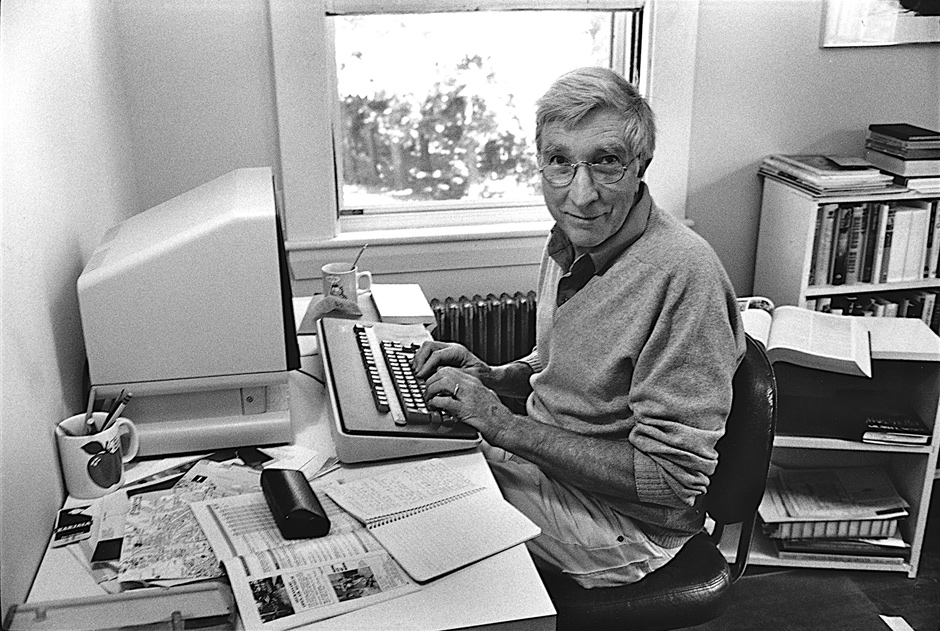
When asked in 1978 about his writing process, Updike said, “I’ve never believed that one should wait until one is inspired because I think that pleasures of not writing are so great that if you ever start indulging them, you will never write again.”
After the birth of his third child, he had rented an office above a restaurant in Ipswich, and spent several hours each morning writing there. Throughout his 50-year career, he remained devoted to that schedule, writing about three pages every morning after breakfast, sometimes more if things were going well. He said: “Back when I started, our best writers spent long periods brooding in silence. Then they’d publish a big book and go quiet again for another five years. I decided to run a different kind of shop.” WA
Baseball by John Updike
It looks easy from a distance, easy and lazy, even, until you stand up to the plate and see the fastball sailing inside, an inch from your chin, or circle in the outfield straining to get a bead on a small black dot a city block or more high, a dark star that could fall on your head like a leaden meteor.
The grass, the dirt, the deadly hops between your feet and overeager glove: football can be learned, and basketball finessed, but there is no hiding from baseball the fact that some are chosen and some are not—those whose mitts feel too left-handed, who are scared at third base of the pulled line drive, and at first base are scared of the shortstop's wild throw that stretches you out like a gutted deer.
There is nowhere to hide when the ball's spotlight swivels your way, and the chatter around you falls still, and the mothers on the sidelines, your own among them, hold their breaths, and you whiff on a terrible pitch or in the infield achieve something with the ball so ridiculous you blush for years. It's easy to do. Baseball was invented in America, where beneath the good cheer and sly jazz the chance of failure is everybody's right, beginning with baseball.
“Every morning," reported his friend Miles Malleson, "Bertie [Russell] would go for an hour’s walk by himself, composing and thinking out his work for that day. He would then come back and write for the rest of the morning, smoothly, easily and without a single correction." Gymnasiums of the Mind
"...from his university days he would walk at least 20 miles every Sunday, and recounts how some of his peers at Cambridge walked much more." The Connection Between Walking and Thinking
"...thinking is generally thought of as doing nothing in a production-oriented culture, and doing nothing is hard to do. It’s best done by disguising it as doing something, and the something closest to doing nothing is walking. Walking itself is the intentional act closest to the unwilled rhythms of the body, to breathing and the beating of the heart. It strikes a delicate balance between working and idling, being and doing. It is a bodily labor that produces nothing but thoughts, experiences, arrivals. After all those years of walking to work out other things, it made sense to come back to work close to home, in Thoreau’s sense, and to think about walking.
Walking, ideally, is a state in which the mind, the body, and the world are aligned, as though they were three characters finally in conversation together, three notes suddenly making a chord. Walking allows us to be in our bodies and in the world without being made busy by them. It leaves us free to think without being wholly lost in our thoughts." Rebecca Solnit, Wanderlust... On a childhood of reading and wandering
"I want death to find me planting my cabbages, not concerned about IT or - still less- my unfinished garden" Montaigne
(I would always have a man to be doing, and, as much as in him lies, to extend and spin out the offices of life; and then let death take me planting my cabbages, indifferent to him, and still less of my gardens not being finished.)
I believe, in truth, that it is those terrible ceremonies and preparations wherewith we set it out, that more terrify us than the thing itself... we seem dead and buried already. … Happy is the death that deprives us of leisure for preparing such ceremonials.
“If you could forget mortality... You could really believe that time is circular, and not linear and progressive as our culture is bent on proving. Seen in geological perspective, we are fossils in the making, to be buried and eventually exposed again for the puzzlement of creatures of later eras. Seen in either geological or biological terms, we don't warrant attention as individuals. One of us doesn't differ that much from another, each generation repeats its parents, the works we build to outlast us are not much more enduring than anthills, and much less so than coral reefs.Here everything returns upon itself, repeats and renews itself, and present can hardly be told from past.” Wallace Stegner, Crossing to Safety
“At the core of every habit is a neurological loop with three parts: A cue, a routine and a reward. To understand how to create habits — such as exercise habits — you must learn to establish the right cues and rewards.” nyt
My first landlord was an old zoologist at the University of Missouri named Winterton Curtis (1875-1965). He was one of the scientific experts not allowed to testify at the Scopes Trial in Dayton TN in 1925. My parents (and I) rented rooms from him in his home on Westmount in Columbia Missouri while Dad attended Veterinary school at Mizzou in the early '60s, and later maintained a cordial friendship with him. He used to visit when I was a kid and pull dollar bills from my ears. Dad thought that must be why I was always so fascinated by the concept of evolution.
The humanistic philosophy of life, which flowered in Greece and which has blossomed again, is not the crude materialistic desire to eat, drink, and be merry. It is a spiritual joy in living and a confidence in the future, which makes this life a thing worthwhile. The otherworldliness of the Middle Ages does not satisfy the spiritual demands of modern times. Science and Human Affairs From the Viewpoint of Biology
Of the Scopes Trial itself, he wrote of the 1925 Dayton Tennessee spectacle:
The courtroom audience impressed me as honest country folk in jeans and calico. “Boobs" perhaps, as judged by Mencken, and holding all the prejudices of backwoods Christian orthodoxy, but nevertheless a significant section of the backbone of democracy in the U.S.A. They came to see their idol “the Great Commoner” and champion of the people meet the challenge to their faith. They left bewildered but with their beliefs unchanged despite the manhandling of their idol by the “Infidel” from Chicago.... A Defense Expert's Impressions of the Scopes Trial
"And maybe this is what I have learned more than anything from my great-great-grandfather: to keep my eyes and my mind open, to enjoy the wonders of nature and never cease to ask questions." Sarah Darwin, foreword to "A Modest Genius: The story of Darwin's life and how his ideas changed everything" by Hanne Strager
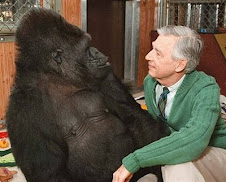
...but I'll be your friend. “The thing I remember best about successful people I've met all through the years is their obvious delight in what they're doing and it seems to have very little to do with worldly success. They just love what they're doing, and they love it in front of others.” Mr. Rogers, echoing Mr. Vonnegut (above), also said “There are three ways to ultimate success: The first way is to be kind. The second way is to be kind. The third way is to be kind.” ― Fred Rogers
1. William James 2. John Stuart Mill 3. John Dewey 4. David Hume 5. Michel de Montaigne 6. Bertrand Russell 7. Ralph Waldo Emerson/Henry David Thoreau (a tie, and a couple) 8. Aristotle (mostly because he contradicts Plato)
Where are the women? Up until relatively recently, they weren't invited into the conversation. But I'm doing my homework. Thanks to Jennifer Michael Hecht's wonderful Doubt: A History, I know the names of some 19th century women who'd likely have become favorites of mine and many others, in a better world: Hypatia Bradlaugh Bonner, Annie Besant, Ernestine Rose, Etta Semple, Helen Hamilton Gardener...
Great nickname for the pitcher who shut out Hillwood in the postseason opener!
It's her time
The clock on my office wall
Hobbes
He walked much and contemplated, and he had in the head of his cane a pen and ink-horn, carried always a note-book in his pocket, and as soon as a thought darted, he presently entered it into his book, or otherwise he might perhaps have lost it."
"It cannot be always seaside...
...even as it cannot be always May, and through the gaps thought creeps in." H.G. Wells







 Charles Darwin (

 Posts
Posts