Showing posts with label John Stuhr. Show all posts

Friday, September 18, 2009

James bio - 2

Time for our next installment from Richardson's James biography.
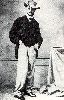
WJ BrazilThis week's reading includes young William's attempts to buck up his younger brother's spirits in a letter that evokes images he'd imbibed while traveling with scientist Louis Agassiz's South America expedition, in the 1860s (more on that, and more). I wrote about this once, while drawing a connection between John Dewey's naturalistic version of spirituality and James's.

In an uncharacteristic moment of self-revelation the stolid Yankee once apparently confided in his old student Max Eastman about a youthful "mystical experience" from his [John Dewey's] early stint in Oil City, Pennsylvania:

The essence of the experience was a feeling of oneness with the universe, a conviction that worries about existence and one's place in it are foolish and futile. "It was not a very dramatic mystic experience," Eastman continued. There was no vision, not even a definable emotion—just a supremely blissful feeling that his worries were over. Eastman quoted Dewey, ". . . to me faith means not worrying. . . . I claim I've got religion and that I got it that night in Oil City."

This melds very well with a homiletic, therapeutic, stoic, yet somehow joyous and de novo expression of James's unique view, dating from his prephilosophic youth but anticipating his most mature thought:

"Remember when old December's darkness is everywhere about you, that the world is really in every minutest point as fullgull of life as in the most joyous morning you ever lived through; that the sun is whanging down, and the waves dancing, and the gulls skimming down at the mouth of the Amazon, for instance, as freshly as in the first morning of creation; and the hour is just as fit as any hour that ever was for a new gospel of cheer to be preached. I am sure that one can, by merely thinking of these matters of fact, limit the power of one's evil moods over one's way of looking at the cosmos."

I find it compelling, and not at all coincidental or incongruous, that the two great pragmatic meliorists of classical American Philosophy each achieved in their twenties the same quasi-stoic insight that, as we have noted, carried the world's oldest person happily through her many days. [The world's oldest person had just died when I wrote that; her position was quickly filled, of course. But it's not a job with a lot of long-term security.] The power of imaginative self-transcendence to conquer egoistic distemper, especially when coupled with the wide-open perspective of life as a self-replicating, self-correcting chain, is unrivaled. It has been conclusively "verified." The spirit of acceptance and the spirit of reform belong together. The mature James, for one, is full of admiration for the spirit of acceptance in whatever blissful forms it may assume in the actual lives of men and women. And he is full of expectancy and hope.

He wasn't so sunny while aboard ship during the Brazilian expedition: he became very depressed and homesick, and probably would at that time have been incapable of cheering himself with the letter he sent to Bob.

But the 23-year old James was already a kind of incipient Stoic, in 1865. He was much more of one when he got his land legs back under him. One of the more engaging graduate seminars I've participated in was "Pragmatism and Stoicism," jointly offered by John Lachs and John Stuhr at Vanderbilt.

It's hard for some people to get that link (Pragmatists and Stoics, not Lachs and Stuhr). Some think that Pragmatists are all about "go-go-go"-ing, trying to change the world and ameliorate its wounds, never noticing cliffs and sharp edges. Not so. A wise Pragmatist knows there's a time to put on the Stoic's hat and accept external conditions as they stand, while turning inward and conjuring some skimming gulls.

And a wise Jamesian is prepared to act on the belief that such an inward turn is freely available to us all.

But at 25, we learn in this week's reading of Robert Richardson, James has now added another vocation to his "reject" list-- "Medicine is busted," he told a friend-- and is one step closer to a breakdown and posssible suicide that would have been anything but stoically reasonable.

Here, in case you ever need cheering-up. A little YouTube might have done young WJ some good.

Saturday, October 27, 2007

John Lachs: Symposium and Retrospective

I've not dropped any coins into this bottomless well lately, but over the past two days I participated in a public event that merits blog-space if anything does.

Five good friends and I gathered as a panel symposium this afternoon to discuss a very special teacher, John Lachs, who has been educating Vanderbilt philosophy students since 1967. Last night he delivered a keynote address to the 39th annual meeting of the Tennessee Philosophical Association. Here's how I introduced him, followed by my contribution to the panel discussion:

Welcome to the 39th annual meeting of the TPA. We invite all of you who came out this evening for what promises to be an engaging, provocative keynote address by John Lachs, and those who came for the "spirited" reception to follow, to pick up a conference program near the entrance behind you. We’ll be at it all day tomorrow, starting at 9 am. We have sessions scheduled on a variety of topics. I’m particularly pleased that so many presenters heeded our suggestion and selected themes consonant with those of tonight’s speaker, and only regret that it won’t be possible to be everywhere at once tomorrow.

But tonight we’re all here, and I am delighted to introduce my mentor and friend John Lachs, one of the preeminent philosophers of his generation. Born in Hungary, educated at McGill and Yale Universities, he is Centennial Professor of Philosophy at Vanderbilt, where he has been for four decades now. He is the author of a great many articles and books including Intermediate Man, The Relevance of Philosophy for Life, In Love With Life, A Community of Individuals, and the forthcoming Leaving People Alone. He founded the Society for the Advancement of American Philosophy (SAAP). He is a respected public intellectual, enjoying lustrous name and reputation in this community and far beyond. Above all, he is an inspirational teacher who has shared the spark of his enthusiasm for learning and living with generations of grateful students – some of whom, I am pleased to note, have journeyed further than they otherwise would have for the opportunity to be here with him at this conference. Others, including a university president, have sent warmest regards and regrets.

It is unusual for the TPA keynote speaker to be met on his own turf. But this is a delightfully unusual evening. Join me in welcoming to the lectern, on his home field, Professor John Lachs. (10.26.07)


Welcome to our symposium on John Lachs, last night’s distinguished keynote speaker and – for each of us on this panel - an esteemed teacher, whose influence on our respective lives and careers in academia makes this opportunity to exchange reflections and reminisce about our mentor particularly gratifying.

The program notes that we were all graduate students here at Vanderbilt in the early ‘80s. We studied in Lachs’s seminars, were TAs in his ever-popular Intro to Ethics course, and worked closely with him in our respective paper chases. I’ll leave it to my colleagues each to express the specific nature and extent of Lachs’s impact on themselves, if they wish. (I don’t know what they’re going to say, they all preferred to approach this gathering in what I think we could call a Lachsian spirit of spontaneity.)

But I can tell you that his tutelage, and now his friendship, have profoundly marked me. I simply would not have succeeded without his patient sufferance and, when at last I got serious, his intense commitment to my success. But long before that, Lachs kindled the interest in American philosophy that is the core of my professional and philosophic identity. Gratitude alone seems insufficient as repayment. But, "from each according to ability..."

I'm also very grateful to my former classmates, now far-flung colleagues, for joining me here today. Some have traveled significant distances, and none missed a beat in accepting the invitation to do it. We’re all here because we want to profess in public our regard for a man whose instruction and example helped bring us to our calling.

For teaching is a calling, and of all my teachers it was Lachs whose enthusiastic practice of the academic philosopher’s vocation best exhibited what that can mean. He was (and is, and will continue to be) the opposite of the stereotypical university "free rider" he so deliciously pans in A Community of Individuals: the shirking recycler of the same old stale lecture material who knows only four good reasons to teach: May, June, July, and August. Lachs knows that "the aim of teaching is the creation of human beings," and that "its essential condition is inter-generational faith." Older people genuinely caring about younger people, generation after generation, sounds like a small achievement. It is not. It is how our species evolves, and – come to think of it – it is how people like us can best repay our gratitude to people like John Lachs: we can "pay it forward."

When I first started thinking about my remarks today I compiled a laundry list of categories into which I began sorting all the ways John Lachs’s style of caring has been important to me. There were at least a half dozen. But I’ve asked my peers to hold their opening remarks to about five minutes, so to set the right example for them I’m just going to mention one now myself: immediacy.

Lachs was always talking about immediacy. I didn’t really get it until one day in about 1986, at a SAAP meeting in Lexington, KY. Lachs had generously allowed some of us penurious grad students to share his hotel room. Before going down to Saturday morning’s opening session, Lachs caught me in the act of shamelessly enjoying a cartoon on television. He was amused, and I started to feel a bit embarrassed about this inadvertent display of what I thought must have looked like ripened immaturity on my part. But he simply affirmed my delight – another distinctive Lachsian word – in this particular form of immediacy. I got it; I finally began to understand what Lachs meant by saying that we have it in our power to regard our acts as so many ends, not just intermediate steps on the way to some perpetually-postponed future fulfillment. That moment nourished several themes that eventually coalesced in my work.

Others wanted to join this panel. One older Lachs alumnus who wanted to be here today was his colleague John Stuhr, whose son is a freshman at Emory University in Atlanta. It's Parent's Weekend there, and so this time the son won out.

Another who could not be here, owing to the especially-insistent demands of his own academic vocation, sent along some remarks that he requested we share. Here they are:

"In my intellectual development and professional choices, no one has been more instrumental and instructive than John Lachs. A masterful teacher and remarkable scholar who in rigor of thought and analysis maintains the essential human quality of sympathy and understanding. His scholarly work ranges through many fields of inquiry: naturalism, ethics, American philosophy, George Santayana, contemporary philosophical issues, many social and philosophical inquiries into the condition of human society, to name a few. He has a publication record that is hard to surpass, a teaching record that is unparalleled in my experience, and the ability to draw the interests of both graduate and undergraduate students.
He spoke at my inauguration as President of Richard Stockton College, and to this day, his remarks are the most requested from that occasion. He captured the essence of being a president in a few short remarks that will be found on the Stockton website for as long as I am president.
On a professional note, he is the model teacher/scholar we all hope to become. On a personal note, he is that faculty member who makes the unusual progression from being a mentor and advisor to being a friend and colleague who not only respects your independence and difference but also encourages it. No better friend and colleague can I imagine. And my sentiments are shared by all of his students, past and present. We are ever grateful." --Herman J. Saatkamp, Jr. President The Richard Stockton College of New Jersey


My time has expired. Up next...

(10.27.07)

There followed a parade of pals, who were in turns funny, perceptive, profound, and gracious. All expressed gratitutde for Lachs's example and instruction.

Lachs was in the room. Invited to comment on these proceedings, he averred that he now knows how it feels to attend one's own funeral. But we came not to bury. As another friend is fond of saying, we were simply saying some things that "needed to be brung out." I'm very glad we did.

KurzweilAI.net Accelerating Intelligence News