Showing posts with label John McDermott. Show all posts

Friday, January 21, 2011

"The Psychology of Possibility"


William James, more than anyone else, was responsible for introducing the wide range of topics that now comprise the broad field of psychology. In his magnificent text, The Principles of Psychology, he explored and expanded what was then known about neuroscience, cognition, emotion, perception, and behavior and left a legacy of inquiry into the workings of human experience that still fuels this social science.
This film presents some of James’s most important formulations, including his discussions of habit, consciousness, will, and religious experience with current live-action illustrations. Dr. McDermott's commentary reminds viewers that James's work also prods us to lead our own individual lives with courage, openess to possibilities and awareness to what James referred to as the "fringe" of experience. This fringe includes the hunches, un-expressible feelings, and haunting memories that influence our thoughts and actions.
An interview with a young recovering alcoholic and an account of James’s own struggle with suicidal depression make this film an emotionally moving experience as well as an instructional one for students. Davidson Films

Thursday, May 21, 2009

Facing elimination

The President of my school, the largest public institution of higher learning in my state, has released his tensely-awaited, now roundly-deplored report. It betrays no recognition of the value of philosophy:

The recommendation for the elimination of the Department of Philosophy will be supported if a viable plan for significantly increasing the number of majors has not been approved by the Interim Provost and President by September 30, 2009. Should we not approve a plan for this area, the Interim Provost, in consultation with the deans, academic personnel and representatives from the Faculty Senate, will develop a plan to phase out the major over a three- to four-year period. Should a decision be made to eliminate the Department of Philosophy, the Interim Provost, in consultation with the appropriate deans, academic personnel and Faculty Senate representatives, will explore the various options for merging the Department with the most appropriate and compatible existing academic department at the University.

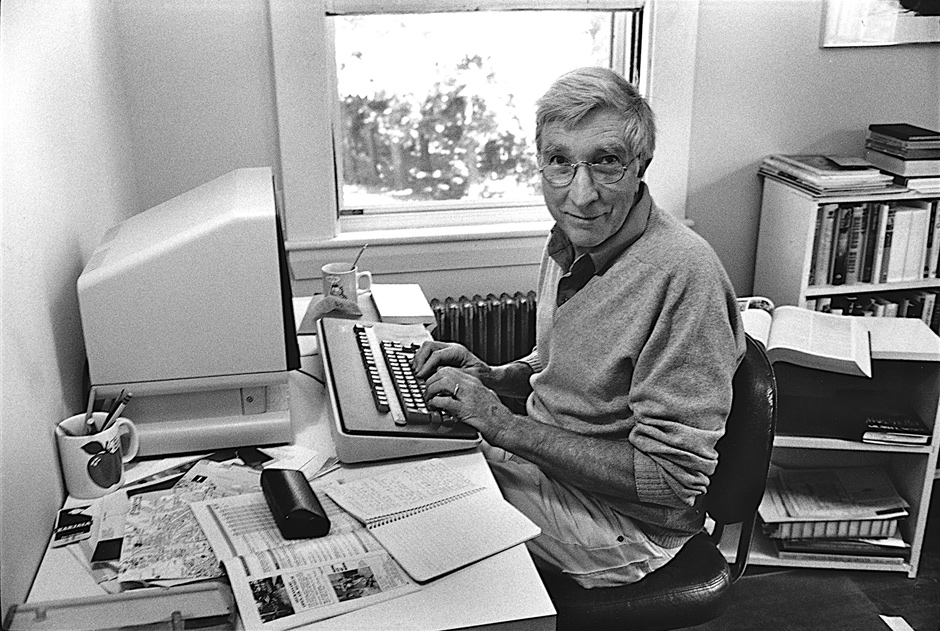
We're not slackers in my department, the numbers show that we more than pull our weight for the university. The distinguished philosopher John J. McDermott called us one of the best small departments of philosophy in the nation.

The president has not explained how our elimination (or "merger") will contribute materially and significantly to redressing the university's present budget shortfall.

So: how do we generate more philosophy majors? Suggestions welcome.

Saturday, March 14, 2009

SAAP

College Station, Texas. The Society for the Advancement of American Philosophy yields an unfortunate acronym, but as academic organizations go it's one of the best. It's a club I'm proud to belong to, even if it does accept someone like me as a member (that's a nod to Groucho and Woody, if you don't know the line). I started attending SAAP's annual March meeting when it was still just a few years old, in the '80s. This year's gathering is the 36th, and it's being held on the home turf of the colorful and distinguished American philosopher John J. McDermott, who - with my mentor John Lachs - was present at SAAP's creation. McDermott still sounds like a New Yorker, though he's been an institution at Texas A&M for decades.

It was McDermott's critical anthologies of the writings of William James and John Dewey that really drew me into the world of classical American philosophy, and thus into the sphere of John Lachs.

This year's conference has been memorable. I've particularly enjoyed sessions devoted to the Jamesian concept of "healthy-mindedness" - a tendency to seek the good in all things, and sometimes to see it where it ain't. James himself criticized un-self-critical healthy mindedness, but was willing to concede its usefulness - in measured doses - for life in general, and for some lives especially. Happiness and how to get it is one of philosophy's perennial preoccupations, and has lately been a cottage industry with good books on the subject from the likes of Jennifer Michael Hecht, Jonathan Haidt and many others. Classical American philosophy has always had its eye on this ball.

Norris Frederick, a philosopher from Charlotte, NC, presented a particularly illuminating talk on how James' approach to teaching informed his philosophy generally. In Talks to Teachers on Psychology, and to Students on Some of Life's Ideals, published over a century ago but still fresh and relevant, James observed:


Spinoza long ago wrote in his Ethics that anything that a man can avoid under the notion that it is bad he may also avoid under the notion that something else is good. He who habitually acts sub specie mali, under the negative notion, the notion of the bad, is called a slave by Spinoza. To him who acts habitually under the notion of good he gives the name of freeman. See to it now, I beg you, that you make freemen of your pupils by habituating them to act, whenever possible, under the notion of a good.

Healthy advice!

Another fine session featured James Pawelski, one of the clearest voices articulating Positive Psychology.

Mitchell Aboulafia discussed Barack Obama as Pragmatist-in-Chief.

And - most unsettling for some - Andrew Light of the Center for American Progress urged us to send our best students not to grad school and careers in academe, but into the world to save it. I'm very much in sympathy with this advice, even if it strikes some of my colleagues as a form of professional suicide. But remember Al Gore's scale: the whole planet on one side, some bars of gold on the other? It's time to save the planet.

The conference continues through tomorrow. My take-away: seek happiness, and encourage the best and brightest young minds to do that too... and oh, by the way, encourage the brightest of the bright to reclaim the mantle of "public intellectual" that has fallen dusty since Dewey's day, and try to save the world.

I'll do what I can.

KurzweilAI.net Accelerating Intelligence News