Some optimists think we live in the best of all possible worlds. Some pessimists fear they may be right. Subjectivists wallow in their interior dramas. The sensible alternative? Meliorism, "a better promise as to this world's outcome"...
Showing posts with label pessimism. Show all posts
Showing posts with label pessimism. Show all posts
Saturday, September 11, 2010


Thursday, April 8, 2010
Sail On
Neither an optimist nor a pessimist be, said William James. Meliorism is the way. Sail on, but beware. "Shipwreck in detail, or even on the whole, is among the open possibilities of life." But the delight of smooth sailing is worth a considerable risk.
Saturday, April 14, 2007
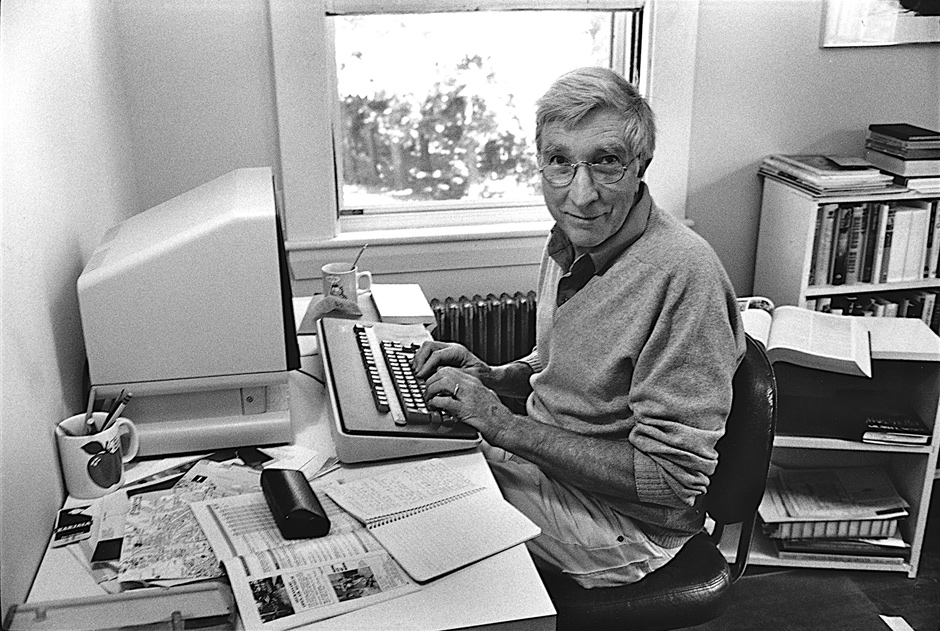
Vonnegut
"With his curly hair askew, deep pouches under his eyes and rumpled clothes, he often looked like an out-of-work philosophy professor..." (New York Times, 4.12.07)
Just as I prefer literary existentialism to the philosophical kind, the passing this week of Kurt Vonnegut reminds me that my disdain for philosophic pessimism does not extend to the sensibility behind "Slaughterhouse Five," "Breakfasts of Champions," "Cat's Cradle," et al. Philosophically I could never endorse Vonnegut's disgusted remark that "evolution can go to hell" if we're its product; but I know what he was saying, and it makes me smile. So does his next observation in A Man Without a Country, which leavens contempt for Mark Twain's "damned human race" with the acknowledgement that on evolution's time-scale we did just get here. (See Carl Sagan's "cosmic calendar".) We can cut ourselves a little slack, and a little hope.
Verlyn Klinkenborg: "The time to read Vonnegut is just when you begin to suspect that the world is not what it appears to be... No one nourishes the skepticism of the young like Vonnegut. In his world, decency is likelier to be rooted in skepticism than it is in the ardor of faith." In mine too.
Just as I prefer literary existentialism to the philosophical kind, the passing this week of Kurt Vonnegut reminds me that my disdain for philosophic pessimism does not extend to the sensibility behind "Slaughterhouse Five," "Breakfasts of Champions," "Cat's Cradle," et al. Philosophically I could never endorse Vonnegut's disgusted remark that "evolution can go to hell" if we're its product; but I know what he was saying, and it makes me smile. So does his next observation in A Man Without a Country, which leavens contempt for Mark Twain's "damned human race" with the acknowledgement that on evolution's time-scale we did just get here. (See Carl Sagan's "cosmic calendar".) We can cut ourselves a little slack, and a little hope.
Verlyn Klinkenborg: "The time to read Vonnegut is just when you begin to suspect that the world is not what it appears to be... No one nourishes the skepticism of the young like Vonnegut. In his world, decency is likelier to be rooted in skepticism than it is in the ardor of faith." In mine too.
Thursday, March 1, 2007
Stewart Brand's new shade of green
Stewart Brand, the Whole Earth Catalog publisher (and instigator of Earth's first full-frontal photo portrait), online pioneer, former Merry Prankster, and free-thinking '60s icon, wants to know "where are the green biotech hackers?" He says we should -- and predicts that environmentalists soon will -- embrace nuclear power, genetic engineering, and biotech. He says population is not going to be a problem, nor will urban sprawl. ("An Early Environmentalist, Embracing New 'Heresies'," NYTimes, 2.27.07)
Is he nuts? I don't know, but after re-reading Bill McKibben's classic End of Nature in our environmental ethics class I'm struck by this Brand observation:
"My trend has been toward more rational and less romantic as the decades go by. I keep seeing the harm done by religious romanticism, the terrible conservatism of romanticism, the ingrained pessimism... It builds in a certain immunity to the scientific frame of mind."
I have a lot of respect for McKibben, but I can't warm to his Deep Ecology version of romanticism according to which nature's meaning is her independence of all things human. When he urges that we remain God's creatures rather than aspiring to godhood ourselves, I wonder if there isn't a saner intermediate position: we don't have to be gods, to be responsible global citizens and effective caretakers of the planet (for a change). We are the part of nature that can -- but too rarely does -- think about how to clean up after itself. McKibben makes clear, in this book, in Enough, and probably in his forthcoming Deep Economy -- that he thinks we must rein ourselves in, stop growing, stop re-engineering the planet and ourselves, declare "halt!"
I'm with Stewart Brand on this: "you have to keep trying new things," like biotech, and sometimes you have to rehabilitate old ones -- maybe even nukes.
Is he nuts? I don't know, but after re-reading Bill McKibben's classic End of Nature in our environmental ethics class I'm struck by this Brand observation:
"My trend has been toward more rational and less romantic as the decades go by. I keep seeing the harm done by religious romanticism, the terrible conservatism of romanticism, the ingrained pessimism... It builds in a certain immunity to the scientific frame of mind."
I have a lot of respect for McKibben, but I can't warm to his Deep Ecology version of romanticism according to which nature's meaning is her independence of all things human. When he urges that we remain God's creatures rather than aspiring to godhood ourselves, I wonder if there isn't a saner intermediate position: we don't have to be gods, to be responsible global citizens and effective caretakers of the planet (for a change). We are the part of nature that can -- but too rarely does -- think about how to clean up after itself. McKibben makes clear, in this book, in Enough, and probably in his forthcoming Deep Economy -- that he thinks we must rein ourselves in, stop growing, stop re-engineering the planet and ourselves, declare "halt!"
I'm with Stewart Brand on this: "you have to keep trying new things," like biotech, and sometimes you have to rehabilitate old ones -- maybe even nukes.
Subscribe to:
Posts (Atom)




 Charles Darwin (

 Posts
Posts