Showing posts with label pluralism. Show all posts
Wednesday, March 16, 2011
Live long and prosper
Really enjoyed Kevin's report on the "Aryan" people of Northern India, but remain wary of what appears to be their insular, xenophobic attitude towards "outsiders."
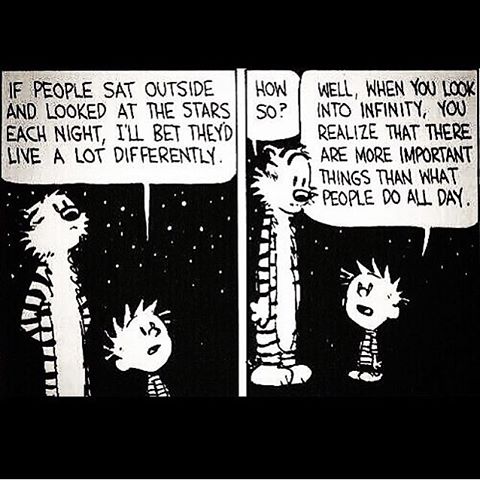
The point of my post this morning, and remarks in class, was to endorse the Cajete/Sagan convergence: "we are all related" means we're a single species, sharing the starstuff that composes all our molecules, and at last aware that our cultural differences are cosmically insignificant.
But who can blame these gentle people, whose way of life so beautifully ties them to their place and their tradition, for resisting "contamination" from the auslanders?
On the other hand: one person's contamination is another's growth opportunity. IDIC, you know? "Infinite diversity from infinite combinations." We're going to have to be pluralists, to live long-term on this rock.
The point of my post this morning, and remarks in class, was to endorse the Cajete/Sagan convergence: "we are all related" means we're a single species, sharing the starstuff that composes all our molecules, and at last aware that our cultural differences are cosmically insignificant.
But who can blame these gentle people, whose way of life so beautifully ties them to their place and their tradition, for resisting "contamination" from the auslanders?
On the other hand: one person's contamination is another's growth opportunity. IDIC, you know? "Infinite diversity from infinite combinations." We're going to have to be pluralists, to live long-term on this rock.
Saturday, February 26, 2011
polysyllabic humanity
What I think Wade Davis is really saying about cultural diversity:
Each, from his peculiar angle of observation, takes in a certain sphere of fact and trouble, which each must deal with in a unique manner... Each attitude being a syllable in human nature's total message, it takes the whole of us to spell the meaning out completely.
--William James, The Varieties of Religious Experience
Wednesday, June 30, 2010
Sunday, January 10, 2010
"Teflon spirituality"
My friend and colleague Rami Shapiro, the Rabbi, is walking the pluralistic walk many of us typically only talk. "Today I am a Hindu," he proclaims.
I'm a different variety of pluralist myself, claiming no firm anchorage in any of the historically dominant theological or spiritual traditions but happy to take truth wherever it can be found and put to work. And I'm also eager to find the spiritual core of atheism, humanism, naturalism, and whatever other names or labels people march under, though a bit dubious as to the "truth is one" thesis. That is, I don't think it's one yet, but I agree that unity-in-plurality is a worthy aspiration.
Rami: The Rig Veda’s teaching that “Truth is one, different people call it by different names,” frees me from both abandoning names and having allegiance to them. But being a Jew is all about names, especially The Name, and taking that Name very seriously. Yet I just can’t do so. I love languages, I love names, but I never mistake the menu for meal, the name for that toward which it points, and it is the meal I desire.
Judaism is my primary menu. It is the system of names I go to first and most often. But primary does not mean exclusive, and I find value in many names and many systems. And while I do love to explore the differences and incompatibilities between systems in an academic setting, in my personal life they all point me to the same reality, the nameless “—“ that is both the One and the Many.
So today I become a Hindu, but this label adheres no more tightly than any other. In the end I practice a Teflon spirituality allowing me to mix lots of ingredients without worrying that any will stick.
Me: That's one small step for a man (of whatever wisdom tradition), one exemplary leap for cosmopolitanism. Good going, Rami!
I'm a different variety of pluralist myself, claiming no firm anchorage in any of the historically dominant theological or spiritual traditions but happy to take truth wherever it can be found and put to work. And I'm also eager to find the spiritual core of atheism, humanism, naturalism, and whatever other names or labels people march under, though a bit dubious as to the "truth is one" thesis. That is, I don't think it's one yet, but I agree that unity-in-plurality is a worthy aspiration.
Rami: The Rig Veda’s teaching that “Truth is one, different people call it by different names,” frees me from both abandoning names and having allegiance to them. But being a Jew is all about names, especially The Name, and taking that Name very seriously. Yet I just can’t do so. I love languages, I love names, but I never mistake the menu for meal, the name for that toward which it points, and it is the meal I desire.
Judaism is my primary menu. It is the system of names I go to first and most often. But primary does not mean exclusive, and I find value in many names and many systems. And while I do love to explore the differences and incompatibilities between systems in an academic setting, in my personal life they all point me to the same reality, the nameless “—“ that is both the One and the Many.
So today I become a Hindu, but this label adheres no more tightly than any other. In the end I practice a Teflon spirituality allowing me to mix lots of ingredients without worrying that any will stick.
Me: That's one small step for a man (of whatever wisdom tradition), one exemplary leap for cosmopolitanism. Good going, Rami!
Thursday, July 16, 2009
Sagan's pragmatic pluralism
Sagan and James: both were humanists, contending that we (each and all, as individuals and as a species) have the opportunity and the capacity to make a constructive difference in the world.
James's variety of humanism was also inseparable from his democratic pluralism: "No one of us ought to issue vetoes to the others, nor should we bandy words of abuse. We ought, on the contrary, delicately, and profoundly to respect one another's mental freedom... then only shall we live and let live, in speculative as well as in practical things." Will to Believe
This is a coupling, humanism + pluralism, that I think Sagan shared. He did not share the conventional religious impulse, but neither did he treat it with scorn. The Dawkins-Hitchens "take no prisoners" style may be more entertaining, but it's definitely not more constructive.
Tuesday, July 7, 2009
Mountain philosophy

While Carolina is still on my mind, I note that William James also visited the area we've just returned from. In 1891 he climbed Mount Mitchell and called it "the most beautiful forest walk (only five hours) I ever made." Robert Richardson notes that he also climbed Roan Mountain and Grandfather Mountain, and on the same trip encountered the mountaineers who inspired his own favorite essay "On a Certain Blindness in Human Beings." The moral of that story is that others see the world differently than we do, and it's ok that they do.
That's pluralism, by the way, closely related to cosmopolitanism. More on the precise nature of their relation as soon as I figure out how to say it. Or point to it.
Subscribe to:
Posts (Atom)