I like Niall Shanks's abrupt clarity about the regard philosophers are given by scientists ("most scientists in my experience— exceptions duly noted—couldn't give a hoot for philosophy anyway") and why scientific (as distinct from philosophical) naturalism is a matter less of ideology than of experience and method. I'd really like to read his next book. But someone else is going to have to write it.
Showing posts with label naturalism. Show all posts
Showing posts with label naturalism. Show all posts
Wednesday, July 20, 2011


Wednesday, February 9, 2011
part of nature
From Particles to People:
The Laws of Nature and the Meaning of Life
We've been discussing the native/indigenous perspective on naturalism, in NW. What do you think, class, is this relevant?
HUMAN BEINGS DO NOT STAND OUTSIDE NATURE; we are a part of it. Ultimately we are made of particles, evolving and interacting according to the laws of physics. And we know what those laws are — the progress of modern science has reached a point where the laws underlying everyday life are completely understood. This understanding lets us draw strong conclusions about the milieu in which we live. There is no telekinesis, astrology, or life after death. What does this mean for our understanding of consciousness, free will, and the meaning of life? Taking the laws of nature seriously opens a vista of possibility, freeing us from outmoded ideas about what it means to be human. -Sean Carroll (from a recent lecture at Cal Tech)Wouldn't the next logical step, if Carroll's right, be to drop all the "Great Spirit" talk?
Wednesday, July 15, 2009
at home in the universe
Can naturalists and humanists be "spiritual," not religious? I've already enlisted Dan Dennett and Richard Dawkins as yea-sayers, and Carl Sagan. Varieties of Scientific Experience, based on his 1985 Gifford Lectures ("The Search for Who We Are"), deliberately mirrors William James's famous Gifford-based Varieties.
Sagan admired James. Both were passionate about the human quest to be at home in the universe, on our pale blue dot, "the only home we've ever known."
He was a very good advocate for NASA, for science and rationality, and for the evolutionary worldview. We do speak for Earth, we have walked far.
"Two billion years ago our ancestors were microbes; a half-billion years ago, fish; a hundred million years ago, something like mice; ten million years ago, arboreal apes; and a million years ago, proto-humans puzzling out the taming of fire. Our evolutionary lineage is marked by mastery of change. In our time, the pace is quickening."
A quickening evolutionary pace is not flatly incompatible with NASA's 40-year detour of distraction, but isn't it really time to refocus on our next "final frontier"?
Sunday, July 12, 2009
Dawkins and Dennett on Darwin and spirituality
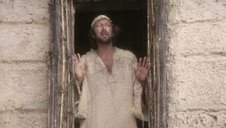
"Can we be spiritual but not religious?" Jesus and Mo say no, I say yes... and I have strong ("bright") allies in Richard Dawkins and Dan Dennett.
If by "spiritual" you mean something like, "outside of space and time, and continuous with the same conscious memories and experiences forever," they agree: No, we can't.
But, if by "spiritual" you mean something more like "alive to our actual place in an evolving cosmos, unblinking in the face of personal mortality but fully open to the possibility of some naturalized sort of transcendence or other," they agree emphatically: Yes, we can.
(But be forewarned: the video techs intrude themselves regrettably into this uncut post, and really disrupt the flow of a very engaging conversation, about ten minutes before the end; but stick with it, or "ff" thru it... the end is well worth suffering the annoyance. Dawkins' reading from his Unweaving the Rainbow definitely belongs in an anthology of humanist "hymns" that will certainly include Carl Sagan, John Dewey, Bertrand Russell, and all my other favorite philosophers. But, somebody please slap those techs for me!)
Oh, by the way: Dan Dennett, like Jackie Robinson and William James and many others on whose shoulders we humanists proudly stand, is another pragmatic meliorist in the rich American tradition: there's plenty of goodness is the world, but it needs more. Let's make some.
Subscribe to:
Posts (Atom)





 Charles Darwin (


 Posts
Posts