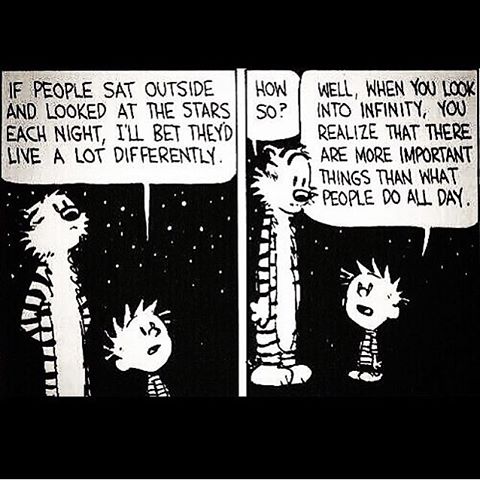
And that's why we need more light.
Showing posts with label future. Show all posts
Showing posts with label future. Show all posts
Thursday, June 7, 2012
"Not one will care at last"
The future both attracted and repelled Ray Bradbury, leaving him filled with apprehension and hope.


Friday, August 12, 2011
The Poetry And Philosophy Of Troubled Times | On Point with Tom Ashbrook
You don't often hear a poet and a philosopher on the radio. And at the same time? A first.
Billy Collins can make even a bleak future (past, present) sound inviting. How does he do that?
THE FUTURE
When I finally arrive there—
and it will take many days and nights—
I would like to believe others will be waiting
and might even want to know how it was.
So I will reminisce about a particular sky
or a woman in a white bathrobe
or the time I visited a narrow strait
where a famous naval battle had taken place.
Then I will spread out on a table
a large map of my world
and explain to the people of the future
in their pale garments what it was like—
how mountains rose between the valleys
and this was called geography,
how boats loaded with cargo plied the rivers
and this was known as commerce,
how the people from this pink area
crossed over into this light-green area
and set fires and killed whoever they found
and this was called history—
and they will listen, mild-eyed and silent,
as more of them arrive to join the circle
like ripples moving toward,
not away from, a stone tossed into a pond
New Yorker
Wednesday, June 29, 2011
"We always live at the time we live..."

...and not at some other time, and only by extracting at each present time the full meaning of each present experience are we prepared for doing the same thing in the future. This is the only preparation which in the long run amounts to anything. John Dewey, Experience and Education
Did Woody Allen read Dewey in preparation for "Midnight in Paris"?
Friday, June 17, 2011
Bertrand Russell speaks to the future
Construction of the "clock of the long now" has commenced, time to think seriously about what we mean for it to say to remote posterity. Bertrand Russell gave this question some thought:
Wednesday, December 15, 2010
tables turned
We were talking about the future of music the other day with Kevin, then Harrison
 asked if I had a turntable. Therein lies one more brief cautionary tale about the future in general.
My old console stereo, with built-in LP "changer" (called that, I think, because you could pile a stack on the spindle and another record would drop onto the platform in turn as the needle withdrew from each terminal circuit) died while I was still in High School in Missouri in the '70s.
I made do for a time, it was the 8-track era and that's what I listened to in the car. I loved the chunka-chunka sound of the track switching every three songs. When I think of it I mostly imagine "Magical Mystery Tour" playing as I rolled down I-70 to or from my first college semester at UMSL (U of Mo - St. Louis), in the '72 Dart.

Eventually I bought a nice cheap Technics turntable, which carried me to grad school in Tennessee. I didn't buy many new records; cassettes and the Sony Walkman were big now. And then compact discs.
And then, at some point-- I'm hazy on (or traumatized by) the details, maybe it was in the fog of preliminary exams-- I became convinced that I no more needed that turntable and those LPs and 45s and tapes than I needed an Edsel.
So I gave 'em away.
Dumb dumb dumb.
Now my music is on a large, neglected stack of CDs, on an iPod, and in the clouds of Sirius and Pandora. I miss my records!
The moral, of course: don't give away your rich, textured (ok, scratchy and hissy) and memory-laden past, in the present, for the unsecured promise of perfection in a shiny but hypothetical future. And don't assume that new and different is always necessarily better.
But: keep aiming for the stars anyway.
Postscript. Thank you, Harrison & class, for this wonderful parting gift. It was pressed by Third Man Records in Nashville, whose leader says "people are paying a couple hundred bucks each" on Ebay for this very rare item. Wow. I'm now officially shopping for my next turntable.


That's the great thing about the future: you don't know what you're gonna get!
 asked if I had a turntable. Therein lies one more brief cautionary tale about the future in general.
My old console stereo, with built-in LP "changer" (called that, I think, because you could pile a stack on the spindle and another record would drop onto the platform in turn as the needle withdrew from each terminal circuit) died while I was still in High School in Missouri in the '70s.
I made do for a time, it was the 8-track era and that's what I listened to in the car. I loved the
 chunka-chunka sound of the track switching every three songs. When I think of it I mostly imagine "Magical Mystery Tour" playing as I rolled down I-70 to or from my first college semester at UMSL (U of Mo - St. Louis), in the '72 Dart.
Eventually I bought a nice cheap Technics turntable, which carried me to grad school in Tennessee. I didn't buy many new records; cassettes and the Sony Walkman were big now. And then compact discs.
And then, at some point-- I'm hazy on (or traumatized by) the details, maybe it was in the fog of preliminary exams-- I became convinced that I no more needed that turntable and those LPs and 45s and tapes than I needed an Edsel.
So I gave 'em away.
Dumb dumb dumb.
Now my music is on a large, neglected stack of CDs, on an iPod, and in the clouds of Sirius and Pandora. I miss my records!
The moral, of course: don't give away your rich, textured (ok, scratchy and hissy) and memory-laden past, in the present, for the unsecured promise of perfection in a shiny but hypothetical future. And don't assume that new and different is always necessarily better.
But: keep aiming for the stars anyway.
Postscript. Thank you, Harrison & class, for this wonderful parting gift. It was pressed by Third Man Records in Nashville, whose leader says "people are paying a couple hundred bucks each" on Ebay for this very rare item. Wow. I'm now officially shopping for my next turntable.


That's the great thing about the future: you don't know what you're gonna get!
Tuesday, December 14, 2010
"program" or else
Parents who believed their kids would intuitively multitask their way to professional success are now concerned those same kids are losing the ability to focus on any one thing...
Faced with a networked future that seems to favor the distracted over the focused, the automatic over the considered, and the contrary over the compassionate , it's time to press the pause button and ask what all this means to the future of our work, our lives, and even our species... Douglas Rushkoff
Monday, December 6, 2010
generous wisdom
Maybe the smartest line in Generosity, so far:
...tomorrow will be there, as soon as you need it.But also good is: "The secret of happiness is meaningful work." Or is it simply to fall into the orbit of someone who's already happy, and bask in their glow? Isn't that resignation?
Tuesday, November 16, 2010
"Bus, do your stuff"
Jaron Lanier seems to imagine the future of pedagogy as a ride on the Magic School Bus. [wiki] “In the future, I fully expect children to turn into molecules and triangles in order to learn about them…” Cool, take me into the ballgame. This was always my favorite episode, of course:
Monday, November 15, 2010
gadget quiz 5
1. (T/F) Lanier thinks of nature as a (very special) person.
2. (T/F) Lanier concedes that the new digital humanism he defends cannot rival The Singularity's "hope of an afterlife" achieved through technology.
3. What is neoteny, and what is it good for? What do children want, and where do they get it (besides parents and peers)?
4. What are Lanier's predictions for the future of software and of medical progress?
5. What's the most obvious aspect of digital culture? What's good and bad about childhood?
6. (T/F) Lanier enjoys verbal accounts of non-verbal experience.
7. What's Lanier's prediction for the future of education? What childhood-less species taunts us with clues about potential human futures?
8. Why is Lanier so excited about the possibility of "postsymbolic communication"? What are its implications for Platonic realism and metaphysics in general, and for our future?
2. (T/F) Lanier concedes that the new digital humanism he defends cannot rival The Singularity's "hope of an afterlife" achieved through technology.
3. What is neoteny, and what is it good for? What do children want, and where do they get it (besides parents and peers)?
4. What are Lanier's predictions for the future of software and of medical progress?
5. What's the most obvious aspect of digital culture? What's good and bad about childhood?
6. (T/F) Lanier enjoys verbal accounts of non-verbal experience.
7. What's Lanier's prediction for the future of education? What childhood-less species taunts us with clues about potential human futures?
8. Why is Lanier so excited about the possibility of "postsymbolic communication"? What are its implications for Platonic realism and metaphysics in general, and for our future?
Wednesday, November 10, 2010
guys & dolls
Wow. What strange synchronicity had Kendal reporting on "Love Dolls" and sex robots in FoL on the same day I had posted this comment:
Is this where we're headed? From virtual "friends" to inanimate lovers? Are these pathetic guys objectifying women, feminizing mannequins, or just de-humanizing themselves? Are they the front edge of a trend, related to what Kendal described as the decline of real face-to-face intimacy as evidenced by youngsters who prefer to exchange text messages to spoken words, even when they are side-by-side? Or, let us hope, are they aberrations who will scare the rest of us back into line?
For the moment, I don't know what else to say about this. It's stunning and disturbing, and I'm still half-expecting it to turn out to have been a hoax. "All the lonely people, where do they all come from?"
...a master storyteller like Richard Powers can make a Turing scenario very lively indeed. Read Galatea 2.2, a hugely clever updating of the Pygmalion (“My Fair Lady”) story, if you doubt it. (Dennett is a fan.) Modern sculptors beware: even if it walks and talks like a lady it may still be hardware.Or a soft facsimile.
Is this where we're headed? From virtual "friends" to inanimate lovers? Are these pathetic guys objectifying women, feminizing mannequins, or just de-humanizing themselves? Are they the front edge of a trend, related to what Kendal described as the decline of real face-to-face intimacy as evidenced by youngsters who prefer to exchange text messages to spoken words, even when they are side-by-side? Or, let us hope, are they aberrations who will scare the rest of us back into line?
For the moment, I don't know what else to say about this. It's stunning and disturbing, and I'm still half-expecting it to turn out to have been a hoax. "All the lonely people, where do they all come from?"
Wednesday, November 3, 2010
lumberjacks
Really enjoyed Kayla's report on transcending gender in FoL today, and the "spacecollective" video that so nicely anticipated Carl Sagan Day this weekend:
Here's another:
How we got from male-female yin and yang to outer space to lumberjacks, I'm not sure. But here you go, Kevin:
Here's another:
How we got from male-female yin and yang to outer space to lumberjacks, I'm not sure. But here you go, Kevin:
Thursday, October 28, 2010
Future Minds
Matthew's terrific TED-worthy report yesterday on Slavoj Zizek* and altruism, featuring the marvelous RSA hyper-animation format, has inspired me to share another (albeit less animated) Royal Society talk:
Richard Watson examines how screen culture is changing the way we think, and calls for analog-digital balance. "The medium still influences the message." Take a walk, switch off after 6:30, reclaim the quality time you've been missing. Only disconnect, now and again.
*
Richard Watson examines how screen culture is changing the way we think, and calls for analog-digital balance. "The medium still influences the message." Take a walk, switch off after 6:30, reclaim the quality time you've been missing. Only disconnect, now and again.
*
Monday, September 27, 2010
immediate future
To all who were too polite to point out that I went over time in FoL class today: sorry. I owe you. Maybe you'll get it back after the Wednesday exam. Or on the Long Now Clock, in the long term.(I wouldn't hold my breath.)
Guess I haven't acquired Chris Anderson's inordinate fear of clocks yet. But wasn't that a nice TED Talk he gave about the new crowd-collaborative possibilities of online video communication? Oral traditions aren't dead at all, suddenly.
For those who weren't there: you owe me.
For everybody: the syllabus is more ambitious than I am, right now. Just read Danny Hillis's "A Forebrain for the World Mind" and whatever else from the first 40 pages of This Will Change Everything you'd like, for next time. Then we'll do the exam.
Guess I haven't acquired Chris Anderson's inordinate fear of clocks yet. But wasn't that a nice TED Talk he gave about the new crowd-collaborative possibilities of online video communication? Oral traditions aren't dead at all, suddenly.
For those who weren't there: you owe me.
For everybody: the syllabus is more ambitious than I am, right now. Just read Danny Hillis's "A Forebrain for the World Mind" and whatever else from the first 40 pages of This Will Change Everything you'd like, for next time. Then we'll do the exam.
Monday, September 13, 2010
future quiz 3
1. Bill Joy dates his unease about the future to the day he met __________ and then read the dystopian vision of ________________.
2. (T/F) Roboticist Hans Moravec predicts that humans will eventually be displaced by machines.
3. "I'm as fond of my body as anyone, but if I can be 200 with a body of silicon, I'll take it," said ____________.
4. Joy's biggest worry is that uncontrolled _________ in robotics, genetics, and nanotechnology may lead to undetectably-gradual changes eventually inhospitable to human life.
5. (T/F) Joy's childhood vision was of benevolent, ethical robots-- guided by something like Asimov's Laws and Roddenberry's Prime Directive-- directing and dominating the human future.
6. (T/F) Joy admits he is something of a Luddite.
7. George Dyson has written that, in "the game of life and evolution," he sides with nature but nature sides with _________.
8. (T/F) Cloning and other forms of genetic re-engineering pose no realistic threat (says Joy) to democracy.
9. The possible proliferation of synthetic plants and bacteria overtaking natural organisms, the _______ problem, could allegedly "reduce the biosphere to dust in a matter of days."
10. What's Joy's point about Nietzsche? Thoreau? The Dalai Lama? Woody Allen?
2. (T/F) Roboticist Hans Moravec predicts that humans will eventually be displaced by machines.
3. "I'm as fond of my body as anyone, but if I can be 200 with a body of silicon, I'll take it," said ____________.
4. Joy's biggest worry is that uncontrolled _________ in robotics, genetics, and nanotechnology may lead to undetectably-gradual changes eventually inhospitable to human life.
5. (T/F) Joy's childhood vision was of benevolent, ethical robots-- guided by something like Asimov's Laws and Roddenberry's Prime Directive-- directing and dominating the human future.
6. (T/F) Joy admits he is something of a Luddite.
7. George Dyson has written that, in "the game of life and evolution," he sides with nature but nature sides with _________.
8. (T/F) Cloning and other forms of genetic re-engineering pose no realistic threat (says Joy) to democracy.
9. The possible proliferation of synthetic plants and bacteria overtaking natural organisms, the _______ problem, could allegedly "reduce the biosphere to dust in a matter of days."
10. What's Joy's point about Nietzsche? Thoreau? The Dalai Lama? Woody Allen?
Saturday, September 11, 2010
future reading
NOTE to Future of Life students: in addition to Bill Joy's "Why the Future Doesn't Need Us," the syllabus promised some discussion on Monday of transhumanists and gerontologists including Aubrey de Grey. Stay tuned, we'll get to all that a little later.*
Meanwhile, we'll stick to Joy on Monday.
On Wednesday we'll look at some of the founding documents of the Long Now Foundation from Hillis & Eno, et al, then get started with Brand's Clock of the Long Now.
*But if you're dying right now to think about living forever, check out this funny excerpt from Gary Shteyngart's new novel Super Sad True Love Story:
Meanwhile, we'll stick to Joy on Monday.
On Wednesday we'll look at some of the founding documents of the Long Now Foundation from Hillis & Eno, et al, then get started with Brand's Clock of the Long Now.
*But if you're dying right now to think about living forever, check out this funny excerpt from Gary Shteyngart's new novel Super Sad True Love Story:
What would John Dewey say? Well, I'll tell you... on Monday.Today I’ve made a major decision: I am never going to die. Others will die around me. They will be nullified. Nothing of their personality will remain. The light switch will be turned off. Their lives, their entirety, will be marked by glossy marble headstones bearing false summations (“her star shone brightly,” “never to be forgotten,” “he liked jazz”), and then these too will be lost in a coastal flood or get hacked to pieces by some genetically modified future-turkey.Don’t let them tell you life’s a journey. A journey is when you end up somewhere. When I take the number 6 train to see my social worker, that’s a journey. When I beg the pilot of this rickety United-ContinentalDeltamerican plane currently trembling its way across the Atlantic to turn around and head straight back to Rome and into Eunice Park’s fickle arms, that’s a journey.But wait. There’s more, isn’t there? There’s our legacy. We don’t die because our progeny lives on! The ritual passing of the DNA, Mama’s corkscrew curls, his granddaddy’s lower lip, ah buh-lieve thuh chil’ren ah our future. I’m quoting here from “The Greatest Love of All,” by 1980s pop diva Whitney Houston, track nine of her eponymous first LP.Utter nonsense. The children are our future only in the most narrow, transitive sense. They are our future until they too perish. The song’s next line, “Teach them well and let them lead the way,” encourages an adult’s relinquishing of selfhood in favor of future generations. The phrase “I live for my kids,” for example, is tantamount to admitting that one will be dead shortly and that one’s life, for all practical purposes, is already over. “I’m gradually dying for my kids” would be more accurate.
Monday, August 30, 2010
"one thing that makes us unique"
A seminal quotation in my own thinking about the future, from Dan Dennett. We are descended from remote ancestors for whom we were-- are-- the future they worked to secure. We're all links in the same chain. Will someone look back to us, someday, in gratitude?
Wednesday, August 4, 2010
future of life
We tend to get a distorted view of history as a long, boring past during which nothing much happened, and then a very short period of rapidly accelerating change leading up to the present. In reality, however, the Sun isn’t yet even halfway through its life cycle.
Despite that, people who predict things “a million years from now” are considered to be talking about the unimaginably distant future, but a million years is only a few dozen clock ticks of cosmological time. We as humanity are responsible for the future of not just the next few thousand years (the timescale on which civilization has so far existed) but for “spans of time six or more orders of magnitude greater than that.”
Over the truly long term, our posthuman descendants will become — not just second-generation intelligences — but thousand-generation or million-generation intelligences. He quoted Darwin on how no species can pass its likeness into the distant future unaltered; in a billion years of biological evolution, we’ve gone from bugs to humans, and technological evolution is a lot faster than biological. Our distant descendants will be not just strange, but completely alien to us.
During this century, we not only have unprecedented opportunity, but unprecedented responsibility. If the new technologies we build have a high chance of causing civilization-wide catastrophe (and Rees thinks they do) for the first time in history, then we are, all of us, are responsible for actively preventing that from happening, not just trying to predict it or understand it. The key thing here is the commitment to taking action to alter the future instead of just trying to predict it.
Saturday, July 10, 2010
"Does wisdom have a future?"
Stephen Hall poses that question in Wisdom, and (of all places) in the gift shop of the New York Public Library. There, he found
But isn't that better than nothing? People will always return to the refrigerator. Libraries of mere books, alas, are not so galvanizing these days.
a refrigerator magnet for sale that read, "Better to light a candle than to curse the darkness-- Confucius." Is this a way of preserving pearls of wisdom in our contemporary, mass-produced form of amber, or have economies of scale managed to turn the hard-earned coin of aphoristic wisdom into one more kind of widget?Hmmm. We do indeed "embrace bits of wisdom, as long as they are short and compact enough" to fit on a magnet. Or in a tweet.
But isn't that better than nothing? People will always return to the refrigerator. Libraries of mere books, alas, are not so galvanizing these days.
Tuesday, June 29, 2010
cognitive surplus
The up-side of Internet overload: Clay Shirky applauds creative, cooperative, constructive public uses of "dead time" not available to people in the pre-digital age. "Free cultures get what they celebrate," Shirky quotes Dean Kamen. That might be good news, if we can get over the infantile and inexplicable fascination with LOLcats and the like and really celebrate things that make a constructive civic difference. Time only will tell if it's Shirky's or Nick Carr's future, or something else entirely.
What you do with cats on your own time is still, of course, your own business. Up to a point.
What you do with cats on your own time is still, of course, your own business. Up to a point.
Subscribe to:
Posts (Atom)




 Charles Darwin (

 Posts
Posts