Saturday, August 15, 2009

Conscious planning

Dan Dennett once said something pregnant with meaningful implication, and I'm still not sure if it complements or squeezes his view of consciousness as some sort of chimera:

"One thing that does make us unique as a species is that for the last five or ten thousand years we have been the beneficiaries of conscious planning (my emph.) by our parents and their parents and the cultures in which we've resided. Today we are actively concerning ourselves with what the world is going to be like in the future. We have strong beliefs about this. They play a role in what Homo sapiens is going to be like a thousand years from now."

If you're in favor of planning, aren't you tacitly also acknowledging the reality of consciousness as something more (and less) than brain activity? But what? Can we even hope to say?

The quote, by the way, comes from a remarkable filmed roundtable discussion several years ago that included Dennett, the late Stephen Jay Gould, Oliver Sacks, Stephen Toulmin, Freeman Dyson, and Rupert Sheldrake, also published in book form as A Glorious Accident. It's hard to find on disk or online, but the separate Dyson interview has turned up (with German subtitles) on YouTube.

Friday, August 14, 2009

Sweet, Sexy, Cute, Funny...

& inverted. In a brisk TED Talk from earlier this year, Dan Dennett says Darwin's great insight was to turn conventional wisdom about what it means to be sweet, sexy etc. on its head.

In March, Dennett expounded his Darwinian perspective on religion at greater length in London. (You can't break a spell without studying and discussing it in the open.) And in an earlier talk about consciousness, he drew out the implications of questioning authority even with respect to the supposedly intimate awareness of our own minds.

Thursday, August 13, 2009

Scientologists

There was already a "celebrity centre" here on Music Row, now there's another large scientology encampment in the old Fall School building at 8th and Chestnut, near Greer Stadium. A bus-bench ad spotted yesterday in Hillsboro Village encourages all to attend an "Open House" at their convenience. I may just have to drop in before my next Sounds' game, just to get the insiders' account of *Xenu and L. Ron Hubbard.

Hubbard was once quoted as saying that if you want to get rich in America, start a new religion. So he did.

Rolling Stone peeked under the Hubbardites' roof a while back.

celebrity_centre_intl

This is the "centre" in Hollywood... not too far, coincidentally, from the Magic Kingdom.

What I find especially pernicious about the Scientologists, but possibly not qualitatively distinctive about them in comparison with the more conventional and mainstream ideologies, is the way they compromise their members' ability to think for themselves. "Cult" is the mainstream term of denigration, but we're all cultish to some degree or other... or have cultish tendencies we need to guard against. Insular, single-track, defensive, reactionary "thinking" makes fools of us all. These guys, though, really are over the top.

*In Scientology doctrine, Xenu (alsoXemu or the modern day "Emu" or "Elmo") is an alien ruler of the "Galactic Confederacy" who, 75 million years ago, brought billions of aliens to Earth in DC-8-like spacecraft, stacked them aroundvolcanoes and blew them up withhydrogen bombs. Their souls then clustered together and stuck to the bodies of the living, and continue to wreak chaos and havoc today.» — Wikipedia

Wednesday, August 12, 2009

Good work


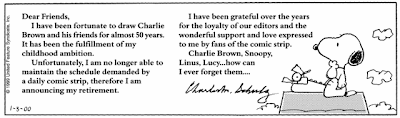
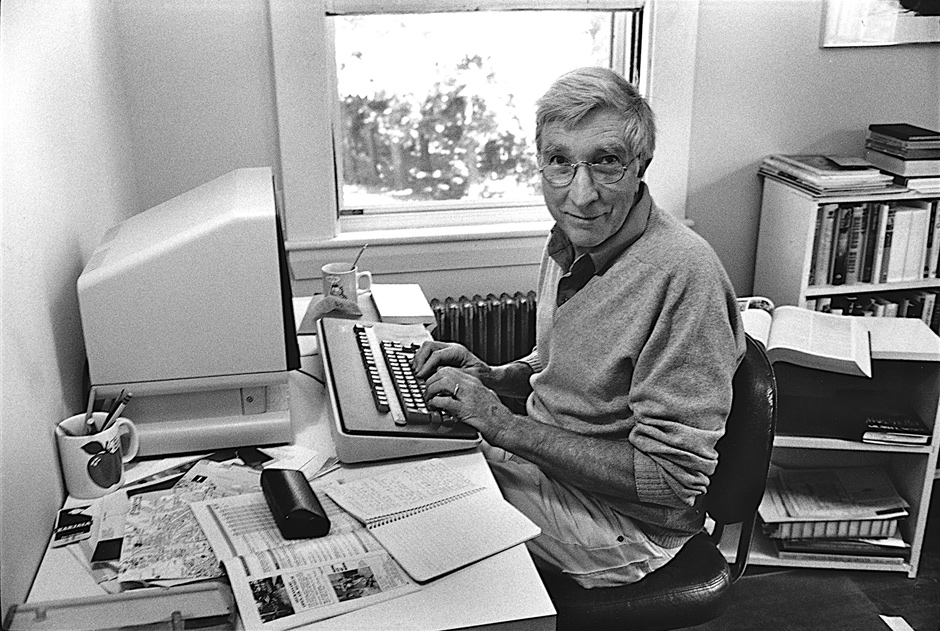
Charles Schulz brought, and continues to bring, happiness to millions. He brought it to himself mostly with his work. "Whenever called upon to discuss his life, he made a point of proclaiming himself a failure in all but his work," observed his biographer. Must've been the modest Minnesotan in him. How remarkable that he died on the eve of publication of his last Peanuts strip, after fifty years. He was a good man.

Tuesday, August 11, 2009

Strange Days


"This Modern World," salon.com

I've been ignoring them too, I don't see a practical alternative. Jon Stewart keeps nailing them, night after night, and they keep not going away.

They are very silly, sometimes dangerously so. But mostly just ridiculously, absurdly silly.

done with the dentist

There's this at least to be said for being dead, Emerson once observed: at least you're done with the dentist.

My second trip to the chair this summer was a lot better than being dead. A lot. But I may not have been paying full attention, and I think they upped my dose of nitrous when I admitted it didn't seem to do much for me last time.

It's the first time I've had a dentist call the house later to check on me.

Not dead yet, Dr. M. But thanks for asking. And thanks for the Larry King stories. I know I seemed a docile (if captive) audience, but I was laughing on the inside.

Monday, August 10, 2009

Graham Chapman

The philosophers' song was ridiculous, and entirely false. Graham Chapman's memorial was sublime, honest, and full of sincere affection.

Becoming who you are

How do we follow the Nietzschean injunction, unleash dormant creativity, and learn to "cook"? That, as actor Stanley Tucci indicates, is what Julie & Julia is really about. There's no recipe. "Julia Child wasn't always Julia Child."

Sunday, August 9, 2009

Philosophy, children, nature

Times notes. The fantasy play of young children is obviously fun for its own sake, but (as noted by Anthony Gottlieb in his review of Alison Gopnik's The Philosophical Baby) it's also instrumental in their growth. So maybe it is sometimes too late to have a happy childhood.

"Playful immersion in freely conjured hypothetical worlds is what teaches us how to make sense of the real one... small children’s grasp of “counterfactual” situations enables them to calculate the probabilities of alternative courses of action.. invisible friends... seem to help youngsters learn how to interpret the actions of others."

I'm pleased to note that Gopnik backs up a point I tried to press upon a Montessori instructor a few years ago who insisted that anything like a moral sense is developmentally absent not only in very young children but in teens as well, as a matter of biological necessity. It's "heartening news for optimists about the human race... that children are naturally empathetic from birth and tend to exhibit altruism (though fitfully) from the age of 1." I've seen it myself.

Gottlieb is less enthusiastic about Gopnik's overall confidence in the philosophical relevance of childhood, and her speculation that its traditional neglect has been due to the patriarchal history of the discipline. "The notion that children's minds have much to tell us about the meaning of life seems rather a fond exaggeration." Maybe, but I'm fond of it too. I'll read the book and report back.

Also in today's Times, Nicholas Kristof has sound advice for us all (and especially for the sedentary young) who suffer from nature deficit disorder. Take a hike, travel light, don't fret about bears. He offers "more backpacking advice on my blog, nytimes.com/ontheground."

Saturday, August 8, 2009

Tolstoy

Russians aren't reputed to be particularly happy people, but one of our leading happiness researchers, Sonja Lyubomirsky, is of Russian heritage. And the author of Anna Karenina famously observed that "Happy families are all alike; every unhappy family is unhappy in its own way." I have no idea if that's true, or what it even means. But I like Tolstoy's approach. In a story he asked three crucial questions:

*What is the best time to do each thing?

*Who are the most important people to work with?

*What is the most important thing to do at all times?

His answers here...

KurzweilAI.net Accelerating Intelligence News