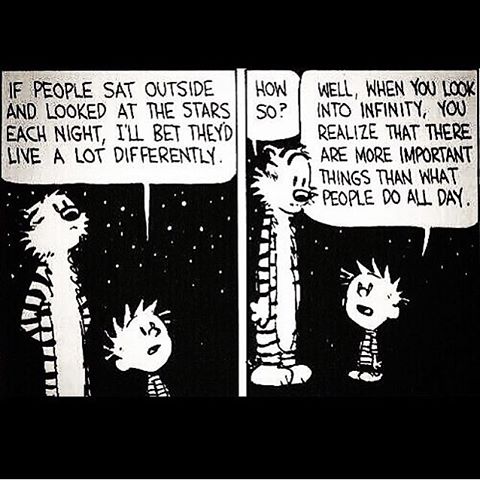
The greatest possible health care reform would be achieved if we'd just finally listen to George Macauley Trevelyan.
Showing posts with label walking. Show all posts
Showing posts with label walking. Show all posts
Friday, June 7, 2013


Friday, May 17, 2013
Best idea ever
Beyond the Darwin's large back yard [at Down House], we saw Sandwalk stretching ahead of us, a well-worn path, shaded by trees, beckoning invitingly... Darwin's own Thinking Place. Thinking Places: Where Great Ideas Were Born

The best idea anyone has ever had happened here. He circled Sandwalk endlessly, walking and thinking. Or sometimes just walking, maybe?
Monday, October 22, 2012
Pulling his own strings
Puppet-Einstein illustrates a version of free will: when you form good habits, your choices habitually coincide with your intentions and you're "free."

For instance: I'm a habitual walker. On Saturday afternoon, typically a time of relative immobility for me, I happened upon this article on the importance of moving. So I did. Could I have done otherwise? Pretty sure I could, but the habits of a lifetime converged with the impulse to get up and go. So I went, and I enjoyed my walk. It felt like a free choice to me.

For instance: I'm a habitual walker. On Saturday afternoon, typically a time of relative immobility for me, I happened upon this article on the importance of moving. So I did. Could I have done otherwise? Pretty sure I could, but the habits of a lifetime converged with the impulse to get up and go. So I went, and I enjoyed my walk. It felt like a free choice to me.
Wednesday, August 22, 2012
Walk and enjoy
Still the most useful information I've ever received at any church, on the grounds of Brook Hollow Baptist in Nashville:


Wednesday, August 1, 2012
Solvitur ambulando
Solvitur ambulando-"It is solved by walking." Diogenes of Sinope, via Kim Stanley Robinson, 2312. Says it all.
Thursday, May 3, 2012
Against Chairs
Against Chairs: "sitting for extended periods during the day dramatically increased participants’ risk of death. The result held even among participants who exercised regularly, and although there’s the usual confusion over causation and correlation, the study falls atop a growing pile of evidence that long times spent seated are a contributing cause of heart disease, obesity, diabetes, depression, and practically innumerable orthopedic injuries. It does not matter if you are young, eat well and live an otherwise active life. Just being seated, in excess, will hurt you."
'via Blog this'
The remedy:
The remedy:
Saturday, April 21, 2012
Walking is better for thinking than thinking
Great news! There is an

Glad I stayed for Lysaker's talk yesterday, though.
And if you're reading this, students: it doesn't apply to you, when I'm the lecturer.

easy-to-achieve, scientifically proven way to make yourself smarter. Go for a walk or a swim. For more than a decade, neuroscientists and physiologists have been gathering evidence of the beneficial relationship between exercise and brainpower. But the newest findings make it clear that this isn’t just a relationship; it is the relationship. Using sophisticated technologies to examine the workings of individual neurons — and the makeup of brain matter itself — scientists in just the past few months have discovered that exercise appears to build a brain that resists physical shrinkage and enhance cognitive flexibility. Exercise, the latest neuroscience suggests, does more to bolster thinking than thinking does. NYT, continuesSo, that urge I almost always feel while sitting in a stuffy lecture room on a nice day (on just about any kind of day, in fact) to get up, walk out, and lay tracks on the other side of the glass? That's healthy, instinctive, and nothing to feel too guilty about.
Glad I stayed for Lysaker's talk yesterday, though.
And if you're reading this, students: it doesn't apply to you, when I'm the lecturer.
Thursday, August 4, 2011
walk and enjoy
Speaking of enjoying life and being happy...

"Keep your health, it's better than all the truths in the firmament." William James

"Keep your health, it's better than all the truths in the firmament." William James
Thursday, July 28, 2011
"Just get up and move"
I forget if I've mentioned this here before (really), but like many in my Boomer demographic I fret a bit about occasional, disquieting lapses of memory. Mostly they're the niggling kind the Times Well blog calls "mundane, creeping memory loss that begins about the time our 30s recede, when car keys and people’s names evaporate." My 30s are definitely receded. This has been a small but persistent issue for, um, for I forget how long.
 And remember to think about Nietzsche's cryptic remark that "in the case of the smallest or of the greatest happiness it is always the same thing that makes happiness happiness: the ability to forget..."
Then again, he forgot a whole lot in his last decade but doesn't seem to have been all that happy.
So, as a daily walker and semi-daily biker, I'm pleased by new research on this topic indicating the leveraged rewards that can come of even the mildest exertion.
“Our results indicate that vigorous exercise isn’t necessary” to protect your mind, Dr. Middleton said. “I think that’s exciting. It might inspire people who would be intimidated about the idea of quote-unquote exercising to just get up and move.”
Just get up and move: a good mantra for us all, if we can remember it. If the years have taught me anything they've taught me this: write it down. Then, get up and move.
 And remember to think about Nietzsche's cryptic remark that "in the case of the smallest or of the greatest happiness it is always the same thing that makes happiness happiness: the ability to forget..."
 Then again, he forgot a whole lot in his last decade but doesn't seem to have been all that happy.
Sunday, May 1, 2011
"It's all gardening"

Nashville, TN
4.30.11
Saturday, February 12, 2011
walk on
A new study compares walking and "less aerobic exercises, including yoga and resistance training"...

After a year, brain scans showed that among the walkers, the hippocampus had increased in volume by about 2 percent on average; in the others, it had declined by about 1.4 percent...
Both groups also improved on a test of spatial memory, but the walkers improved more.The researchers were delighted to learn that the hippocampus might expand with exercise. “And not that much exercise.” People don’t even have to join a gym. They just need shoes.
Told you so. So did Henry
"the moment my legs begin to move, my thoughts begin to flow... An early-morning walk is a blessing for the whole day."
and Kierkegaard
"I know of no thought so burdensome that one cannot walk away from it."

and countless others. Remember?
It's good for body and spirit alike. It's only "boring" (as I actually overheard an otherwise-sensible colleague say recently) if you do it without imagination.
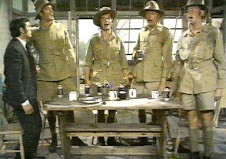
But don't do it like John Cleese.
Tuesday, April 20, 2010
walking and spirituality
Nietzsche said the best thoughts come while walking. That's my single point of unequivocal agreement with him.
Spinoza was another who took it all, but he disagreed with Nietzsche's revaluation program. We're part and parcel of all that is, and our values are too. We should not deny them, much less overturn them. This is where Spinoza diverges from Nietzsche, and of course Spinoza is right. This is acceptance. It has nothing to do with optimism. "Nothing?" Now that's going a bit far. "Acceptance" has at least as much to do with optimism as living with purpose and sanity have to do with it.
 William James was a walker too, and-- as we were saying in class yesterday-- he rejected the cosmic pessimism of Henry Adams. But he also preferred not to call himself an optimist. Wise meliorists "take" some parts and resist others. That's not "seeing the bright side of everything," it's just seeing and bringing brightness where we can.
That's the spirit that can open us up to the world. It's the spirit of walking.
In Turin and elsewhere Nietzsche often wrote in his head while out walking, believing that 'a philosopher [is] a man who constantly experiences, sees, hears, suspects, hopes, dreams extraordinary things; who is struck by his own thoughts as if from without...Nietzsche in TurinAndre Comte-Sponville is drawn to Nietzsche's walking side too, in his Little Book of Atheist Spirituality. Walkers are affirmers and accepters, participants in "the innocence of becoming," lovers of fate and what is. Amor fati, not because the universe and reality are uniformly good but simply because "nothing else exists." Take it or leave it? "Wise men take it." This is Nietzsche's cosmic optimism.
Spinoza was another who took it all, but he disagreed with Nietzsche's revaluation program. We're part and parcel of all that is, and our values are too. We should not deny them, much less overturn them. This is where Spinoza diverges from Nietzsche, and of course Spinoza is right. This is acceptance. It has nothing to do with optimism. "Nothing?" Now that's going a bit far. "Acceptance" has at least as much to do with optimism as living with purpose and sanity have to do with it.

That's the spirit that can open us up to the world. It's the spirit of walking.
Saturday, November 21, 2009
happy rats
Rats are happier when they've been habituated to the "positive stress" of exercise*: a lesson for laggards and misanthropes (and devotees of Schopenhauer and Nietzsche).
New research has undermined the simplistic view of serotonin as the “happy” brain chemical... rats taught to feel helpless and anxious, by being exposed to a laboratory stressor, showed increased serotonin activity in their brains. But rats that had run for several weeks before being stressed showed less serotonin activity and were less anxious and helpless despite the stress.
Anxiety in rodents and people has been linked with excessive oxidative stress, which can lead to cell death, including in the brain. Moderate exercise, though, appears to dampen the effects of oxidative stress... rats that had exercised were relatively nonchalant under stress. They didn’t run for dark corners and hide, like the unexercised rats. They insouciantly explored.
*This goes for moderate walker-rats, too, not just gym rats. The best exploring is pedestrian.
Monday, August 24, 2009
"Go"
Maybe you have to be a walker to get this very short story by Tomas Espedal. I am. I do. It's reminiscent of Emerson's "crossing a bare common" exultation.
...the sunlight strikes a traffic sign and I am struck by an unexpected shaft of happiness. It simply says: You are happy. Here and now. For no reason. In this instant you are happy, unreasoningly, like a gift. There’s no other way to describe it. I have no cause to be happy, hungover and dejected after four days of solid drinking, living on my own in a filthy house on a miserable street, sleeping on a mattress, without furniture, deserted by the woman I thought I’d be able to live with. I’m in the process of destroying myself, a grim and determined effort at self-destruction, drinking and going to pieces, and suddenly I’m happy. Why? Because sunlight strikes a road sign? I have to stop and catch my breath. I feel a warm and jubilant transparency inside me. Thoughts reawaken and lose their dullness, it’s a thoroughly physical experience, my thoughts brighten, and I start walking again, lighter this time, up toward Nygårdshøyden and the city center. Slowly it dawns on me: you’re happy because you’re walking.
Wednesday, July 8, 2009
Drunk on the ground
William James pitied "poor Nietzsche's antipathy," as most of us who were early smitten with Zarathustra eventually do. See Gary Kamiya's "Falling Out With Superman," for instance. Or the alienated teen in "Little Miss Sunshine" who (unlike his hero) eventually reconciles with, and rejoins, the human race. (When Nietzsche Wept is another cinematic tribute that has its moments of insight.)

James and Nietzsche did have in common a mutual affinity for the heights, bracing and invigorating and (ultimately, forJames) terminal. Mountain hikes became James's "main hold on primeval sanity and health of soul." Maybe he was insane to hike so hard in his condition, at his age (60+ with a fluttery heart), but he might have been crazy not to. In 1899 he told his brother Henry, the novelist, that his "ridiculous cardiac weakness" was inconvenient, that his strenuous hikes had probably strained his heart, but that he nonetheless was "glad I had the experience, even at the price!"
Alain de Boton chronicles the price Nietzsche paid, tracing the bleak objective day-to-day mundanities of

his soaring Swiss Mountain philosophy. "Nietzsche spent seven years in Sils-Maria... He would rise at five," work all morning in his small rented room, then hit the peaks. (That's Piz Corvatsch.) In the evening, typically, it was back to the room, a solitary dinner, and an early bed. Sounds stark and easy, and to most of us drearily depressing. But it must have been hard. That's what he liked most about climbing mountains, and writing books: the difficulty and challenge and growth-opportunity ("What doesn't kill me" etc.) of scaling those imposing altitudes. Then, the great payoff at the summit, "a primal delight at being alive to see such beauty."
Again, Nietzsche (the rare tea-totaling German) admired Emerson... who could get drunk sober, simply treading the bare flat ground. (In Nature Emerson famously wrote: "Crossing a bare common, in snow puddles, at twilight, under a clouded sky, without having in my thoughts any occurrence of special good fortune, I have enjoyed a perfect exhilaration.")
Me too. Crossing Hillwood High School's playing fields with my dogs, in dappled morning sunlight, thinking only of getting home and having a good breakfast... It happens all the time.
I love the mountains as much as the next philosopher, but I really think it's more about where you plant your head than your feet.
None of which is to deny that feet, particularly feet in motion, are indispensable too. We have walked far, up and down and all around. Walk on.

Sunday, June 28, 2009
"Phoenix"

"Phoenix"
1995-2009
Faithful friend and walking companion
We pounded thousands of miles together, old girl, in the years since you and "Grace" showed up at our door. You cheated death and earned your name many times. Now you've earned your rest. We'll never forget.
Tuesday, May 12, 2009
Rich and stupid

One of my favorite Nashville walks takes me to the top of a local reservoir called Love Circle, from which vantage it used to be possible to peer at my city and environs in every direction. I used to walk it every day and always enjoyed circling the overlook a couple of times while picking out memory-laden landmarks below - old abodes, old schools, the state capitol building, the Parthenon.
Now I live further out, and get there only occasionally... so I hadn't much attended to the hoopla surrounding country musician John Rich's ugly new manse on the hillside there, until an auto appointment nearby left me with some discretionary time to ramble this morning.
The damn thing dominates the neighborhood, especially when approached from Hillsboro Village to the east. It occludes part of what used to be a lovely view from the summit, and generally highlights the matching monstrosity of its owner's ego. Why do we tolerate this kind of garish abomination in our public spaces, just because some self-important guitar plucker can afford it?

But I'll continue to enjoy that walk, now supplemented with one more reminder that commercial music "success" can be one of the uglier Bitch Goddesses* on our landscape.
*William James to H.G. Wells:
The moral flabbiness born of the exclusive worship of the bitch-goddess SUCCESS. That - with the squalid cash interpretation put on the word 'success' - is our national disease.)
Thursday, January 1, 2009
Happy New Year
Old Nietzsche was right about one thing - the best ideas arise during walks. This year I resolve to keep on walking, and feeding my passion for perambulation. One delightful source of nourishment: Geoff Nicholson's The Lost Art of Walking: The History, Science, Philosophy, and Literature of Pedestrianism (Riverhead Bks 2008).
More on this soon.
Subscribe to:
Posts (Atom)


 Charles Darwin (

 Posts
Posts