Showing posts with label Emerson. Show all posts

Thursday, September 13, 2012

Hail Cicero!

Roman philosophy gets a bad rap, and Cicero is way underrated. Jennifer Hecht, I've noted, rectified that a bit in her Doubt: A History.
Cicero‘s wonderful dialogue with a Skeptic, a Stoic, and an Epicurean, Nature of the Gods, would have been fun to join. “Cotta” says it all: Are you not ashamed as a scientist, as an observer and investigator of nature, to seek your criterion of truth from minds steeped in conventional beliefs? The whole theory is ridiculous… I do not believe these gods of yours exist at all, least of all the uninvolved, uninterested ones like the Epicurean-inspired Disinterested Deist Deity. If this is all that a god is, a being untouched by care or love of human kind, then I wave him good-bye.
Novelists and other artisans of the well-chosen and well-spoken word (like Hecht, a poet and historian as well as a terrific philosopher) have appreciated Cicero more than most of my philosophy colleagues. There's Tom Wolfe's A Man in Full, in which Epictetus gets the star treatment.

I've been listening to Robert Harris's Conspirata on my daily commute up and down I-24 lately. Simon Jones's narration is delightful.

And then there's the Victorian Trollope's compendious Life of Cicero.

The older I get, the longer my reading list grows. Cicero said that was one of the consolations of aging. He was a wise old consul, and an honest Stoic.
After the loss of his daughter Tullia in childbirth, [Cicero] turned to Stoicism to assuage his grief. But ultimately he could not accept its terms: “It is not within our power to forget or gloss over circumstances which we believe to be evil…They tear at us, buffet us, goad us, scorch us, stifle us — and you tell us to forget about them?” 
But my favorite mention of Cicero in all of literature is still from Emerson:
"Meek young men grow up in libraries, believing it their duty to accept the views, which Cicero, which Locke, which Bacon, have given, forgetful that Cicero, Locke, and Bacon were only young men in libraries, when they wrote those books."

Friday, April 20, 2012

Lysaker speaks

Today's Lyceum Lecturer, John Lysaker ("Coming to Terms With the Self", James Union Building 304, 4 pm)-

Thursday, December 23, 2010

writing & thinking


More tips for writers. #6, from Jonathan Safran Foer, is very good. [More good advice]

"I hate quotations. Tell me what you know." But that's poetically-licensed hyperbole: Emerson collected & wrote about them in the little notebooks he quaintly called "Universe." That's how he came to think for himself and know his own mind: writing, walking, talking, thinking... Simple things. Joy. And endurance.

Wednesday, February 24, 2010

truest vision

The Venerable Bede's "truest vision of life" as recast by Wallace Stegner in The Spectator Bird strikes the same Stoic note as Thanatopsis. But Bede himself apparently was less composed, when the time came to wrap his drapery. Simon Critchley says he broke down and wept over the dread departure of the soul from the body and the prospect of God’s judgment. Too bad he lived too early to read Emerson's Divinity School Address, which might have emboldened him a bit.


Friday, September 25, 2009

nice office


Michael Shermer is a kindred spirit, to me and Emerson (not that I've approached their literary fecundity, yet). Just as the Sage of Concord distinguished the residence of his books from the un-roofed places in which he did his best thinking, so Shermer tweets:

My office (I AM working while riding, listening to audio books, writing next book in head):http://www.flickr.com/photo...


Monday, September 14, 2009

wishing caps etc.

Came to class despite strong objections from spouse and daughter ("You look terrible!") and am glad I did. Our discussions of James and Socrates, postponed from Friday, were edifying. And thanks to our volunteer discussion moderators, my voice is still audible.

I was surprised to find how few of us think we'd want to live in James's imaginary "wishing cap" world. (But I'll bet if we asked ourselves how many of us think we could do with a few more fulfilled desires, we'd pretty nearly all line up with WJ... masochists move to the rear, please.)

The contrast between Socrates and Galileo was helpful. The latter gave his accusers what they wanted, a public confession. Only under his breath did he mutter "it (the earth) still moves." Socrates wasn't willing to to be a different person in public than in private, even if it cost him his life.

I love Gabby's brother's unposted tree analogy blog post: "stop worrying about your branches, just grow!"

I confess, I was a bit shocked to discover how few recent High School grads have even heard of William James's younger brother Henry (aka "The Master"); but at least most said they'd encountered Thoreau and Emerson.

And finally, Mike shared with me what may have been the most insightful observation of the day: Socrates chose to die for pedagogical reasons, to spur his fellow Athenians (and eventually you and me) to think about what makes life worth living. With his dying breath he was still teaching, still trying to provoke critical reflection. If that's right, he truly died for philosophy... and for freedom.

And so it's no coincidence that the death of Socrates introduces our next chapter, "The Meaning of Life."

Monday, August 24, 2009

"Go"

Maybe you have to be a walker to get this very short story by Tomas Espedal. I am. I do. It's reminiscent of Emerson's "crossing a bare common" exultation.

...the sunlight strikes a traffic sign and I am struck by an unexpected shaft of happiness. It simply says: You are happy. Here and now. For no reason. In this instant you are happy, unreasoningly, like a gift. There’s no other way to describe it. I have no cause to be happy, hungover and dejected after four days of solid drinking, living on my own in a filthy house on a miserable street, sleeping on a mattress, without furniture, deserted by the woman I thought I’d be able to live with. I’m in the process of destroying myself, a grim and determined effort at self-destruction, drinking and going to pieces, and suddenly I’m happy. Why? Because sunlight strikes a road sign? I have to stop and catch my breath. I feel a warm and jubilant transparency inside me. Thoughts reawaken and lose their dullness, it’s a thoroughly physical experience, my thoughts brighten, and I start walking again, lighter this time, up toward Nygårdshøyden and the city center. Slowly it dawns on me: you’re happy because you’re walking.

Tuesday, August 11, 2009

done with the dentist

There's this at least to be said for being dead, Emerson once observed: at least you're done with the dentist.

My second trip to the chair this summer was a lot better than being dead. A lot. But I may not have been paying full attention, and I think they upped my dose of nitrous when I admitted it didn't seem to do much for me last time.

It's the first time I've had a dentist call the house later to check on me.

Not dead yet, Dr. M. But thanks for asking. And thanks for the Larry King stories. I know I seemed a docile (if captive) audience, but I was laughing on the inside.

Saturday, July 11, 2009

Inspired

Speaking of "faithheads"...

(That term, by the way, popularized by Richard Dawkins, is more derogatory and incendiary than I'm generally comfortable with. But sometimes the company one must keep, here in the buckle of the Bible Belt, just makes it bubble up, benign intentions and tolerant impulses notwithstading. Sorry. But I'm leaving it in.)

A religious zealot and publisher in Murfreesboro, Tennessee named Shelton Smith comes in today for what strikes this free-thinker as a fawning and uncritical feature story in the Nashville Tennessean about his "embrace of old-time religion." That's not terribly unusual around these parts, unfortunately.

Smith, an "Independent Baptist," publishes Sword of the Lord. He is committed to halting "spiritual drift" and spreading the Verbal Inspiration of the Bible, the Deity of Christ, His Blood Atonement, Salvation by Faith, New Testament Soul Winning and the Premillennial Return of Christ; Opposing Modernism, Worldliness and Formalism."

Smith contends that only the 1872 King James Bible is inspired. All else is imposture and fraud.

So, inspiration happened once in all of recorded human history? It simply falls to you and me to salute and genuflect and defer and shut up?

Socrates and Emerson (and Twain and Nietzsche) had a lot to say about that benighted suggestion. Why are you and I here at all, if not to enjoy "an original relation to the universe" and so on? But Smith says simply: "There's what I think, and then there is what the Bible says. I'd rather go with what the Bible says."

I'd rather think about it myself, thanks all the same. I'd rather honor the inspiration that offers itself afresh every day, beginning with the sunrise, to me and you and possibly even to Shelton Smith, though I doubt he'd notice.

But what really galls about this story is the gratuitous insult to baseball fans the Tennessean reporter hurls with its first sentences: "Being a Christian is a lot like playing baseball. Get the fundamentals wrong, and everything goes to hell in a handbasket."

"Faithheads" is too kind.

Wednesday, June 10, 2009

"The days are gods"

The Turkish Nobelist Orhan Pamuk said: "For me, a good day is a day like any other, when I have written one page well. Except for the hours I spend writing, life seems to me to be flawed, deficient, and senseless."

I understand where he's coming from, and am also most contented on those days when I have scribbled a few good lines. But that's an excessively bookish attitude. Even a bad writing day can still include a trip to the park, a good walk or bikeride, a ballgame, a fun outing with family and friends, splashy fun at the pool... Try to get out of the book-lined study a little more, Orhan, and let nature and her progeny be your study for at least a portion of each day. I don't know if that's the best way to win the Nobel, but there are bigger prizes at stake than mere recognition by one's peers.

So I side with Emerson over Pamuk on this one: the days are Gods, summer days especially.

Pamuk also said literature should focus on our fears: "the fear of being left outside, and the fear of counting for nothing, and the feelings of worthlessness that come with such fears…" But I think literature, philosophy, and ordinary good sense should go beyond fear and explore the fearless state of mind that habituates itself, as Whitman said, to the daily dazzle of existence - the good, godly days - and learns to love life.

Saturday, September 8, 2007

"Yes, we're all individuals"

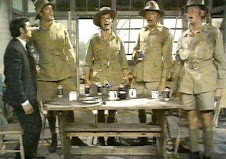
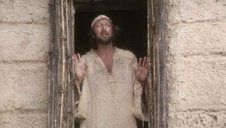
The Fall semester has about found its legs now, two weeks in. I'm doing something a little different in my Intro classes: on Fridays we're using Open Court's Monty Python and Philosophy, to supplement the week's more conventional approach. This week we read about "The Life of Brian" and took a look at a few clips, most pointedly the one in which Brian Cohen -- the mistaken Messiah -- insists to the multitude at his window that "you're all individuals" who don't need to follow anyone. I usually trot that clip out when explicating Emerson's Self-reliance, but it turns out to be a perfect comment on Plato's Euthyphro too.

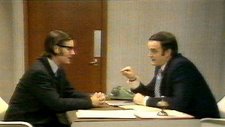
The logic & critical thinking class has been fun, stocked as it is with lots of pre-law students who love to argue. And, as Monty Python reminds us, an argument isn't just saying "no it isn't!" (Yes it is!) (No, it ISN'T!!)

KurzweilAI.net Accelerating Intelligence News