Showing posts with label Ralph Waldo Emerson. Show all posts

Friday, July 29, 2011

Life only avails

Interesting convergence of tweets from William James and John Dewey this morning, spotlighting the indispensable contribution of real life experience to intelligence and wisdom:


 William James 


 John Dewey 


Both put me in mind of one of my favorite lines in Emerson: "Life only avails, not the having lived. Power ceases in the instant of repose..." Or, as I was saying yesterday: just get up and move, pay attention to what's around you and try to learn something from it.

Friday, May 14, 2010

inspired

Commencement addresses are usually forgettably underwhelming. But there have been some good ones, like Paul Hawken's at the University of Portland last year:


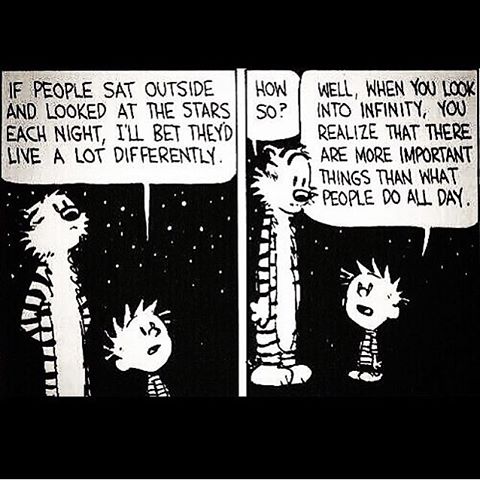
Ralph Waldo Emerson once asked what we would do if the stars only came out once every thousand years. No one would sleep that night, of course. The world would create new religions overnight. We would be ecstatic, delirious, made rapturous by the glory of God. Instead, the stars come out every night and we watch television. 


This extraordinary time when we are globally aware of each other and the multiple dangers that threaten civilization has never happened, not in a thousand years, not in ten thousand years. Each of us is as complex and beautiful as all the stars in the universe. We have done great things and we have gone way off course in terms of honoring creation. You are graduating to the most amazing, stupefying challenge ever bequeathed to any generation. The generations before you failed. They didn’t stay up all night. They got distracted and lost sight of the fact that life is a miracle every moment of your existence. Nature beckons you to be on her side. You couldn’t ask for a better boss. The most unrealistic person in the world is the cynic, not the dreamer. Hope only makes sense when it doesn’t make sense to be hopeful. This is your century. Take it and run as if your life depends on it.
Hawken's talk at Google was more restrained, but it also bore the powerful message of Blessed Unrest: we must stop stealing from the future, and in fact there are hopeful signs that more and more people all around the world are committed to doing just that.  They're beginning to connect, in an atomized and non-ideological movement that is truly inspired. Inspiring.

Thursday, April 1, 2010

Emerson on Thoreau

Andrew raised a question yesterday about the state of relations between Emerson and Thoreau, wondering if it was true that the former said unkind things about the latter at his funeral. I think I can disconfirm those rumors. No foolin'...


His robust common sense, armed with stout hands, keen perceptions and strong will, cannot yet account for the superiority which shone in his simple and hidden life. I must add the cardinal fact, that there was an excellent wisdom in him... It was a pleasure and a privilege to walk with him. He knew the country like a fox or a bird, and passed through it as freely by paths of his own. He knew every track in the snow or on the ground, and what creature had taken this path before him. One must submit abjectly to such a guide, and the reward was great... No college ever offered him a diploma, or a professor's chair; no academy made him its corresponding secretary, its discoverer or even its member. Perhaps these learned bodies feared the satire of his presence. Yet so much knowledge of Nature's secret and genius few others possessed... The country knows not yet, or in the least part, how great a son it has lost. It seems an injury that he should leave in the midst of his broken task which none else can finish, a kind of indignity to so noble a soul that he should depart out of Nature before yet he has been really shown to his peers for what he is. But he, at least, is content. His soul was made for the noblest society; he had in a short life exhausted the capabilities of this world; wherever there is knowledge, wherever there is virtue, wherever there is beauty, he will find a home. Ralph Waldo Emerson, Eulogy of Thoreau (1862)

Saturday, November 7, 2009

still exploring


So... "persons may get lost," in the absence of the philosophically-correct account of psychological continuity and personal identity.


But are we really concerned that people, real flesh-and-blood humans, might literally wander off the reservation and not know who they are, where they've been, where they're going?


This came up in one of my Intro classes last week, before I began to think about my assignment to comment on a paper at the Tennessee Philosophical Association's annual meeting today that raises the specter of lost and confused persons wandering in search of continuity and identity.


Most of the freshmen were puzzled, as I confess that I am too. Is this a real question? Is anyone really afraid that if philosophers don't say the right things about personal identity, then it might get misconceived and-- shudder!-- "persons may get lost"?!


They were reassured, I think, to hear their professor say that one can fail to give an adequate conceptual account, can fail to tell a complete and compelling story about "who I am" without then instantly vanishing in a puff of metaphysical dereliction.


They were reassured not because they were worried about getting lost themselves, but because they questioned the safety and sanity of any philosopher for whom this question might actually precipitate an existential crisis.


Are those who puzzle over personal identity and psychological continuity, in the manner of Parfit, Shoemaker, and Unger quite clear on the distinction between metaphysical puzzle and existential problem that is so important to existentialists, pragmatists, radical empiricists, and others who think common sense can be a buffer against the worst debilities of sustained reflection?


It would be thoughtful (in the sense of considerate, constructive, practical) of philosophers to attempt to say something helpful to Intro students and naive pragmatists about why this style of approach to the perennially inconclusive puzzle of personal identity is constructive and worthwhile. I am assuming that it must be, but still don't know quite how to say it with conviction.


William James famously declared: "The philosophy which is so important in each of us is not a technical matter; it is our more or less dumb sense of what life honestly and deeply means." There is an immediacy of perception and self-recognition that only a mind debauched by too much (or the wrong kind of) learning can easily discount. That's why he wanted to give voice to something whose acquaintance he was sure we would have to make non-verbally. There is on this view a vital core of life that words and concepts cannot reach. "I must deafen you to talk..."


The immediacy in question is purported to reveal relations, and qualities of experience, that are personal, intimate, and first-hand. The distinctiveness or '"subjectivity" of persons, the felt-but-not-spoken texture of incommunicable conscious life, is said to be much warmer and much less subject to loss, than is dreamt of in the philosophies of those who would treat knowledge (including personal self-knowledge) as an exclusively intellectual and/or aesthetic phenomenon.


Professor Naylor: "Unless the Personal Continuity Theory can either articulate and defend a middle ground of neither too much nor too little psychological continuity or else find some way to avoid one of the horns of the dilemma, it will be possible for persons to get lost..."


Well, perhaps. But I'm tempted to think that the "lost" will be only those persons who were already lost in the misapprehension that self-knowledge occurs primarily in the brain, or in an unstable relation between the ever-vanishing present and a past or future glimpsed darkly. What of our embodied, natural relations to actual (though changing) places and persons and social structures, to former work environments, to colleagues and co-workers old and new and hypothetical?


When I revisit a place whose shape and significance are irrevocably imprinted on me-- a place, for me, like the University Student Center where I used to be nominally "in charge" (and where today I'll play the role of credentialed pontificator)-- and find myself whisked back to an earlier instantiation of myself, in an instant... well, that's not simply a matter of robust or sparse psychology, is it? My personal identity is inseparable from my past, present, and future social identities, and these are embodied and located in space and time beyond mind.


Or as James might have said: beyond the ever-flowing stream of consciousness, beneath all the selectively-attentive, alternately transitory and stable flights and perchings that sustain our selfhood (such as it is), we have no fixed or core "person" to lose. Persons are explorers, made and re-made by their places, making and re-making those places as they go.

One more thought, for the New England transcendentalists among us: self-possession can be viewed as a quality of self-reliance, in the Emersonian vein. If you're committed to being that kind of non-conformist, the kind not overly-- critics say not sufficiently-- wedded to its own historicity, then you'll be doubly unworried about losing the hobgoblin of self-consistent personhood. You'll be an explorer too. And maybe you'll be lucky enough to arrive back where you started and know more about it. Where have we heard that before, Mr. Eliot?

Sunday, October 11, 2009

not so bright

Barbara Ehrenreich's new book, Bright-sided: How the Relentless Promotion of Positive Thinking Has Undermined America, is her pay-back to all the blundering friends, medical professionals and clinicians, and well-meaning strangers who thought they were helping her deal with breast cancer by telling her to cheer up.

The unrelenting message was “that you had to be cheerful and accepting and that you would not recover unless you were.” Most infuriating, she added, was the advice to “consider your cancer a gift.”

Can't blame her a bit for finding that "mass-delusional" advice unhelpful and insensitive. But she is very sloppy here when she lumps that kind of unreflective, facile, smiley-face foolishness, and New Age/New Thought spirituality, and whatever gospel it is exactly that Joel Osteen has been peddling in his Texas mega-temple, with the more serious and circumspect contributions of Positive Psychology and its long trail back to Emerson and James.

She traces the roots of the nation’s blithe sunniness to a reaction against Calvinist gloom and the limits of medical science in the first half of the 19th century. Starting with Phineas Parkhurst Quimby, perhaps one of the first American New Age faith healers, she draws a line to Mary Baker Eddy, the founder of Christian Science; the psychologist William James; Ralph Waldo Emerson; Norman Vincent Peale, who published “The Power of Positive Thinking” in 1952; and the toothy television minister Joel Osteen, who preaches the gospel of prosperity.

But I'm glad she got better.

Now, contrast Ehrenreich's reaction to her cancer with Winifred Gallagher's to hers, in Rapt: Attention and the Focused Life.

"Walking away from the hospital after the biopsy from hell-- not just cancer, but a particularly nasty, fairly advanced kind-- I had an intuition... This disease wanted to monopolize my attention, but as much as possible, I would focus on my life instead...

Through many months of chemo, surgery, more chemo, and daily radiation, I mostly stayed focused on taking care of business in the present-- suddenly all I could count on-- and on the things that matter most and make me feel best: big ones like my family and friends, spiritual life, and work, and smaller ones like movies, walks, and a 6:30 p.m. martini. As a result, I spent very little time and energy on the past or future, or on the suddenly very many things that seemed unimportant or negative...

That's not to say that cancer was the proverbial 'best thing that ever happened to me,' or that I'm glad I had it... [But] whenever possible, I looked toward whatever seemed meaningful, productive, or energizing and away from the destructive, or dispiriting...

She got better too, and felt better doing it. William James's concept of focused attention as the decisive element in shaping one's quality of life was her inspiration. She verified it, pragmatically, quite impressively.

She took courage from Emerson, too. "To fill the hour-- that is happiness."

And that, finally, is what I want to say to my friend whose little girl was diagnosed with diabetes.

Sunday, September 20, 2009

true prayer

Zev Chafets wonders if the 75% of Americans who say they pray regularly are doing it right. He asks lots of experts, who have lots of views. If he'd consulted the self-reliant Sage of Concord, he'd have heard: "don't grovel!" (Complete works of Emerson... more RWE... James on RWE centenary)

Prayer looks abroad and asks for some foreign addition to come through some foreign virtue, and loses itself in endless mazes of natural and supernatural, and mediatorial and miraculous. Prayer that craves a particular commodity, — any thing less than all good, — is vicious. Prayer is the contemplation of the facts of life from the highest point of view. It is the soliloquy of a beholding and jubilant soul. It is the spirit of God pronouncing his works good. But prayer as a means to effect a private end is meanness and theft. It supposes dualism and not unity in nature and consciousness. As soon as the man is at one with God, he will not beg. He will then see prayer in all action. The prayer of the farmer kneeling in his field to weed it, the prayer of the rower kneeling with the stroke of his oar, are true prayers heard throughout nature, though for cheap ends...

Another sort of false prayers are our regrets. Discontent is the want of self-reliance: it is infirmity of will. Regret calamities, if you can thereby help the sufferer; if not, attend your own work, and already the evil begins to be repaired...

As men's prayers are a disease of the will, so are their creeds a disease of the intellect...

But that's another post.

Wednesday, July 8, 2009

Drunk on the ground

William James pitied "poor Nietzsche's antipathy," as most of us who were early smitten with Zarathustra eventually do. See Gary Kamiya's "Falling Out With Superman," for instance. Or the alienated teen in "Little Miss Sunshine" who (unlike his hero) eventually reconciles with, and rejoins, the human race. (When Nietzsche Wept is another cinematic tribute that has its moments of insight.)

nietzsche penguinBut somehow the books remain, in some pre-postmodern way detached from their author and standing magnificently apart... as on a tall peak just beyond reach. The Dawn, Human, All too Human, Beyond Good and Evil, Genealogy of Morals, Antichrist, Twilight of the Idols, Gay Science, Thus Spake Zarathustra... Works of genius, and of despair that refuses to name and accept its condition. But, with enough of the truth to arrest a young person who knows this can't be all there is, who knows there has to be something better still to come. But (this sensibility attests) it must come here, in this life, and perhaps recurrently, eternally.

James and Nietzsche did have in common a mutual affinity for the heights, bracing and invigorating and (ultimately, forJames) terminal. Mountain hikes became James's "main hold on primeval sanity and health of soul." Maybe he was insane to hike so hard in his condition, at his age (60+ with a fluttery heart), but he might have been crazy not to. In 1899 he told his brother Henry, the novelist, that his "ridiculous cardiac weakness" was inconvenient, that his strenuous hikes had probably strained his heart, but that he nonetheless was "glad I had the experience, even at the price!"

Alain de Boton chronicles the price Nietzsche paid, tracing the bleak objective day-to-day mundanities of

piz corvatsch

his soaring Swiss Mountain philosophy. "Nietzsche spent seven years in Sils-Maria... He would rise at five," work all morning in his small rented room, then hit the peaks. (That's Piz Corvatsch.) In the evening, typically, it was back to the room, a solitary dinner, and an early bed. Sounds stark and easy, and to most of us drearily depressing. But it must have been hard. That's what he liked most about climbing mountains, and writing books: the difficulty and challenge and growth-opportunity ("What doesn't kill me" etc.) of scaling those imposing altitudes. Then, the great payoff at the summit, "a primal delight at being alive to see such beauty."

Again, Nietzsche (the rare tea-totaling German) admired Emerson... who could get drunk sober, simply treading the bare flat ground. (In Nature Emerson famously wrote: "Crossing a bare common, in snow puddles, at twilight, under a clouded sky, without having in my thoughts any occurrence of special good fortune, I have enjoyed a perfect exhilaration.")

Me too. Crossing Hillwood High School's playing fields with my dogs, in dappled morning sunlight, thinking only of getting home and having a good breakfast... It happens all the time.

I love the mountains as much as the next philosopher, but I really think it's more about where you plant your head than your feet.

None of which is to deny that feet, particularly feet in motion, are indispensable too. We have walked far, up and down and all around. Walk on.

oldest recorded footprints

Saturday, July 4, 2009

Independence Day

Best book ever on the general theme of independence: Richard Ford's Independence Day. (Ford himself prefers Emerson's Self-reliance for "its implicit goal of leaving us as it found us: free.")

It's a great road book, too. The action centers on Cooperstown and the baseball hall of fame. It reflects wisely on just how much, and how little, any of us can help anyone else (our own kids included) be free.

There is a time in every man's education when he arrives at the conviction that envy is ignorance; that imitation is suicide; that he must take himself for better, for worse, as his portion;…The power which resides in him is new in nature, and none but he knows what that is which he can do, nor does he know until he has tried.

Ralph Waldo Emerson, "Self Reliance,"
Essays, First Series, 1841.

Tuesday, May 8, 2007

Brainwashing children

Stephen Law (The War for Children's Minds, Routledge 2006) cites Oxford physiology researcher Kathleen Taylor on brainwashing: "One striking fact about brainwashing is its consistency. Whether the context is a prisoner of war camp, a cult’s headquarters or a radical mosque, five core techniques keep cropping up: isolation, control, uncertainty, repetition and emotional manipulation."

Law thinks religious teachers and those who try to instill "faith"-based values in children are distinctively guilty of brainwashing them, of attempting to "inject beliefs into the child's mind directly, without engaging the child's rational, critical faculties." But what about parents and other teachers generally?

Teachers, parents, and authorities of all stripes who deliberately bypass children's "rational, critical faculties" aren't teaching, they're indoctrinating. Emerson reprimanded such people: "You're trying to create another you. One is enough!"

KurzweilAI.net Accelerating Intelligence News