Saturday, February 29, 2020


Wednesday, February 26, 2020
James and Royce at the APA
Royce wj soc from Osopher
Greetings from chilly Chicago

where there must surely be something better to do tonight than attend a philosophy conference...

My badge boldly declares "my pronoun"...

I'll go downstairs in a bit to deliver my latest reflections on what we can learn from the friendly, good-spirited, lifelong philosophical antagonism between two great philosophers - a pragmatist and an idealist - who didn't let their divergent ideas diminish their humane mutual respect. That's kinda what we were talking about in class Thursday with Ben, isn't it?
Do I get extra credit for walking right past the Yazoo booth at Gate 25 without stopping, when I boarded the plane for Chicago?

Greetings from chilly Chicago
where there must surely be something better to do tonight than attend a philosophy conference...
My badge boldly declares "my pronoun"...
I'll go downstairs in a bit to deliver my latest reflections on what we can learn from the friendly, good-spirited, lifelong philosophical antagonism between two great philosophers - a pragmatist and an idealist - who didn't let their divergent ideas diminish their humane mutual respect. That's kinda what we were talking about in class Thursday with Ben, isn't it?
Do I get extra credit for walking right past the Yazoo booth at Gate 25 without stopping, when I boarded the plane for Chicago?
Monday, February 17, 2020
The Resisters
My Baseball Conference subject for 2021? (It's The Brothers K this year.)
 An audacious marvel of a novel about baseball and a future America, from the always inventive and exciting author of The Love Wife and Who's Irish
The time: a not-so-distant future. The place: AutoAmerica. The land: half under water. The Internet—the new face of government—is "Aunt Nettie": a mix of artificial intelligence, surveillance technology, and pesky maxims. The people have been divided, and no one is happy. The angel-fair "Netted" still have jobs and literally occupy the high ground, while the mostly coppertoned "Surplus" live on swampland if they're lucky, on the water if they're not.
The story: To a Surplus couple—he was a professor, she's still a lawyer—is born a Blasian girl with a golden arm. At two, Gwen is hurling her stuffed animals from the crib; by ten she can hit whatever target she likes with a baseball; her teens find her playing happily in an underground Surplus league. When AutoAmerica re-enters the Olympics—with a special eye on beating ChinRussia—Gwen attracts interest. Soon she's at Net U, falling in love with her coach and considering "crossing over," even as her mother is challenging the AutoAmerican Way with lawsuits that will prove very dangerous.
An astonishing story of an America that seems only too possible, and of a family struggling to maintain its humanity in circumstances that threaten their every value—even their very existence. g'r
“The Resisters is palpably loving, smart, funny and desperately unsettling. The novel should be required reading for the country, both as a cautionary tale and because it is a stone-cold masterpiece. This is Gish Jen’s moment. She has pitched a perfect game.” —Ann Patchett, author of The Dutch House
“An absolute joy . . . I finished The Resisters with a tear in my eye and a smile on my face. Who could ask for a better combo? Gish Jen has written a one-of-a-kind book with great characters—especially Eleanor, who is the heart of the story—and a warm heart. Remind Ms. Jen that the great Ernie Banks said, ‘Hey, guys, let’s play two!’ Which is my way of saying I wouldn’t mind a sequel. Probably won’t happen, but a guy can hope. P.S. This lady knows her baseball.” —Stephen King, author of The Institute
“A dystopia so chillingly plausible that an entire review could be spent simply describing its components. To do that, however, would scant the provocative ideas that underpin her gripping tale of a family confronting the digitally empowered authoritarian state . . . Over the course of three decades, Jen’s social and psychological observations have only sharpened, while her marvelous humor has darkened . . . Alert as always to the demands of storytelling and character development, she crafts a suspenseful, deftly plotted narrative” —Wendy Smith, The Boston Globe
“Intricately imagined . . . The Resisters is a book that grows directly out of the soil of our current political moment, and much of the book’s unsettling pleasure lies in Jen’s ingenious extrapolation (or, in some cases, redescription) of contemporary problems. [She] has a gifted ear for the manipulative languages of tech, marketing and government.” —Karen Thompson Walker, The New York Times Book Review
more
An audacious marvel of a novel about baseball and a future America, from the always inventive and exciting author of The Love Wife and Who's IrishThe time: a not-so-distant future. The place: AutoAmerica. The land: half under water. The Internet—the new face of government—is "Aunt Nettie": a mix of artificial intelligence, surveillance technology, and pesky maxims. The people have been divided, and no one is happy. The angel-fair "Netted" still have jobs and literally occupy the high ground, while the mostly coppertoned "Surplus" live on swampland if they're lucky, on the water if they're not.
The story: To a Surplus couple—he was a professor, she's still a lawyer—is born a Blasian girl with a golden arm. At two, Gwen is hurling her stuffed animals from the crib; by ten she can hit whatever target she likes with a baseball; her teens find her playing happily in an underground Surplus league. When AutoAmerica re-enters the Olympics—with a special eye on beating ChinRussia—Gwen attracts interest. Soon she's at Net U, falling in love with her coach and considering "crossing over," even as her mother is challenging the AutoAmerican Way with lawsuits that will prove very dangerous.
An astonishing story of an America that seems only too possible, and of a family struggling to maintain its humanity in circumstances that threaten their every value—even their very existence. g'r
“The Resisters is palpably loving, smart, funny and desperately unsettling. The novel should be required reading for the country, both as a cautionary tale and because it is a stone-cold masterpiece. This is Gish Jen’s moment. She has pitched a perfect game.” —Ann Patchett, author of The Dutch House
“An absolute joy . . . I finished The Resisters with a tear in my eye and a smile on my face. Who could ask for a better combo? Gish Jen has written a one-of-a-kind book with great characters—especially Eleanor, who is the heart of the story—and a warm heart. Remind Ms. Jen that the great Ernie Banks said, ‘Hey, guys, let’s play two!’ Which is my way of saying I wouldn’t mind a sequel. Probably won’t happen, but a guy can hope. P.S. This lady knows her baseball.” —Stephen King, author of The Institute
“A dystopia so chillingly plausible that an entire review could be spent simply describing its components. To do that, however, would scant the provocative ideas that underpin her gripping tale of a family confronting the digitally empowered authoritarian state . . . Over the course of three decades, Jen’s social and psychological observations have only sharpened, while her marvelous humor has darkened . . . Alert as always to the demands of storytelling and character development, she crafts a suspenseful, deftly plotted narrative” —Wendy Smith, The Boston Globe
“Intricately imagined . . . The Resisters is a book that grows directly out of the soil of our current political moment, and much of the book’s unsettling pleasure lies in Jen’s ingenious extrapolation (or, in some cases, redescription) of contemporary problems. [She] has a gifted ear for the manipulative languages of tech, marketing and government.” —Karen Thompson Walker, The New York Times Book Review
more
Thursday, February 6, 2020
The Little House
Just occurred to me, thinking of Michael Pollan's cool writing hut, that I don't have an image of my rustic retreat here. 'Til now. It hasn't looked like this since 2017.

Wednesday, January 29, 2020
Boldly go
Trek
For my fellow Trek geeks, here's novelist and Picard show-runner (and former philosophy major) Michael Chabon on Star Trek's hard-won optimism for our long-term future:
Several years ago Chabon wrote a wonderful essay for the Long Now Foundation about Star Trek, parenting, and the future called The Omega Glory:
Was there a conscious effort to include the sense of old-school optimism that’s so integral to Star Trek?The effort was to make sure that what we did felt like Star Trek. Part of something being Star Trek is not simply that it reflects the time in which it’s being made. EveryTV show reflects the time in which it’s being made. But Star Trek is unique in that it deliberately reflected what was happening when it was being made—it wasn’t just unconscious or automatic. And so, we tried to consciously reflect a coherent vision of our time.Chabon recently wrote a New Yorker essay on his late father and Spock:
I think that optimism is an easily misunderstood term. There’s this misconception that Star Trek was always sunshine and roses. But its optimism was hard-won. It was always fairly clear-eyed about the darkness in the human soul. The potential for violence, for greed, for criminality, for hatred. All of that felt very much present from the very first episode of Star Trek in ‘66. It’s just that people are working their asses off to overcome it, and it’s a constant effort. It’s always there, even in the episode titles: “The Enemy Within.” “The Turnabout Intruder.” That dark side of human nature is always waiting to emerge again.
So, is that optimism? It is optimism, but it’s a very sober optimism that understands darkness. It’s a deliberate, conscious optimism that goes hand-in-hand with the kind of clear-eyed vision that allows you to reflect the times that you’re living in... (Rest of the interview here)
...In “Star Trek” ’s imagined future, amid the rocks and under the red alien skies of Spock’s home world, Vulcans called that unflagging effort a “philosophy,” enshrined its founder, Surak, and looked with cool condescension on those who did not submit to its regime. But, as I would discover as an undergrad in the halls of the Philosophy Department at the University of Pittsburgh, a redoubt far stauncher than the planet Vulcan of a logic far fiercer than Surak’s, the Vulcan way had little to do with philosophy and even less to do with logic, and there was certainly nothing alien about it. It was just good old repression, of the sort practiced by human fathers, among others, for many long and illogical centuries.
I love Mr. Spock because he reminds me of you, I said...The Vulcans did have a philosophy, though: Stoicism plus IDIC...
Several years ago Chabon wrote a wonderful essay for the Long Now Foundation about Star Trek, parenting, and the future called The Omega Glory:
"Betting on the future" for our kids and theirs (et al) has a particular environmental resonance in these Greta/Green New Deal days - as I'm sure to mention when I give my little Climate Changetalk on Monday.When I told my son about the Clock of the Long Now, he listened very carefully, and we looked at the pictures on the Long Now Foundation’s website. “Will there really be people then, Dad?” he said. “Yes,” I told him without hesitation, “there will.” I don’t know if that’s true, any more than do Danny Hillis and his colleagues, with the beating clocks of their hopefulness and the orreries of their imaginations. But in having children—in engendering them, in loving them, in teaching them to love and care about the world—parents are betting, whether they know it or not, on the Clock of the Long Now. They are betting on their children, and their children after them, and theirs beyond them, all the way down the line from now to 12,006. If you don’t believe in the Future, unreservedly and dreamingly, if you aren’t willing to bet that somebody will be there to cry when the Clock finally, ten thousand years from now, runs down, then I don’t see how you can have children. If you have children, I don’t see how you can fail to do everything in your power to ensure that you win your bet, and that they, and their grandchildren, and their grandchildren’s grandchildren, will inherit a world whose perfection can never be accomplished by creatures whose imagination for perfecting it is limitless and free. And I don’t see how anybody can force me to pay up on my bet if I turn out, in the end, to be wrong.
Wednesday, January 22, 2020
Terry Jones
Obit (nyt)... BBC
Graham Chapman eulogy
Just heard about Terry J— John Cleese (@JohnCleese) January 22, 2020
It feels strange that a man of so many talents and such endless enthusiasm, should have faded so gently away...
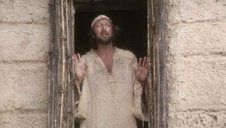
Of his many achievements, for me the greatest gift he gave us all was his direction of 'Life of Brian'. Perfection
Two down, four to go
Sir Michael Palin:— PA Media (@PA) January 22, 2020
"He was far more than one of the funniest writer-performers of his generation, he was the complete Renaissance comedian – writer, director, presenter, historian, brilliant children’s author, and the warmest, most wonderful company you could wish to have." pic.twitter.com/3bL0Gu7VXJ
You will be very missed old friend. I feel very fortunate to have shared so much of my life with Terry. pic.twitter.com/4oNANoIeB2— Michael Palin (@NotMichaelPalin) January 22, 2020
“He’s not the Messiah, he’s a very naughty boy”— Chris Green (@ChrisGreenNews) January 22, 2020
RIP Terry Jones, utterer of surely one of the greatest lines in comedy history
Graham Chapman eulogy
Tuesday, January 14, 2020
1947, the Bronx
A decade before my time began...
METROPOLITAN DIARY
‘We Lived in Brooklyn, but We Were New York Yankees Fans’
Teenage friends at the ’47 World Series, a windy Manhattan day and more reader tales of New York City in this week’s Metropolitan Diary.
Jan. 12, 2020

Dear Diary:
It was 1947. Larry Goldberg and I were 13 years old. We lived in Brooklyn, but we were New York Yankees fans.
The World Series that year was a memorable one. The Yankees played the Dodgers, with notables on the field like Joe DiMaggio, Phil Rizzuto, Yogi Berra and, of course, Brooklyn’s Jackie Robinson, in his rookie year and first World Series.
The day of Game 1, Larry and I boarded the F train on Church Avenue at 3 a.m. and headed to Yankee Stadium. I doubt very much if my parents would let me go at that age today. (The subway by the way, was 5 cents cash then, no tokens.)
When we got to the stadium, we stopped at Nedick’s for a breakfast special: their famous orange drink, a doughnut and a cup of coffee, all for 15 cents.
We waited on line until 10 a.m., when the gates opened. We bought bleacher tickets for $1 and watched the Yankees do their thing, beating the Dodgers 5-3.
We repeated the adventure for the Game 7, and we saw the Yankees win the game and the series. I still have the ticket stubs.
I am curious where Larry Goldberg is today.
— Bruce Funk
‘We Lived in Brooklyn, but We Were New York Yankees Fans’
Teenage friends at the ’47 World Series, a windy Manhattan day and more reader tales of New York City in this week’s Metropolitan Diary.
Jan. 12, 2020
Dear Diary:
It was 1947. Larry Goldberg and I were 13 years old. We lived in Brooklyn, but we were New York Yankees fans.
The World Series that year was a memorable one. The Yankees played the Dodgers, with notables on the field like Joe DiMaggio, Phil Rizzuto, Yogi Berra and, of course, Brooklyn’s Jackie Robinson, in his rookie year and first World Series.
The day of Game 1, Larry and I boarded the F train on Church Avenue at 3 a.m. and headed to Yankee Stadium. I doubt very much if my parents would let me go at that age today. (The subway by the way, was 5 cents cash then, no tokens.)
When we got to the stadium, we stopped at Nedick’s for a breakfast special: their famous orange drink, a doughnut and a cup of coffee, all for 15 cents.
We waited on line until 10 a.m., when the gates opened. We bought bleacher tickets for $1 and watched the Yankees do their thing, beating the Dodgers 5-3.
We repeated the adventure for the Game 7, and we saw the Yankees win the game and the series. I still have the ticket stubs.
I am curious where Larry Goldberg is today.
— Bruce Funk
nyt
Monday, January 6, 2020
Walking: A Pedestrian Pursuit
LISTEN - CBC
If you walk the nine kilometers between the villages of Salvage and Eastport on Bonavista Bay, there are moments when you imagine being the only person in all of Newfoundland.
It happens when there are no cars on the narrow road and no planes in the wide sky. There are only the rolling hills, the water and the faraway sound of sea birds.
You can stop, lean on a tree and stare out across the bay waters and realize that somebody looked out at the same view hundreds of years ago.
It might just be my favorite walk in the world.
Humans were made for walking. It is as natural to us as breathing. Yet we avoid it whenever and however we can.
Despite our automotive allegiance, there are whiffs of change in the air. Many people are re-discovering the joys of perambulation and are hitting the sidewalks and the walking paths.
Today, we're revisiting a special program from 2013 called Walking: A Pedestrian Pursuit, which celebrated the joys of walking in a myriad of ways.
- Michael Enright
A peripatetic history of walking
The history of humanity is a history of walking — and, more recently, of finding ways not to walk.
Our ancestors made a decisive break with other primates by taking their first baby steps toward walking upright millions of years ago. Our species, homo sapiens, originated in Africa about 200,000 years ago, tramping around the Rift Valley region.
Then, about 50,000 to 70,000 years ago, humans set out on foot to populate the earth, eventually spreading to every continent except Antarctica.
All that walking was done barefoot. The first sandals, the precursors to full shoes, didn't appear on the scene until about 10,000 years ago.
Then, in about 3500 B.C., the wheel was invented. Neolithic walkability advocates warned of a looming public health crisis and village sprawl as a result.
Next came the chariot, in the second millennium B.C. But in 100 A.D., the Roman Emperor Hadrian completed an epic walk, touring his entire empire by foot. He marched about 21 miles a day, all the while wearing full armour.
Over the next centuries, the wheel and other technologies slowly eroded walking's central place in human affairs. So much so that Henry David Thoreau felt compelled to write one of his most popular essays, called Walking, in 1851 to extol the virtues of a ramble through nature.
'Forest bathing': You don't need a swimsuit, just comfortable shoes and an open mind, guide says
Other forces came into play in the war on walking. Golf, Mark Twain said more than a century ago, was "a good walk spoiled." To be fair, though, at many golf courses today, everyone rides around in golf carts, thus sparing walks from further ruination.
In the late 19th century, walking enjoyed a vogue as a sport. Edward Payson Weston, a long-distance walker, became America's best-known athlete. His greatest feat came in 1909 when he walked 4,000 miles from New York to San Francisco, in 100 days at the age of 70.
That same year, Henry Ford started his Model T assembly line. In 1956, U.S. President Dwight Eisenhower signed the Federal Aid Highway Act. Suburbs blossomed. Walking became something you did with the dog. Or if you didn't have a golf cart.
 Volunteer trail builders Graham Houlker, Sam Waddington and Kelly Pearce walk down a wooden feature on the Thaletel hiking and mountain biking trail in Chilliwack's Lexw Qwo:m Park. (Rafferty Baker/CBC)
Today, for some of us, the longest walk of the day is across the parking lot to the car.
Our kids, by and large, aren't doing much better. A 2013 survey found only 28 percent of Canadian kids walk to school.
And it's not like they're going on long rambles in the woods after school, either. According to the same survey, Canadian teenagers spend an average of 11 minutes walking per day.
Canadian adults earn failing grade on physical activity report card
Presumably, much or most of the time not spent walking is spent sitting — at a desk, on a couch, on a bus or in a car. And why not? It's easy. It's comfortable. You'd think that's what our amply padded posteriors were put there for.
But sitting, as it turns out, is best done in moderation. Studies have shown that excessive sitting leads to higher rates of obesity and dramatically increased risk of diabetes and heart disease, among other things.
Walking, not sitting, is what our bodies are meant to do.
Daniel Lieberman is one of the world's foremost experts on how — and why — we humans walk on two legs. He's the Edwin M. Lerner II Professor of Biological Sciences and a Professor of Human Evolutionary Biology at Harvard University. His books include The Story of the Human Body: Evolution, Health and Disease.
He spoke to Michael Enright about how and why bipedalism first emerged, and the consequences of not walking.
The Sunday Edition
How and why bipedalism first emerged and the consequences of not walking
8:31
Daniel Lieberman is one of the world's foremost experts on how — and why — we humans walk on two legs. He spoke to Michael Enright about how and why bipedalism first emerged, and the consequences of not walking. 8:31
How walking changes us
Walking still seems out of step with much of our way of life today. We live in a society that values speed, efficiency, just-in-time delivery and instant access to whatever you want.
Walking is slower. It takes longer. It requires patience. And perhaps, in so doing, it connects us to the present, to our surroundings and to our humanity.
Sitting 8 hours a day? An hour a day of physical activity could offset the health risks
Enright spoke to three people about how we engage differently with the world while walking and how walking shapes our minds, values and cities.
Wayne Curtis is a contributing editor with the Atlantic magazine, and he's the author of an upcoming book on the history of walking in America.
Alexandra Horowitz teaches psychology at Barnard College in New York, and she's the best-selling author of Inside of a Dog and On Looking: Eleven Walks with Expert Eyes.
Ken Greenberg is the Principal of Greenberg Consultants and a former Director of Urban Design and Architecture for the City of Toronto. He's also the author of Walking Home: The Life and Lessons of a City Builder.
The Sunday Edition
How walking changes us
23:06
Wayne Curtis, Alexandra Horowitz and Ken Greenberg on how walking changes us. 23:06
Click 'listen' above to hear the full special, which also includes reflections from John Baxter on being a pedestrian in Paris, Jane Farrow on suburban walkability, and Robert Macfarlane on the walking the 'Old Ways.' "Walking: A Pedestrian Pursuit" was produced by Chris Wodskou and originally aired on June 9, 2013.
If you walk the nine kilometers between the villages of Salvage and Eastport on Bonavista Bay, there are moments when you imagine being the only person in all of Newfoundland.
It happens when there are no cars on the narrow road and no planes in the wide sky. There are only the rolling hills, the water and the faraway sound of sea birds.
You can stop, lean on a tree and stare out across the bay waters and realize that somebody looked out at the same view hundreds of years ago.
It might just be my favorite walk in the world.
Humans were made for walking. It is as natural to us as breathing. Yet we avoid it whenever and however we can.
Despite our automotive allegiance, there are whiffs of change in the air. Many people are re-discovering the joys of perambulation and are hitting the sidewalks and the walking paths.
Today, we're revisiting a special program from 2013 called Walking: A Pedestrian Pursuit, which celebrated the joys of walking in a myriad of ways.
- Michael Enright
A peripatetic history of walking
The history of humanity is a history of walking — and, more recently, of finding ways not to walk.
Our ancestors made a decisive break with other primates by taking their first baby steps toward walking upright millions of years ago. Our species, homo sapiens, originated in Africa about 200,000 years ago, tramping around the Rift Valley region.
Then, about 50,000 to 70,000 years ago, humans set out on foot to populate the earth, eventually spreading to every continent except Antarctica.
All that walking was done barefoot. The first sandals, the precursors to full shoes, didn't appear on the scene until about 10,000 years ago.
Then, in about 3500 B.C., the wheel was invented. Neolithic walkability advocates warned of a looming public health crisis and village sprawl as a result.
Next came the chariot, in the second millennium B.C. But in 100 A.D., the Roman Emperor Hadrian completed an epic walk, touring his entire empire by foot. He marched about 21 miles a day, all the while wearing full armour.
Over the next centuries, the wheel and other technologies slowly eroded walking's central place in human affairs. So much so that Henry David Thoreau felt compelled to write one of his most popular essays, called Walking, in 1851 to extol the virtues of a ramble through nature.
'Forest bathing': You don't need a swimsuit, just comfortable shoes and an open mind, guide says
Other forces came into play in the war on walking. Golf, Mark Twain said more than a century ago, was "a good walk spoiled." To be fair, though, at many golf courses today, everyone rides around in golf carts, thus sparing walks from further ruination.
In the late 19th century, walking enjoyed a vogue as a sport. Edward Payson Weston, a long-distance walker, became America's best-known athlete. His greatest feat came in 1909 when he walked 4,000 miles from New York to San Francisco, in 100 days at the age of 70.
That same year, Henry Ford started his Model T assembly line. In 1956, U.S. President Dwight Eisenhower signed the Federal Aid Highway Act. Suburbs blossomed. Walking became something you did with the dog. Or if you didn't have a golf cart.
Volunteer trail builders Graham Houlker, Sam Waddington and Kelly Pearce walk down a wooden feature on the Thaletel hiking and mountain biking trail in Chilliwack's Lexw Qwo:m Park. (Rafferty Baker/CBC)Today, for some of us, the longest walk of the day is across the parking lot to the car.
Our kids, by and large, aren't doing much better. A 2013 survey found only 28 percent of Canadian kids walk to school.
And it's not like they're going on long rambles in the woods after school, either. According to the same survey, Canadian teenagers spend an average of 11 minutes walking per day.
Canadian adults earn failing grade on physical activity report card
Presumably, much or most of the time not spent walking is spent sitting — at a desk, on a couch, on a bus or in a car. And why not? It's easy. It's comfortable. You'd think that's what our amply padded posteriors were put there for.
But sitting, as it turns out, is best done in moderation. Studies have shown that excessive sitting leads to higher rates of obesity and dramatically increased risk of diabetes and heart disease, among other things.
Walking, not sitting, is what our bodies are meant to do.
Daniel Lieberman is one of the world's foremost experts on how — and why — we humans walk on two legs. He's the Edwin M. Lerner II Professor of Biological Sciences and a Professor of Human Evolutionary Biology at Harvard University. His books include The Story of the Human Body: Evolution, Health and Disease.
He spoke to Michael Enright about how and why bipedalism first emerged, and the consequences of not walking.
The Sunday Edition
How and why bipedalism first emerged and the consequences of not walking
8:31
Daniel Lieberman is one of the world's foremost experts on how — and why — we humans walk on two legs. He spoke to Michael Enright about how and why bipedalism first emerged, and the consequences of not walking. 8:31
How walking changes us
Walking still seems out of step with much of our way of life today. We live in a society that values speed, efficiency, just-in-time delivery and instant access to whatever you want.
Walking is slower. It takes longer. It requires patience. And perhaps, in so doing, it connects us to the present, to our surroundings and to our humanity.
Sitting 8 hours a day? An hour a day of physical activity could offset the health risks
Enright spoke to three people about how we engage differently with the world while walking and how walking shapes our minds, values and cities.
Wayne Curtis is a contributing editor with the Atlantic magazine, and he's the author of an upcoming book on the history of walking in America.
Alexandra Horowitz teaches psychology at Barnard College in New York, and she's the best-selling author of Inside of a Dog and On Looking: Eleven Walks with Expert Eyes.
Ken Greenberg is the Principal of Greenberg Consultants and a former Director of Urban Design and Architecture for the City of Toronto. He's also the author of Walking Home: The Life and Lessons of a City Builder.
The Sunday Edition
How walking changes us
23:06
Wayne Curtis, Alexandra Horowitz and Ken Greenberg on how walking changes us. 23:06
Click 'listen' above to hear the full special, which also includes reflections from John Baxter on being a pedestrian in Paris, Jane Farrow on suburban walkability, and Robert Macfarlane on the walking the 'Old Ways.' "Walking: A Pedestrian Pursuit" was produced by Chris Wodskou and originally aired on June 9, 2013.
INFORMATION ABOUT COOKIEPlease know that cookies are required to operate and enhance our services as well as foradvertising purposes. W
“Collective effervescence"
On Being with Krista Tippett
Brené Brown
Strong Back, Soft Front, Wild Heart-Original Air Date February 8, 2018, rebroadcast January 2020
Finding "collective joy with strangers" at the old ballpark
...Durkheim, the French sociologist, called this experience “collective effervescence.” And interestingly, he was trying to understand the voodoo magic that he believed happened in churches: What is this thing where people seem transcendent? They’re connected. They’re moving in unison. There’s a cadence in song and rhythm. And he tried to understand what it was, and what he realized is — and that’s what he named “collective effervescence” — it’s the coming together in shared emotion.
And we have that today. We have opportunity — trust me. I’m from Houston.
Ms. Tippett:I know, I was gonna say — you’ve just gone through one of those experiences where this rises up in a way no one would have wished for.
Ms. Brown:I’ve gone through two.
Ms. Tippett:Yeah — two.
Ms. Brown:Yeah, I’ve gone through two. So I’ve gone through Harvey, which — there we are, six feet of water in our street. We’re one of only four houses left on our street. Everything else has been torn down since Harvey. Everyone lost everything. You have the Cajun navy, which is 400 fishermen and women coming from Louisiana in swamp boats and jet skis and fishing boats, pulling people out of houses. Never once during this tragedy, which is still unfolding here in Houston — we’ll be in pain for a long time around it. But never once did someone say, “Hey, I’m here to help. Who did you vote for?”
Ms. Tippett:[laughs] Right.
Ms. Brown:That just didn’t happen. We just reached out. And it was collective: It was collective pain; it was collective struggle. But we saw hope in each other’s eyes and stories.
And then you fast-forward to baseball season, and we’ve had this incredible experience of collective joy, with the Astros winning the World Series.
Ms. Tippett:[laughs] Oh, OK, that’s what you mean. All right. OK.
Ms. Brown:Yeah. Yes. It was really — it was — I could give just a short story. I’m at the last game, playoff game against the Yankees. I’m standing — I’m with another couple, me and Steve — the game of inches, as they say — watching every pitch, watching every batter. I cannot take my eyes off. I’m a big sports person, so I am glued. And it’s the second-to-last batter, and I stick my hand — I shove my hand down in my husband’s back pocket, and I’m kind of holding onto his rear, like — ready. And the guy next to me goes, “Excuse me, ma’am.” And it wasn’t even my husband.
He had got up to go to the bathroom, and when he came back, he stood at the end of the aisle. But this guy was like, “But, uh, go, Astros.” And it was just this — when else are you singing with strangers, hugging strangers, high-fiving people around you? Again, the connection between people — you can’t sever it, but you can forget it. So to find moments of collective joy and pain and to lean into those, with strangers, reminds us of that something bigger.
Friday, January 3, 2020
Health in 48 Words
Forget fad diets and fitness gimmicks. Just stick to the basics.
By Yoni Freedhoff
Dr. Freedhoff is an associate professor of family medicine at the University of Ottawa.
Daytime television talk shows, popular podcasts and diet books on the New York Times best-seller list would have you believe that being healthy is complicated. You need to eat the latest superfood, buy the perfect supplements or join the hippest fitness cult. These theories are particularly popular right now, as people commit to New Year’s resolutions.
But after practicing family medicine for 16 years, with a focus on nutrition and obesity, I’ve learned that the keys to good health are quite simple to describe. In fact, I believe the best health advice can be boiled down to 48 words.
So what are these 48 words? In no particular order:
Don’t smoke (2).
Get vaccinated (4).
Avoid trans fats (7).
Replace saturated fats with unsaturated if you can (15).
Cook from whole ingredients — and minimize restaurant meals(23).
Minimize ultraprocessed foods (26).
Cultivate relationships (28).
Nurture sleep (30).
Drink alcohol at most moderately (35).
Exercise as often as you can enjoy (42).
Drink only the calories you love (48).
Subscribe to:
Posts (Atom)




 Charles Darwin (

 Posts