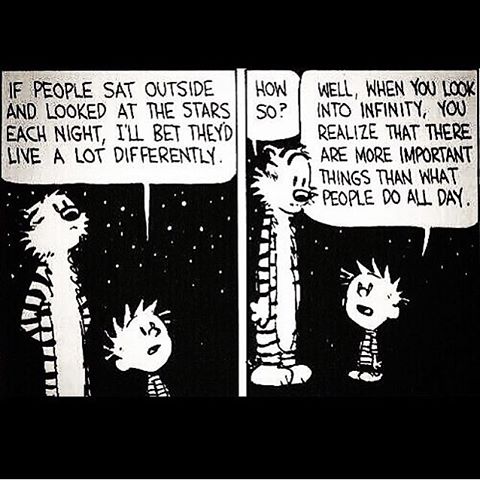
Transhumanism? "Live long enough to live forever" etc.? Camus would be amused, and-- I must imagine-- happy.
Showing posts with label Robert Solomon. Show all posts
Showing posts with label Robert Solomon. Show all posts
Friday, June 18, 2010


Monday, January 25, 2010
Robert C. Solomon
Bob Solomon's life ended suddenly in the airport in Zurich, Switzerland on January 2, 2007. A victim of pulmonary hypertension, he was dead at 64.
A former student said he was "more aware than most people how fragile and finite life is. He would tell students that if there were some things they wanted to do, to not hesitate to do them." And, he told them to be grateful every day.

"Gratitude, I want to suggest, is not only the best answer to the tragedies of life. It is the best approach to life itself. The proper recognition of tragedy and the tragic sense of life is not shaking one's fist at the gods or the universe in scorn and defiance. Whether or not there is a God or there are gods to be thanked, however, seems not the issue to me."

He was a teacher who clearly loved his calling. He reached past the confines of his university (Texas) to teach countless autodidacts around the world who found him, and will continue to find him, through The Teaching Company. My great regret: I won't get to find him anymore at his favorite Austin pub, The Dog & Duck.
In my classrooms we'll continue to engage his instruction via Passion for Wisdom and Spirituality for the Skeptic.
Tuesday, July 14, 2009
"Waking Life"
"I am a philosopher. (As Kurt Vonnegut writes in Timequake, 'I have to be.') I am not a spiritual thinker, much less a spiritualist or a religious advocate of any kind. But it seems to me, at least as a philosopher, that if spirituality means anything it means thoughtfulness... Spirituality, like philosophy, involves those questions that have no ultimate answers... [it] puts at arms' length all of the clever philosophy that scoffs at the big questions or reduces them to mere puzzles and paradoxes." Robert C. Solomon, Spirituality for the Skeptic
Tuesday, April 24, 2007
Gratitude
David Halberstam died yesterday in an automobile accident in California. He was a first-rate journalist and author, best known for The Best and the Brightest. My favorite Halberstam work is The Children, an account of the courageous college students who organized protests in Nashville and elsewhere in the heyday of the Civil Rights movement. I also like his baseball books, especially his account of the 1964 season that culminated in a Cards-Yanks World Series. I'm grateful for Halberstam's life and contribution,.
Halberstam's death seems an appropriate occasion to express my gratitude for another personal hero who left us too soon, Robert Solomon.
I'm on record as being generally unimpressed by the the academic/philosophical/Continental expression of Existentialism, much preferring literary versions like Walker Percy's and Richard Ford's. But I make an exception for Solomon, the University of Texas philosopher who collapsed and died in a Swiss airport in January.
Gratitude was one of Solomon's recurrent themes:
Gratitude, I want to suggest, is not only the best answer to the tragedies of life. It is the best approach to life itself. This is not to say, as I keep insisting, an excuse for quietism or resignation. It is no reason to see ourselves simply as passive recipients and not as active participants full of responsibilities. On the contrary, as Kant and Nietzsche among many others insisted, being born with talents and having opportunities imposes a heavy duty on us, to exercise those talents and make good use of those opportunities. It is also odd and unfortunate that we take the blessings of life for granted -- or insist that we deserve them -- but then take special offense at the bad things in life, as if we could not possibly deserve those. The proper recognition of tragedy and the tragic sense of life is not shaking one's fist at the gods or the universe "in scorn and defiance" but rather, as Kierkegaard writes in a religious context, "going down one one's knees" and giving thanks. Whether or not there is a God or there are gods to be thanked, however, seems not the issue to me. It is the importance and the significance of being thankful, to whomever or whatever, for life itself.
-Robert C. Solomon, "Spirituality for the Skeptic" (New York: Oxford University Press, 2002)
Carlin Romano wrote last week in The Chronicle of Higher Education:
Above all, Solomon exuded appetite, endless appetite, for philosophy that matters, problems, in the Jamesian sense, that make a difference for real people.
Halberstam and Solomon, thankfully, left us a legacy of words and ideas by which we can continue to be instructed and inspired, and for which I am profoundly grateful.
Halberstam's death seems an appropriate occasion to express my gratitude for another personal hero who left us too soon, Robert Solomon.
I'm on record as being generally unimpressed by the the academic/philosophical/Continental expression of Existentialism, much preferring literary versions like Walker Percy's and Richard Ford's. But I make an exception for Solomon, the University of Texas philosopher who collapsed and died in a Swiss airport in January.
Gratitude was one of Solomon's recurrent themes:
Gratitude, I want to suggest, is not only the best answer to the tragedies of life. It is the best approach to life itself. This is not to say, as I keep insisting, an excuse for quietism or resignation. It is no reason to see ourselves simply as passive recipients and not as active participants full of responsibilities. On the contrary, as Kant and Nietzsche among many others insisted, being born with talents and having opportunities imposes a heavy duty on us, to exercise those talents and make good use of those opportunities. It is also odd and unfortunate that we take the blessings of life for granted -- or insist that we deserve them -- but then take special offense at the bad things in life, as if we could not possibly deserve those. The proper recognition of tragedy and the tragic sense of life is not shaking one's fist at the gods or the universe "in scorn and defiance" but rather, as Kierkegaard writes in a religious context, "going down one one's knees" and giving thanks. Whether or not there is a God or there are gods to be thanked, however, seems not the issue to me. It is the importance and the significance of being thankful, to whomever or whatever, for life itself.
-Robert C. Solomon, "Spirituality for the Skeptic" (New York: Oxford University Press, 2002)
Carlin Romano wrote last week in The Chronicle of Higher Education:
Above all, Solomon exuded appetite, endless appetite, for philosophy that matters, problems, in the Jamesian sense, that make a difference for real people.
Halberstam and Solomon, thankfully, left us a legacy of words and ideas by which we can continue to be instructed and inspired, and for which I am profoundly grateful.
Subscribe to:
Posts (Atom)


 Charles Darwin (


 Posts
Posts