Showing posts with label God. Show all posts

Wednesday, July 13, 2011

Listen first, write later

There's a nice profile of Jaron Lanier in the current New Yorker by Jennifer Kahn. It's locked to non-subscribers, but still on the newsstands. In it he's very wise, in the way (as we learned last year in the "Future of Life" course*) of You Are Not a Gadget, on the importance of actually existing and creating as a human being in your own right and not being content merely to reflect passing currents  in the enveloping cyber-sea around you. Re-tweeters, attend:
If you listen first, and write later, then whatever you write will have had time to filter through your brain, and you'll be in what you say. This is what makes you exist. If you are only a reflector of information, are you really there?
(*NOTE TO SELF, on a possible future course. "Philosophy and the Internet: Staying Human in the Information Age")

In the Chronicle of Higher Education awhile back Lanier commented on techno-Utopia and New Atheism, shaking his head at
a new sort of "nerd" religion based around a core belief that a global brain is not only emerging but will replace humanity. It is often claimed, in the vicinity of institutions like Silicon Valley's Singularity University, that the giant global computer will upload the contents of human brains to grant them everlasting life in the computing cloud.
And,
There is right now a lot of talk about whether to believe in God or not, but I suspect that religious arguments are gradually incorporating coded debates about whether to even believe in people anymore.
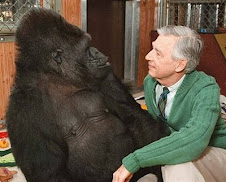
That's always the most important question. He still believes. Of course he does. Look again at that little girl.

Friday, January 15, 2010

more life

Very interesting post from Rabbi Rami, responding to the question Why do I talk so much about God? He writes: "'God' is just a word. For me it isn’t a matter of true or untrue, it is a matter of useful or unuseful."


So, with this view the Rabbi may be a kind of pragmatist or even Deweyan. In John Dewey's "A Common Faith," the word God names an active human will to close the gap between present reality and the envisioned attainment of our highest ideals. I prefer that to John Lennon's "God is a concept by which we measure our pain," but that view too can be useful. 


The Deweyan attitude seems less fatalistic, less stoically resigned than Lennon's (though in retrospect you'd have to say his fatalism was perfectly prescient). 


But it's also less reckless than William James's variety of pragmatism, insofar as being useful or not is still kept separate from the "matter of being true or untrue." 


I like William James's philosophy a lot, though I don't always share it. But I do share this view: "Not God but life, more life, a larger, richer, more satisfying life, is the end of religion." Shouldn't that be the point of living, period?

KurzweilAI.net Accelerating Intelligence News