O 16-26
1. Aristotle's school was called what? Why were its students called "peripatetics"?
2. On what logical form did Aristotle say all arguments are constructed? From what are its conclusions inferred?
3. Aristotle opposed Plato's view that Forms are transcendent, contending instead that forms are in what?. What are some other names for "Forms"?
4. Aristotle's basic causes are material, final, and what? He called the final cause behind everything, the ultimate purpose, goal, or telos, the what? Which cause is still widely invoked in modern scientific explanations?
5. In ethics, Aristotle said, we should always search for what? What should we study before theorizing?
6. In what ancient cosmopolitan city was a great library established? Who developed the physics of leverage and hydraulics, thought "Eureka" moments could provide sudden, intuitive insight, and made the Philosophy Football Cup highlights reel? Who calculated earth's circumference with surprising accuracy? Who said there's no "royal road to mathematics"? Who was a heliocentrist before Copernicus?
7. Pyrrho was a _______, making systematic doubt central in his philosophy. Diogenes was a ______ who did contemptible things in public to show his contempt for public opinion.
8. One of the Romans' great practical achievements, besides architecture, infrastructure, and aqueducts, was _________. (Hint: a popular major at MTSU.)
9. ________, whose actual philosophy was quite different from the modern meaning of the adjective it inspired, said we must conquer fear, and what else, in order to experience pleasure and be happy? Which Epicurean said nothing comes from nothing?
10. _______, a Stoic, was ordered by the Emperor _____ (his student) to kill himself. Which Stoic raised the problem of free will and determinism to prominence? __________ said (with a bee analogy) that the interests of individuals are inseparable from those of society and that yhou should approach every act as though it were your last.
Tuesday, February 15, 2011


Monday, February 14, 2011
nature-culture
Before he was known to the world mainly as a passionate advocate of "real" (local, human-scale) food, Michael Pollan was thinking hard about what Daniel Wildcat calls the "nature-culture nexus" and recognizing the complex co-evolutionary relationship between them. It's a hopeful view, suggesting we have an important continuing role to play in Mother Earth's preservation and flourishing.
==
Red Alert! ch7-conclusion
1. How much did the American bison population decline between the 17th & 19th centuries?
2. What does it mean concretely to "allow places to give us homes" and to live in a "coextensive present with the past and future"?
3. Have you lived in an "unimaginative house"? Has your conceptual/spiritual life been "boxed" by the experience? Does this attitude place too much confidence in architecture? Do we place too little?
4. Is there any way to live "green" in suburbia? Are "buffalo commons" and "earth lodges" realistic?
5. Are you personally fatalistic about "500 year floods"? Would you ever deliberately make your home in a flood plain? Do you expect the Army Corps of Engineers to consult indigenous peoples in the future?
6. Is childhood obesity a public policy issue? Or is it just a matter of "personal virtue"?
7. Are you making different food choices since becoming aware of the nutritional problems associated with fast food? Do you consciously choose local products? Do you see your food choices as ethical? Are you willing to pay more for more responsibly grown & distributed food?
8. What is T3C? Is it helpful or relevant? Is it possible to make a reliable present judgment about the ultimate impact of technologies? How does the will to bequeath "good stories" help us make wise choices?
9. Is it not possible to see the world as full of relatives and resources?
Nature does tend toward dissolution and entropy, yes, yes, but I can't help thinking she contains some countervailing tendency, too, some bent toward forms of ever-increasing complexity. Toward us and our creations, I mean. Second NatureIn A Place of My Own he builds a little house in which to think and dream. Like most of our human enterprises it "stands a little apart" from its natural surroundings.
==
Red Alert! ch7-conclusion
1. How much did the American bison population decline between the 17th & 19th centuries?
2. What does it mean concretely to "allow places to give us homes" and to live in a "coextensive present with the past and future"?
3. Have you lived in an "unimaginative house"? Has your conceptual/spiritual life been "boxed" by the experience? Does this attitude place too much confidence in architecture? Do we place too little?
4. Is there any way to live "green" in suburbia? Are "buffalo commons" and "earth lodges" realistic?
5. Are you personally fatalistic about "500 year floods"? Would you ever deliberately make your home in a flood plain? Do you expect the Army Corps of Engineers to consult indigenous peoples in the future?
6. Is childhood obesity a public policy issue? Or is it just a matter of "personal virtue"?
7. Are you making different food choices since becoming aware of the nutritional problems associated with fast food? Do you consciously choose local products? Do you see your food choices as ethical? Are you willing to pay more for more responsibly grown & distributed food?
8. What is T3C? Is it helpful or relevant? Is it possible to make a reliable present judgment about the ultimate impact of technologies? How does the will to bequeath "good stories" help us make wise choices?
9. Is it not possible to see the world as full of relatives and resources?
B/V'day poem
A poem, to mark yet another birthday. Happy Valentine's Day.

Ever since that moment
when it first occurred
to me that I would die
(like everyone on earth!)
I struggled against
this eventuality, but
never thought of
how I'd die, exactly,
until around thirty
I made a mental list:
hit by car, shot
in head by random ricochet,
crushed beneath boulder,
victim of gas explosion,
head banged hard
in fall from ladder,
vaporized in plane crash,
dwindling away with cancer,
and so on. I tried to think
of which I'd take
if given the choice,
and came up time
and again with He died
in his sleep.
Now that I'm officially old,
though deep inside not
old officially or otherwise,
I'm oddly almost cheered
by the thought
that I might find out
in the not too distant future.
Now for lunch.
The Death Deal" by Ron Padgett, from How Long. © Coffee House Press, 2011. Writer's Almanac
Saturday, February 12, 2011
walk on
A new study compares walking and "less aerobic exercises, including yoga and resistance training"...

After a year, brain scans showed that among the walkers, the hippocampus had increased in volume by about 2 percent on average; in the others, it had declined by about 1.4 percent...
Both groups also improved on a test of spatial memory, but the walkers improved more.The researchers were delighted to learn that the hippocampus might expand with exercise. “And not that much exercise.” People don’t even have to join a gym. They just need shoes.
Told you so. So did Henry
"the moment my legs begin to move, my thoughts begin to flow... An early-morning walk is a blessing for the whole day."
and Kierkegaard
"I know of no thought so burdensome that one cannot walk away from it."

and countless others. Remember?
It's good for body and spirit alike. It's only "boring" (as I actually overheard an otherwise-sensible colleague say recently) if you do it without imagination.
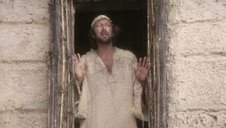
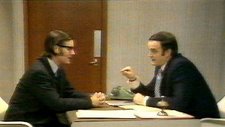
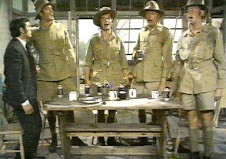
But don't do it like John Cleese.
Friday, February 11, 2011
"shared governance"
My mentor John Lachs kicked the hornet's nest with a recent Chronicle of Higher Education piece.
No whine, just fact.
When I served as chair of the Vanderbilt University Faculty Senate, the chancellor met once a month with the senate's executive committee. The meetings were cordial, but it was clear that the chancellor used them to inform the senate of what he wanted. When the committee challenged some of his ideas, he summarily terminated the meetings, sending his provost to tell us each month what the chancellor had done. "Shared Governance is a Myth"In the comments section, angry and blustering administrators from across the land have crawled out of the woodwork to protest Lachs's candor. People who don't know him are quick to deploy ad hominem irrelevance, one even slurring him (of all people) as an "elitist." Comment #7 should shut them all up:
...based on my experience Professor Lachs is one of the most genuine, generous, affable, gregarious, open-minded, inspiring professors I've come across at 8 universities where I've either studied or taught. He's beloved by many students and faculty there. He's just a really cool guy, and not in the slightest way elitist.After nearly three years as a Senator I can corroborate Lachs's contention. We gather, we sit, we listen to administrators speak of welcoming our perspectives. And then they do what they were going to do. Challenges were not and are not welcome.
No whine, just fact.
Thursday, February 10, 2011
"perfectly" sustainable
Speaking of earthships... and Platonic perfection, Apollonian order, Nietzsche and Sartre...
"This isn't just in housing; it's in clothing and food and transportation and energy... We may have invented excess, but the problem of waste is worldwide.We're in trouble. What we need to do is reconnect with those really primal parts of ourselves, with who we really are."
Socrates & Plato (2)
PW 33-39
1. The ________, aka "practitioners of wisdom," turned away from questions about the origins of the world and the nature of reality towards living and "fun." They wanted to make philosophy more what?
2. A pragmatic interpretation of Protagoras's statement that "man is the measure" suggests that knowledge is what? Ultimately it is a statement of ________. (confidence, doubt, sophistry)
3. What was "the proper business of the philosopher," according to Socrates? What did he consider most valuable? What was his view of truth?
4. (T/F) Like his mentor Socrates, Plato had little interest in systematic philosophy or big metaphysical questions about reality.
5. How many worlds does Plato affirm in his cosmology? How does the everyday world relate to Forms? How do we know the latter is real?
6. The Myth of the Cave is an allegory of the relation between Plato's two worlds, as well as a cautionary tale about the fate of who? By what is the escaped slave dazzled?
7. Who should rule, according to Plato? Did Socrates agree?
8. Even if you reject Plato's world of Forms, what Platonic ideal can you retain? Do yo u?
9. (T/F) Socrates and Plato agreed with the pre-Socratics about "soul" being essentially breath, thus needing a body.
10. What is innate, on Plato's (and Socrates'?) view?
1. The ________, aka "practitioners of wisdom," turned away from questions about the origins of the world and the nature of reality towards living and "fun." They wanted to make philosophy more what?
2. A pragmatic interpretation of Protagoras's statement that "man is the measure" suggests that knowledge is what? Ultimately it is a statement of ________. (confidence, doubt, sophistry)
3. What was "the proper business of the philosopher," according to Socrates? What did he consider most valuable? What was his view of truth?
4. (T/F) Like his mentor Socrates, Plato had little interest in systematic philosophy or big metaphysical questions about reality.
5. How many worlds does Plato affirm in his cosmology? How does the everyday world relate to Forms? How do we know the latter is real?
6. The Myth of the Cave is an allegory of the relation between Plato's two worlds, as well as a cautionary tale about the fate of who? By what is the escaped slave dazzled?
7. Who should rule, according to Plato? Did Socrates agree?
8. Even if you reject Plato's world of Forms, what Platonic ideal can you retain? Do yo u?
9. (T/F) Socrates and Plato agreed with the pre-Socratics about "soul" being essentially breath, thus needing a body.
10. What is innate, on Plato's (and Socrates'?) view?
Wednesday, February 9, 2011
earthships
Earthships, "built to utilize the available local resources, especially energy from the Sun," make a terrific sustainability statement-- in perfect harmony with the native wisdom that we ought to make our container boxes as seamless, green, & light as can be. Harrison told us about them in NW today.
We need lots more of 'em, including a campus demonstration project. And if you can't own, maybe you can rent...
We need lots more of 'em, including a campus demonstration project. And if you can't own, maybe you can rent...
weeds
Red Alert! ch5-6
1. Why is it important to emphasize the collaborative nature of indigenous knowledge?
2. Wildcat renounces "New Age secrets" and romantic tribal mythology (as well as "hard-fact skeptics"). Why do you think native wisdom holds such appeal for New Agers and romantics? What have they misunderstood? (Or, if you're one of them: why does Wildcat renounce your perspective?)
3. What would be the practical utility of "inter-species communication with animals"? What would you tell the wolves? What do you think they'd tell you?
4. In what sense is knowledge a gift? To whom or to what do we owe our gratitude?
5. Indigenous knowledge rejects "linear temporal universal history... progress and civilization." Does that imply a static and possibly stagnant view (& experience) of history? Don't we need collective goals to pursue, in order to advance? Or do we just need Black Elk's "circles"?
6. Do you favor the large-scale development of wind energy? What will it take to bring that about?
7. If there is not a sustainable way for large urban and suburban populations of the future to inhabit the desert southwest, what should be done to address the problem of water scarcity there? What do you think will be?
8. Which creation story (besides evolution) says we were animals before we became human? Are 7 generations enough?
9. Do you agree with Wildcat that emphasis on human design, talk of "the human condition," and affirmations that "man is the measure" are arrogant?
10.[John Dewey on nature-culture... David Quammen on weeds... the "big picture"... James Lovelock... the homeland]
1. Why is it important to emphasize the collaborative nature of indigenous knowledge?
2. Wildcat renounces "New Age secrets" and romantic tribal mythology (as well as "hard-fact skeptics"). Why do you think native wisdom holds such appeal for New Agers and romantics? What have they misunderstood? (Or, if you're one of them: why does Wildcat renounce your perspective?)
3. What would be the practical utility of "inter-species communication with animals"? What would you tell the wolves? What do you think they'd tell you?
4. In what sense is knowledge a gift? To whom or to what do we owe our gratitude?
5. Indigenous knowledge rejects "linear temporal universal history... progress and civilization." Does that imply a static and possibly stagnant view (& experience) of history? Don't we need collective goals to pursue, in order to advance? Or do we just need Black Elk's "circles"?
6. Do you favor the large-scale development of wind energy? What will it take to bring that about?
7. If there is not a sustainable way for large urban and suburban populations of the future to inhabit the desert southwest, what should be done to address the problem of water scarcity there? What do you think will be?
8. Which creation story (besides evolution) says we were animals before we became human? Are 7 generations enough?
9. Do you agree with Wildcat that emphasis on human design, talk of "the human condition," and affirmations that "man is the measure" are arrogant?
10.[John Dewey on nature-culture... David Quammen on weeds... the "big picture"... James Lovelock... the homeland]
part of nature
From Particles to People:
The Laws of Nature and the Meaning of Life
We've been discussing the native/indigenous perspective on naturalism, in NW. What do you think, class, is this relevant?
HUMAN BEINGS DO NOT STAND OUTSIDE NATURE; we are a part of it. Ultimately we are made of particles, evolving and interacting according to the laws of physics. And we know what those laws are — the progress of modern science has reached a point where the laws underlying everyday life are completely understood. This understanding lets us draw strong conclusions about the milieu in which we live. There is no telekinesis, astrology, or life after death. What does this mean for our understanding of consciousness, free will, and the meaning of life? Taking the laws of nature seriously opens a vista of possibility, freeing us from outmoded ideas about what it means to be human. -Sean Carroll (from a recent lecture at Cal Tech)Wouldn't the next logical step, if Carroll's right, be to drop all the "Great Spirit" talk?
Subscribe to:
Posts (Atom)


 Charles Darwin (

 Posts
Posts