1. Andy Clark ________ (welcomes, deplores, is indifferent towards) the prospect.of our becoming "reconfigurable nodes in a flux of information."
2. Tino Sehgal anticipates a new idea of _____ subjectivity.
3. By "hidden persuaders" Helen Fisher means what?
4. Henry Happending says nearly everyone in the "gamete market" will want to select traits like ________. Marco Iacoboni thinks brain stimulation plus brain imaging will offset aging, fix mood disorders, and make it possible for everyone to be ______ in ways specific to their own distinctive neurophysiology. Karl Sabbagh says only good could come from re-engineering ourselves to suppress what?
5. What matters, says Jesse Bering, is not whether our beliefs about the world are accurate but whether they ____. But he also views "explanatory ________" as the cornerstone of science. Clifford Pickover says ____ can explain the color of the sunset.
6. Lee Smolin says the new view of time rules out any timeless and transcendent Platonic realm of values, ethics, and meaning, as well as _____ and ______. They are human projections which would not exist without us.
7. (T/F) Paul Steinhardt says the notion of "events before the Big Bang" is incoherent.
8. If we learn to create the outer human form, says Mark Pagel, we can then separate ____ and ____; then, we'll achieve practical immortality.
9. Pluripotent stem cells come from ______. Ian Wilmut thinks they'll enable us to treat diseases like _________ for which there is no evidence of a genetic cause.
10. Paul Ewald thinks the successful treatment of infectious diseases will result in people living healthily into their ____s, on average.
11. The body's evolved systems are _________ complex, says Randolph Nesse, as if designed by Rube Goldberg and modified by ______ tinkerers; but this is nothing like being __________ complex.
12. The recent global economic collapse, says Brian Goodwin, shows we've failed to appreciate the mutual integration of nature and culture as a sustainable parts of _____.
13. Jonathan Haidt predicts "war" over what, beginning in around 2012?
14. What does Mihaly Csikszentmihalyi mean by "analytic science"?
15. (T/F) Austin Dacey is revolted by the idea of "cultured , in vitro" meat.
16. Richard Foreman says a human being able not to think about the future would become more ________ (animal, human)
17. _________ will soon be the new "self-esteem," says Betsy Devine.
18. When will human nature be revealed, according to Aubrey de Grey?
NOTE TO FoL STUDENTS: Exam 2 is Wednesday. We'll go over this quiz first. If you want to submit possible exam questions please get them to me by Tuesday evening.
Monday, October 25, 2010


Friday, October 22, 2010
entangled
We heard an interesting report from Will yesterday on reason, responsibility, Battlestar Galactica, Objectivism, and much else. Our classroom was his pulpit for 20 minutes.
The Q-and-A brought us to a discussion of the infamous double-slit electron experiment as featured in the film "What the [Bleep] Do We Know." One implication seemed to be that, because observations at the quantum level alter experimental results, "we're not supposed to know" reality. Or "magic is real," or "God exists," or... I'm not quite sure what. [bleeping banality...e-Skeptic review... debunked...Secret... Shermer vs. Chopra]
Steven Novella thinks this particular example of quantum weirdness is a species of a broader pattern of misunderstanding, often perpetrated by the likes of Deepak Chopra. In the wave-particle duality of matter, illustrated by the double-slit experiment, "the collapse to a particle is not dependent on any observer – just interaction with other stuff. No observer is necessary." Chopra has interpreted this experiment as showing that the future can mysteriously alter the past. Novella says nonsense. "Physicists do not pretend to understand the fundamental nature of quantum entanglement."
Well, me neither. But Novella's observation rings true to me:
The Q-and-A brought us to a discussion of the infamous double-slit electron experiment as featured in the film "What the [Bleep] Do We Know." One implication seemed to be that, because observations at the quantum level alter experimental results, "we're not supposed to know" reality. Or "magic is real," or "God exists," or... I'm not quite sure what. [bleeping banality...e-Skeptic review... debunked...Secret... Shermer vs. Chopra]
Steven Novella thinks this particular example of quantum weirdness is a species of a broader pattern of misunderstanding, often perpetrated by the likes of Deepak Chopra. In the wave-particle duality of matter, illustrated by the double-slit experiment, "the collapse to a particle is not dependent on any observer – just interaction with other stuff. No observer is necessary." Chopra has interpreted this experiment as showing that the future can mysteriously alter the past. Novella says nonsense. "Physicists do not pretend to understand the fundamental nature of quantum entanglement."
Well, me neither. But Novella's observation rings true to me:
Don't get tangled up in woo: solid advice. And, reservations aside, a good provocative report, too.Chopra is using a common trick of the pseudoscientist – exploiting cutting edge science, which the public is not likely to understand, and pretend as if there is proof where there is uncertainty. Take some interesting experiments, then leap way ahead to conclusions that serve their metaphysical purposes, but which are not settled science.In short – beware of anyone pretending to understand the ultimate implications of Quantum Mechanics and that it supports their far out philosophy.
Thursday, October 21, 2010
global brain

Experts compare the Internet to a planet growing a global brain. As users, we represent the neurons. Texting, emails, and IM act as nerve endings, and electromagnetic waves through the sky become neural pathways. Like germinating seeds, this global brain continues to evolve and as some forward-thinkers believe, will not stop until it develops feelings and achieves consciousness. FutureBloggerI think Jaron Lanier will have something to say about this, and about how we ought to be less eager to turn ourselves into neuron-gadgets. We'll see. Meanwhile, if we all get an unsolicited email of unknown provenance... we'll have to see about that too. Is the singularity near?
intro quiz 13
1. Among the notable developments of the 15th-16th century Renaissance were shifts from astrology to __________ and from _______ to chemistry.
2. Machiavelli distinguished himself from his medieval predecessors how? What was his view of republican democracy?
3. ________, one of the New Humanists, criticized professors and Popes. ______'s "Utopia,"with no private property, resembled Plato's "Republic" as an imaginary "perfect society."
4. __________, leader of the Protestant Reformation, upheld the authority of ________, defended faith and ___________, and opposed __________.
5. ________ also defended predestination, and claimed that even newborns deserve eternal damnation.
6. Copernicus advocated ________. (geocentrism, heliocentrism, pantheism)
7. _______ confirmed Copernicus' theory with his new telescope.
8. _________ practiced constant critical inquiry and said we can't create lowly worms but think nothing of creating gods.
9. _______, believed by some to have written Shakespeare's plays, said "knowledge is power."
10. ______, a determinist, said life in a state of nature would be "solitatary, ____..."
Wednesday, October 20, 2010
FoL quiz 12
1. Eric Drexler says a 3-terrawatt solar array could remove excess anthropogenic carbon in ___ years.
2. Stewart Brand says fixing climate change will require global __________. (cooperation, economics, governance)
3. Max Tegmark estimates the likelihood of accidental nuclear war as comparable to his own likelihood of ______ ______, about ___%.
4. After a significant deployment of WMDs somewhere in the world, says Dan Sperber, we can expect individual liberty and national autonomy to be ________. (enhanced, limited, eliminated)
5. If we want to reduce population growth we should _____ (boost, cut) the gross domestic product of the _______ (richest, poorest) countries, according to Patrick Bateson.
6. "_______ is the power of the future, & always will be."
7. Synthetic biofuel technology will replicate the natural production of ____.
8. The most world-changing thing about large-scale geoengineering, says Oliver Morton, is that it would be __________ and might finish off the idea of ________.
9. Daniel Goleman says innovations in _________ can bring about more sustainable consumerism.
10. Alternative energy sources will be ____ economically appealing when produced synthetically in a lab or factory. (more, less, no more or less)
11. Besides gender and age differentials, says Nick Christakis, an overlooked feature of the human environment is _______ ________.
12. Haim Harari says education reform will be more likely as those who grew up with _________ enter the teaching profession.
13. (T/F) E-texts promote democracy, says David Myers.
14. Chris Anderson says a teacher who reached a hundred students five years ago can now hope to reach ________, and teaching is becoming a prestigious vocation.
15. (T/F) Roger Schank says in the future we'll have "reminding machines" that will make libraries obsolete.
16. (T/F) David Gelernter says in the future personal learning consultants will proliferate and teachers will nearly disappear.
17. (T/F) Keith Devlin thinks mobile phones are subverting democracy.
18. What's the difference between Type I, II, & III civilizations? What are we? What stands between us and the realization of our potential?
19. Daniel Everett forecasts universal __________, Thomas Metzinger predicts virtual models of our own bodies, or _______, and Tors Norretranders thinks we'll lose the distinction between ______ and ______.
20. Garrett Lisi calls ________ "Pascal's Wager for Singularitarians."
21. Neurocosmetics will ________ (reinforce, validate, undermine) the feeling of stable personal identity, says Marcel Kinsbourne. (T/F) Brian Knutson thinks targeted brain stimulation will be unacceptably invasive.
2. Stewart Brand says fixing climate change will require global __________. (cooperation, economics, governance)
3. Max Tegmark estimates the likelihood of accidental nuclear war as comparable to his own likelihood of ______ ______, about ___%.
4. After a significant deployment of WMDs somewhere in the world, says Dan Sperber, we can expect individual liberty and national autonomy to be ________. (enhanced, limited, eliminated)
5. If we want to reduce population growth we should _____ (boost, cut) the gross domestic product of the _______ (richest, poorest) countries, according to Patrick Bateson.
6. "_______ is the power of the future, & always will be."
7. Synthetic biofuel technology will replicate the natural production of ____.
8. The most world-changing thing about large-scale geoengineering, says Oliver Morton, is that it would be __________ and might finish off the idea of ________.
9. Daniel Goleman says innovations in _________ can bring about more sustainable consumerism.
10. Alternative energy sources will be ____ economically appealing when produced synthetically in a lab or factory. (more, less, no more or less)
11. Besides gender and age differentials, says Nick Christakis, an overlooked feature of the human environment is _______ ________.
12. Haim Harari says education reform will be more likely as those who grew up with _________ enter the teaching profession.
13. (T/F) E-texts promote democracy, says David Myers.
14. Chris Anderson says a teacher who reached a hundred students five years ago can now hope to reach ________, and teaching is becoming a prestigious vocation.
15. (T/F) Roger Schank says in the future we'll have "reminding machines" that will make libraries obsolete.
16. (T/F) David Gelernter says in the future personal learning consultants will proliferate and teachers will nearly disappear.
17. (T/F) Keith Devlin thinks mobile phones are subverting democracy.
18. What's the difference between Type I, II, & III civilizations? What are we? What stands between us and the realization of our potential?
19. Daniel Everett forecasts universal __________, Thomas Metzinger predicts virtual models of our own bodies, or _______, and Tors Norretranders thinks we'll lose the distinction between ______ and ______.
20. Garrett Lisi calls ________ "Pascal's Wager for Singularitarians."
21. Neurocosmetics will ________ (reinforce, validate, undermine) the feeling of stable personal identity, says Marcel Kinsbourne. (T/F) Brian Knutson thinks targeted brain stimulation will be unacceptably invasive.
Tuesday, October 19, 2010
Fall '11 student survey
Last Spring I ran a student survey to solicit course suggestions. The consensus result: "Environmental Ethics and native wisdom," coming in January.
So, for those who plan to matriculate at our fair institution (or would like to), here's another opportunity to express yourself. If more than one of these hypothetical courses appeals to you, rank them according to your preference for the Fall 2011 semester.
__ Attention, Information, and Distraction. William James said if you can control your attention you can be happy and free. But many of us lately feel distracted and overwhelmed by information and our "social networks." Can philosophy help? Besides James we'd look at recent perspectives from people like Winifred Gallagher (Rapt: Attention and the Focused Life), Maggie Jackson (Distracted: The Erosion of Attention and the Coming Dark Age), Kevin Kelly (What Technology Wants), Steven Johnson (Where Good Ideas Come From), and Jaron Lanier (You Are Not a Gadget).
__ Experimental Ethics. The new "X-Phi" ("experimental philosophy") movement is not really new, empiricists have always sought "data." American philosophy in particular has always emphasized experimentalism. But there has been a noticeable upswing of interest lately, to go with the catchy new name, at the instigation of philosophers like Anthony Appiah (Experiments in Ethics). They wonder about David Hume's claim that you can't get an "ought" from an "is" and are eager to test it. In his new book The Moral Landscape, Sam Harris challenges the Humean view and wonders if science can "determine values." Good question.
__ Experience. How much deference do we owe to other persons' experience when it differs from, or even contradicts, our own? What kind(s) of pluralism should we defend and practice? Can we credit, or at least respect, experiences we've not had ourselves and may even be skeptical about? James's Varieties of Religious Experience, Sagan's Varieties of Scientific Experience, and Emerson's famous essay "Experience" are among the relevant sources. So is your own experience.
__ Childhood and Early Education. Taught this in Fall '08, we read William James, Talks to Teachers on Psychology, and to Students on Some of Life's Ideals; John Dewey, The School and Society & The Child and the Curriculum Harry Brighouse, On Education; Ann Hulbert, Raising America: Experts, Parents, and a Century of Advice About Children; Stephen Law, The War for Children's Minds; and Neil Postman, The Disappearance of Childhood
__ Philosophy of Happiness. Taught this in Fall '09, we read Sonja Lyubomirsky, The How of Happiness; Jonathan Haidt, The Happiness Hypothesis; Matthieu Ricard, Happiness; Eric Wilson, Against Happiness; Jennifer Michael Hecht, The Happiness Myth; and Steven Cahn, ed., Happiness: Classic and Contemporary Readings in Philosophy.
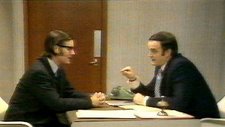
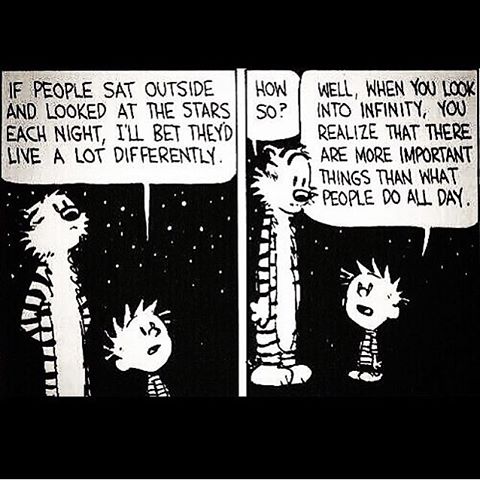
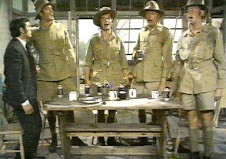
__ Philosophy and Humor. This course would feature the funny side of philosophy, from Monty Python's "Argument Clinic" and Philosophers' Football sketch (etc.) to Jesus and Mo to Calvin and Hobbes and Woody Allen ("My Apology"), always tempted to peek into the soul of his neighbor. Philosophers have given serious thought to the likes of the Simpsons, Jon Stewart, Stephen Colbert, South Park, and The Onion.So will we, if enough of you vote for this class. We'll also ask: What is the value of approaching Big Questions with a grin? Should we question everything, and laugh at it too? Why is laughter such good medicine?
__ Philosophy and Sports. Many of us spend much too much time and emotional energy on spectator sports, professional and amateur. How much is too much? What does it matter? What's the point of playing, and of watching them play? Is big-time collegiate athletics defensibly "amateur"? Are exorbitant professional salaries justified? Is our continued interest in games a form of infantilism, or a sign of healthy engagement? And most important of all: how is baseball so clearly superior to football?
__ Humanism and Meaning. This course would resemble the "Atheism & Spirituality" course from last Spring, but this time with even greater attention to the reasons for affirming humanism (naturalism, atheism) rather than for rejecting theism. We'd explore and critique the claim that a humanist worldview is as meaningful to its adherents as theism is to theists, with John Dewey's A Common Faith, Andre Comte-Sponville's Little Book of Atheist Spirituality, Bertrand Russell's "A Free Man's Worship" and "Why I'm Not a Christian," and more recent voices as well. What makes life worth living, for those who do not seek for meaning beyond it?
__ [Your suggestion(s) here].
So, for those who plan to matriculate at our fair institution (or would like to), here's another opportunity to express yourself. If more than one of these hypothetical courses appeals to you, rank them according to your preference for the Fall 2011 semester.
__ Attention, Information, and Distraction. William James said if you can control your attention you can be happy and free. But many of us lately feel distracted and overwhelmed by information and our "social networks." Can philosophy help? Besides James we'd look at recent perspectives from people like Winifred Gallagher (Rapt: Attention and the Focused Life), Maggie Jackson (Distracted: The Erosion of Attention and the Coming Dark Age), Kevin Kelly (What Technology Wants), Steven Johnson (Where Good Ideas Come From), and Jaron Lanier (You Are Not a Gadget).
__ Experimental Ethics. The new "X-Phi" ("experimental philosophy") movement is not really new, empiricists have always sought "data." American philosophy in particular has always emphasized experimentalism. But there has been a noticeable upswing of interest lately, to go with the catchy new name, at the instigation of philosophers like Anthony Appiah (Experiments in Ethics). They wonder about David Hume's claim that you can't get an "ought" from an "is" and are eager to test it. In his new book The Moral Landscape, Sam Harris challenges the Humean view and wonders if science can "determine values." Good question.
__ Experience. How much deference do we owe to other persons' experience when it differs from, or even contradicts, our own? What kind(s) of pluralism should we defend and practice? Can we credit, or at least respect, experiences we've not had ourselves and may even be skeptical about? James's Varieties of Religious Experience, Sagan's Varieties of Scientific Experience, and Emerson's famous essay "Experience" are among the relevant sources. So is your own experience.
__ Childhood and Early Education. Taught this in Fall '08, we read William James, Talks to Teachers on Psychology, and to Students on Some of Life's Ideals; John Dewey, The School and Society & The Child and the Curriculum Harry Brighouse, On Education; Ann Hulbert, Raising America: Experts, Parents, and a Century of Advice About Children; Stephen Law, The War for Children's Minds; and Neil Postman, The Disappearance of Childhood
__ Philosophy of Happiness. Taught this in Fall '09, we read Sonja Lyubomirsky, The How of Happiness; Jonathan Haidt, The Happiness Hypothesis; Matthieu Ricard, Happiness; Eric Wilson, Against Happiness; Jennifer Michael Hecht, The Happiness Myth; and Steven Cahn, ed., Happiness: Classic and Contemporary Readings in Philosophy.
__ Philosophy and Humor. This course would feature the funny side of philosophy, from Monty Python's "Argument Clinic" and Philosophers' Football sketch (etc.) to Jesus and Mo to Calvin and Hobbes and Woody Allen ("My Apology"), always tempted to peek into the soul of his neighbor. Philosophers have given serious thought to the likes of the Simpsons, Jon Stewart, Stephen Colbert, South Park, and The Onion.So will we, if enough of you vote for this class. We'll also ask: What is the value of approaching Big Questions with a grin? Should we question everything, and laugh at it too? Why is laughter such good medicine?
__ Philosophy and Sports. Many of us spend much too much time and emotional energy on spectator sports, professional and amateur. How much is too much? What does it matter? What's the point of playing, and of watching them play? Is big-time collegiate athletics defensibly "amateur"? Are exorbitant professional salaries justified? Is our continued interest in games a form of infantilism, or a sign of healthy engagement? And most important of all: how is baseball so clearly superior to football?
__ Humanism and Meaning. This course would resemble the "Atheism & Spirituality" course from last Spring, but this time with even greater attention to the reasons for affirming humanism (naturalism, atheism) rather than for rejecting theism. We'd explore and critique the claim that a humanist worldview is as meaningful to its adherents as theism is to theists, with John Dewey's A Common Faith, Andre Comte-Sponville's Little Book of Atheist Spirituality, Bertrand Russell's "A Free Man's Worship" and "Why I'm Not a Christian," and more recent voices as well. What makes life worth living, for those who do not seek for meaning beyond it?
__ [Your suggestion(s) here].
Monday, October 18, 2010
primal roots
Wanted to use Bruce Wilshire's Primal Roots of American Philosophy in the "Environmental Ethics and native wisdom" course, but it's too expensive in hardcover and unavailable in paper. (There is a cheap kindle edition. More evidence that our environment is going digital.)
Friday, October 15, 2010
Environmental Ethics & native wisdom
Coming January 2011 (Wtr./Spg. Semester), Middle Tennessee State University-
Philosophy 4800.1, Readings in Philosophy:
Environmental Ethics & native wisdom
The environmental ethics course, covering familiar issues involving climate change, global warming, the ethics of industrial agriculture and food distribution, the vehicles we drive, the homes we build, the waste we generate, the time we waste, the technology some think will save us from ourselves, how we conceive our relation to the rest of nature, and generally just the whole impact we humans have on our planet and biosphere… will add a new dimension next semester: the pre-scientific wisdom of indigenous and native peoples.
We’ll look at what lessons we might learn about living lightly and harmoniously on Earth from native and indigenous peoples—including native American sources, of course, but also imaginative and fictive ones like “Avatar”-- and how those lessons may either complement, challenge, or contradict the dominant western scientific-technological worldview.
TEXTS include:
- Nature's Way: Native Wisdom for Living in Balance with the Earth
- The Vanishing Face of Gaia: A Final Warning
- Whole Earth Discipline: Why Dense Cities, Nuclear Power, Transgenic Crops, Restored Wildlands, and Geoengineering Are Necessary
- Red Alert!: Saving the Planet with Indigenous Knowledge
- Native Science: Natural Laws of Interdependence
The class will meet on Mondays and Wednesdays from 12:40 to 2:05 in the James Union Building (Room #202) at MTSU, beginning in January 2011. Watch for details, or contact Dr. James P. Oliver (poliver@mtsu.edu) for further information.
Thursday, October 14, 2010
ineffable

2. Jewish mysticism is called ________ , or "tradition". ______ is an Islamic mystical tradition related to neo-Platonism which aims to eliminate ___ .
3. "What is the sound of one hand clapping?" is an example of a ___ ____, which attempts to subvert our usual habits of thought and break down everyday logical thinking.
4. Zen Buddhism says all things depend on their relations to everything else, implying the ____________ of everything.
5. Admirers of Aristotle who walked around with him as he lectured were called ____________. They were strongly influenced by ________.
6. _________ rejected Neoplatonism and said literalism was good enough for ordinary people but that educated people required persuasive, reasoned argument.
7. _________ attempted to reconcile religion with reason and science.
8. _______, whose motto was "Faith seeking to understand," advanced his ontological argument for the existence of God in order to ___________. (persuade nonbelievers, clarify "God" for believers)
9. _______ was a nominalist, contending that only individuals exist. Those who say that universals exist are ________. Abelard's view was that they are tricked by _____.
10. Aquinas agreed with Aristotle: an ______________ makes no sense and should not be accepted in philosophy or theology.

Wednesday, October 13, 2010
Subscribe to:
Posts (Atom)


 Charles Darwin (

 Posts
Posts