Showing posts with label Stewart Brand. Show all posts

Monday, March 14, 2011

pineal gland

Interesting NW class today, thanks to questions from Clark & Jon on (respectively) Earth's long-term good* and the ethics of carnivorousness [see Michael Pollan's "An Animal's Place" & Omnivore's Dilemma], and then Kayla's report on the pineal gland. I'm sure we'll return to all of these topics in class again, but on the latter some might be interested in this article about Descartes' interest in that gland as the "seat of the soul":

Incorporeal volitions cannot move the corporeal pineal gland because this would violate the law of the conservation of energy. Descartes did not have this problem because he did not know this law...
As philosophy reduced the pineal gland to just another part of the brain and science studied it as one endocrine gland among many, the pineal gland continued to have an exalted status in the realm of pseudo-science. Towards the end of the nineteenth century, Madame Blavatsky, the founder of theosophy, identified the “third eye” discovered by the comparative anatomists of her time with the “eye of Shiva” of “the Hindu mystics” and concluded that the pineal body of modern man is an atrophied vestige of this “organ of spiritual vision.” This theory is still immensely popular today. 
My own view, to paraphrase Ray Stevens: every gland is beautiful, in its own way... but none of them is likely to reconcile metaphysically-distinct res extensa  and res cogitans. It's part of the brain, whose works & wonders we've only just begun to grasp.

Oh, and about the symbolism of those pine cones: remember, futurists, the bristlecone pines from Clock of the Long Now?
Rings in some dead bristlecone trunks on the mountain [Mt. Washington in Nevada]  go back 10,000 years... 'Find a bristlecone you like and hang out with it. Forget the present. Think about the past and the future.'
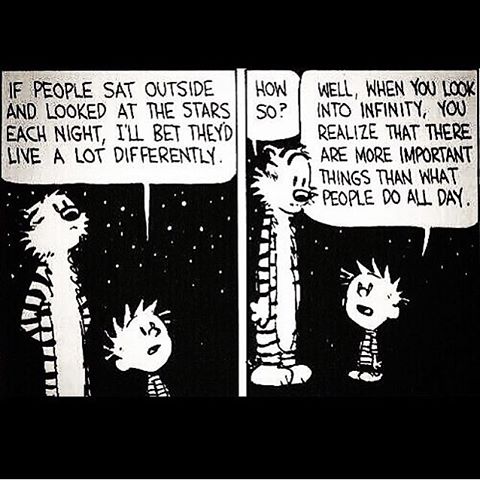
Think, in other words, deeper than seven generations. Think really long-term, and don't despair.
==
* The way Clark phrased his question reminded me of this...


and this:

Saturday, June 12, 2010

Whole Nukes

Speaking of necessary debates: here's one now. Stewart Brand trusts us to play with the nuclear genie. Is that really "ecological pragmatism," or short-sighted desperation? The catalog is not what it used to be.

Wednesday, December 23, 2009

future of the future

I always find myself thinking a semester ahead this time of year, with part of my attention, and so today I'm thinking about a course I'll teach in the Fall, "The Future of Life."

Eight months is not what Stewart Brand and his friends at the Long Now Foundation call "long-term thinking." They want us to start keeping time on a 10,000 year cycle.

That's still a drop in the bucket, "cosmic calendar"-wise, but it sure puts the 24-hour news cycle mentality to shame. It may just be the change we ultimately need, if life on this dusky orb is to have a long-term future.

Thursday, March 1, 2007

Stewart Brand's new shade of green

Stewart Brand, the Whole Earth Catalog publisher (and instigator of Earth's first full-frontal photo portrait), online pioneer, former Merry Prankster, and free-thinking '60s icon, wants to know "where are the green biotech hackers?" He says we should -- and predicts that environmentalists soon will -- embrace nuclear power, genetic engineering, and biotech. He says population is not going to be a problem, nor will urban sprawl. ("An Early Environmentalist, Embracing New 'Heresies'," NYTimes, 2.27.07)

Is he nuts? I don't know, but after re-reading Bill McKibben's classic End of Nature in our environmental ethics class I'm struck by this Brand observation:

"My trend has been toward more rational and less romantic as the decades go by. I keep seeing the harm done by religious romanticism, the terrible conservatism of romanticism, the ingrained pessimism... It builds in a certain immunity to the scientific frame of mind."

I have a lot of respect for McKibben, but I can't warm to his Deep Ecology version of romanticism according to which nature's meaning is her independence of all things human. When he urges that we remain God's creatures rather than aspiring to godhood ourselves, I wonder if there isn't a saner intermediate position: we don't have to be gods, to be responsible global citizens and effective caretakers of the planet (for a change). We are the part of nature that can -- but too rarely does -- think about how to clean up after itself. McKibben makes clear, in this book, in Enough, and probably in his forthcoming Deep Economy -- that he thinks we must rein ourselves in, stop growing, stop re-engineering the planet and ourselves, declare "halt!"

I'm with Stewart Brand on this: "you have to keep trying new things," like biotech, and sometimes you have to rehabilitate old ones -- maybe even nukes.

KurzweilAI.net Accelerating Intelligence News