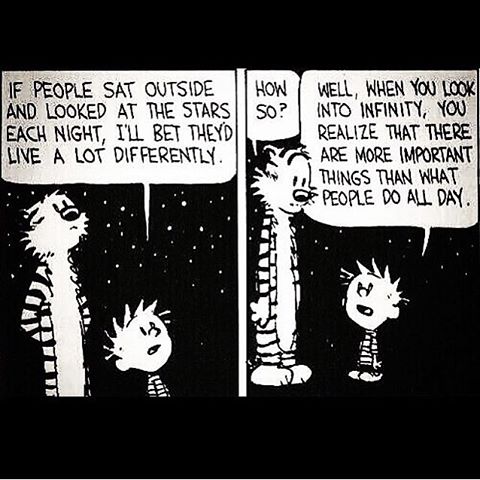
Maybe the world of athletic competition isn't ready for cosmopolitanism, after all.

And I do totally agree: many of us don't feel a need for Jesus to furnish our lives with meaning, though we admire his message-- which was not exclusively his, of course-- of hope and charity and love and forgiveness etc. But like William James and Adam Gopnik I must also acknowledge the "double feeling" of so many others for whom sweet reason seems not to be enough.3:35[Comment From Osopher]Thanks for clarifying the end of the essay. But it still bothers me that you evoke a "mystery" surrounding this man, rightly credited by Jefferson with moments of moral sublimity but also documented by Bart Ehrman and others as having been almost uniformly misunderstood. So my question: what do you see as the unsolved mystery about Jesus of Nazareth?3:36Adam Gopnik: By "unsolved mystery" I meant only that there are aspects of the Jesus myth that are just never going to be susceptible to rational judgment, and that faith, as everyone says, remains a leap -- foolish or necessary -- but a leap past reason. [...]3:38[Comment From Osopher]So the mystery might be more about us: why do so many find reason so uncongenial?3:39Adam Gopnik: Because our lives are bounded by the certainty of death, I suppose, and what reason can give us seems, to some -- to so many -- unsatisfying. I'm with Darwin on this one -- enough in life to give anyone meaning, if we make it hard enough -- but I understand the opposite feeling. Much the best account of this, I think-- this double feeling --is in William James's "Varieties Of Religious Experience" [...]3:42[Comment From Osopher]Totally agree about Darwin and James. Thanks for the chat and for the review, I've got to go and pick up the kids now.3:43Adam Gopnik: Pleasure sharing views; even in this odd and pixeled forum.


Will we ever learn?
Jon Haidt scorns the old, long-rejected behaviorist dogma that "Unconditional love-- holding, nuzzling, and cuddling children for no reason... was the surest way to make [them] lazy, spoiled, and weak... John Watson wrote of his dream that one day babies would be raised in baby farms, away from the corrupting influences of parents. But until that day arrived, parents were urged to use behaviorist techniques to rear strong children: Don't pick them up when they cry, don't cuddle or coddle them, just dole out benefits and punishments for each good and bad action." (Happiness Hypothesis ch.6)
Might as well throw them to the wolves.
Recently, more humane voices had squelched the behaviorist din (and rescued infant organisms from the den): "children need love as well as milk," and touch, and secure, reliable, attached, nurturing parents who demonstrate no-strings affection.
But the hydra has been rearing its head again. One of its faces belongs to the ubiquitous Dr. Phil (no relation), who "tells us in his book Family First that what children need or enjoy should be offered contingently, turned into rewards to be doled out or withheld so they 'behave according to your wishes.' And 'one of the most powerful currencies for a child is the parents’ acceptance and approval.'"
And TV's Supernanny (or is it -ninny?) says, “The best rewards are attention, praise and love,” and these should be held back “when the child behaves badly until she says she is sorry,” at which point the love is turned back on.
I'm with Haidt on this one, and with Alfie Kohn when he writes that he'd be "glad to see less demand for skillful therapists if that meant more people were growing into adulthood having already felt unconditionally accepted." (Hap Hyp ch7)
Unconditional love doesn't mean total comfort and ease. The character-building benefits of (some) adversity in a child's life are evident and attractive, just as the squishy softness of privilege's children is repellent. I heard actor Wallace Shawn on Bob Edwards last Thursday, reading his autobiographical essay on the subject. Ick! (There's just something about the lives of New Yorker children... recalling Mr. Gill of Starbucks' fame).
But this new "free range" movement, letting small children walk (or ride the subway!) to school unaccompanied by a trusted adult? No. This is not Gilligan's Island, and we're supposed to be raising humans here. But yes, give them permission to eat a cookie without calling. That seems safe enough.


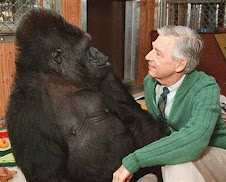
"Hello, babies. Welcome to Earth. It's hot in the summer and cold in the winter. It's round and wet and crowded. At the outside, babies, you've got about a hundred years here. There's only one rule that I know of, babies—God damn it, you've got to be kind." God Bless You, Mr. Rosewater (and see Mr. Rogers, below)

"Love may fail, but courtesy will prevail."
Jailbird, prologue

When asked in 1978 about his writing process, Updike said, “I’ve never believed that one should wait until one is inspired because I think that pleasures of not writing are so great that if you ever start indulging them, you will never write again.”
After the birth of his third child, he had rented an office above a restaurant in Ipswich, and spent several hours each morning writing there. Throughout his 50-year career, he remained devoted to that schedule, writing about three pages every morning after breakfast, sometimes more if things were going well. He said: “Back when I started, our best writers spent long periods brooding in silence. Then they’d publish a big book and go quiet again for another five years. I decided to run a different kind of shop.” WA


 | Alain de Botton (@alaindebotton) |
Why ‘Earthrise’ Matters thebookoflife.org/why- | |
 | Five Books (@five_books) |
The 'father of science fiction' HG Wells suffered terribly from class anxiety. Huxley and Woolf thought him 'vulgar' == Five books on... | |


 Charles Darwin (@cdarwin)1/11/15, 6:51 AM
"And maybe this is what I have learned more than anything from my great-great-grandfather: to keep my eyes and my mind open, to enjoy the wonders of nature and never cease to ask questions." Sarah Darwin, foreword to "A Modest Genius: The story of Darwin's life and how his ideas changed everything" by Hanne Strager


 Posts
All Comments


 Posts
All Comments