...we are all part of one family. That's not just a nice, naive image; either we are all losers or all winners in terms of survival. Now we can't say it makes sense for just one nation to be powerful, rich, and so forth. If the whole world is starving, we'll create immense wars and difficulty. And the environment can only be a chance national solution. So hopefully, evolution wouldn't take hold quickly enough so that altruistic behavior become — not just seemingly altruistic behavior, which is selfishness in disguise...True altruism is a genuine consideration for all sentient beings, whether they are your tribe, your relatives, your own gene lines — forget about that, it has now to be concern for all that lives. (Full transcript)
Showing posts with label Matthieu Ricard. Show all posts
Showing posts with label Matthieu Ricard. Show all posts
Monday, October 31, 2011
"Happiest Man in the World"
No, not me on Friday night after the last out of the 2011 World Series, but Matthieu Ricard (despite his "1,000 disclaimers"). He was just featured on "On Being" (the radio show formerly known as "Speaking of Faith") with Krista Tippett. We read him in SOL last month. A wise man, combining the best of science and humane spirit.


Thursday, October 1, 2009
How to Do It
"Make your mind as vast as the sky and you will find that the waves of afflictive emotions have lost all the strength you had attributed to them." M. Ricard
So that's how you do it. Sounds simple enough, why didn't I think of that? The brain is wider than the sky...
Wednesday, September 30, 2009
Scrooge
.jpg) "There is no sadder sight than a young pessimist.” Mark Twain
"There is no sadder sight than a young pessimist.” Mark TwainTalking about the old pessimist Schopenhauer today-- he was a young pessimist once, too-- I mused that he'd lived to a relatively ripe old age for someone so sure that life was a mistake and a burden. (In fact, he made it to just 72. His disposition made him look at least that old, in photographs, long before his eventual expiration date.)
Camus said we must imagine Sisyphus happy. Schopenhauer, too? He does seem to have enjoyed his misery and misogyny and misanthropy, and even to have lived for it. He could've checked out early. Life: love it or leave it. Isn't that the existentialist/pessimist credo? In fact, he rejected suicide on philosophical grounds even though personal events brought it close to home.
"His father killed himself in 1805. [That might explain some things, eh?] However, he insists that suicide is a cowardly act... we do not really [on his metaphysical view] will but are willed by an unconscious agency over which we have no power. The problem with suicide, then, is that it maintains the illusion of willfulness. For Schopenhauer, the only permissible suicide is the self-starvation of the ascetic..." But why is even that "permissible," if we're all under the sway of a voracious and implacable Will, endlessly striving for no purpose larger than its own blind and pointless continuance?
The young Schopenhauer, btw, had not only been a romantic figure for the trendy young pessimists who made him their paragon; he was himself disappointed in love. Matthieu Ricard's statement seems tailor-made for our philosopher: "We can respond to heartbreaks by trying to forget them, distracting ourselves, moving away, going on a trip, and so on, but these are merely plaster casts on a wooden leg." Schopenhauer's cast was metaphysical. Did it assuage his heartbreak? Doubtful.
For the record: "he was found dead sitting in his chair on 21 September 1860." He hadn't missed any meals. Simon Critchley
Tuesday, September 22, 2009
happy yet?
 Are we having fun, in Happiness 101?
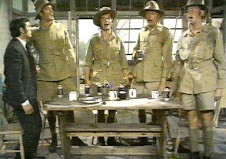
 I know I did today, from the small ovation acknowledging that I'm not dead yet-- health and the drugs that are helping restore it are at the top of my happy list today-- to the Python song ("Is mankind evolving or is it too late?") through the discussions of virtue, transcendence, and Herodotus.
"Call no man happy 'till he dies," btw, is said to be a misattribution. "Herodotus actually attributes this to Solon..." And several variants are on record, including "Deem no man happy, until he passes the end of his life without suffering grief." Hmmm. That sheds some light on things. If that's what he said, I have to disagree emphatically. We're a more resilient species than that. I grieved hard for my parents last year, it hurt a lot... and I'm happy today. Yesterday too.
Hope we talk again about "trans-end-dance," moving beyond the "end" really is a crucial step towards permanent personal flourishing. And think some more about what you'd do if you knew you had a day to live. If you can answer that honestly, you'll know what makes you happy-- at least on my reckoning. No bucket list here.
I agree with those who say we shouldn't constantly pester ourselves with that question, but I still see no harm and lots of benefit in saying to yourself as often as you can (and mean it): "I'm happy!"
Don't forget to look at that other Python clip, if you really want to know the meaning of life.
One more thing I meant to to mention today: the "most-emailed" New York Times article in recent days has been Maureen Dowd's column claiming women are less happy than men. True?
Next up: Monsieur Ricard, the monk of Monk and Philosopher fame. Who knew a Frenchman could radiate such bliss? What would Sartre* say?
*Here's what he said: "Ah, and the myth of Happiness; there are those spellbinding slogans which advise you how to be happy as quickly as possible; there are the films with the happy endings, which every evening show life in rose colors to harassed crowds.
There is that language, laden with optimistic expressions, "Having a good time," "enjoy yourself," "life is fun," "Don't worry, be happy," etc. - and then there are those who are pursued into the most conformist happiness by an obscure malaise that does not know what to call itself... An American said to me, "The trouble is that each of us is haunted by the fear of being less American than his neighbor."
Subscribe to:
Comments (Atom)


 Charles Darwin (

 Posts
Posts