Sunday, August 21, 2022

No gurus

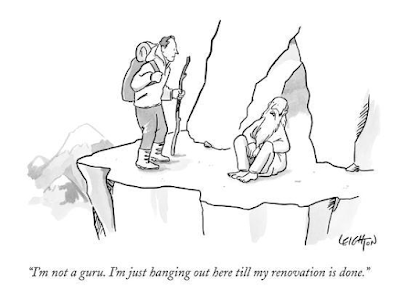
 I always tell students on Opening Day to resist the Guru model of wisdom. Philosophy is collaborative. Authority figures do not appeal. 

"...there is no teacher, no pupil; there is no leader; there is no guru; there is no Master, no Saviour. You yourself are the teacher and the pupil; you are the Master; you are the guru; you are the leader; you are everything." Well, Krishnamurti, I wouldn't go that far.

"People usually come to the front door."
More...


Future of Humanity Institute

Tuesday, August 16, 2022

Wendell Berry on Delight

 ...as a Force of Resistance to Consumerism, the Key to Mirth Under Hardship, and the Measure of a Rich Life

"I have always had a quarrel with this country not only about race but about the standards by which it appears to live," James Baldwin told Margaret Mead as they sat down together to reimagine democracy for a post-consumerist world. A generation later, the poet, farmer, and ecological steward Wendell Berry — a poet in the largest Baldwinian sense — picked up the time-escalated quarrel in his slim, large-spirited book The Hidden Wound (public library) to offer, without looking away from its scarring realities, a healing and conciliatory direction of resistance to a culture in which our enjoyment of life is taken from us by the not-enoughness at the hollow heart of consumerism, only to be sold back to us at the price of the latest product, and sold in discriminating proportion along lines of stark income inequality... (continues)

Maria Popova

Sunday, August 14, 2022

characteristic delight

"Unsurprisingly, the back of Either/Or didn’t say which kind of life was better. All it said was: “Does Kierkegaard mean us to prefer one of the alternatives? Or are we thrown back on the existentialist idea of radical choice?” That had probably been written by a professor. I recognized the professors’ characteristic delight at not imparting information."

Either/Or" by Elif Batuman: https://a.co/4q7yZ0f

Saturday, August 6, 2022

If heaven ain't a lot like Wrigley

and Chavez Ravine...

Wednesday, August 3, 2022

E B White’s morning dilemma

How do you resolve this, rationally?


https://images.app.goo.gl/B3BMqYE4cLaCFav86


Phil.Oliver@mtsu.edu
👣Solvitur ambulando
💭Sapere aude

Monday, July 18, 2022

Cosmic biocentrism

"With the discoveries of the Kepler satellite in the last five years, it is almost certain that life exists elsewhere in the universe. (Given the unimaginable number of habitable planets, the absence of life beyond Earth would be like the absence of fires in a million dry forests, year after year after year.) The Kepler discoveries, plus the rarity of life in time and in space discussed here, lead to a concept I will call “cosmic biocentrism.” By that, I mean that the rarity and preciousness of life provides a kinship to all living things in the universe. I cannot imagine what kinds of thoughts, what kinds of values and principles, other living beings might have. But we share something in the vast corridors of this cosmos we find ourselves in. What exactly is it we share? Certainly, the mundane attributes of “life”: the ability to separate ourselves from our surroundings, to utilize energy sources, to grow, to reproduce, to evolve. I would argue that we “conscious” beings share something more during our relatively brief moment in the “era of life”: the ability to witness and reflect on the spectacle of existence, a spectacle that is at once mysterious, joyous, tragic, trembling, majestic, confusing, comic, nurturing, unpredictable and predictable, ecstatic, beautiful, cruel, sacred, devastating, exhilarating. The cosmos will grind on for eternity long after we’re gone, cold and unobserved. But for these few powers of ten, we have been. We have seen, we have felt, we have lived."

"Probable Impossibilities: Musings on Beginnings and Endings" by Alan Lightman: https://a.co/9uRyAum

Saturday, July 16, 2022

A nine-year old confronts the abyss

"My own most vivid encounter with nothingness occurred not while dividing up my kingdom or while contemplating the absence of three-dimensional space in quantum physics, but in a remarkable experience I had as a nine-year-old child. It was a Sunday afternoon. I was standing alone in a bedroom of my home in Memphis, Tennessee, gazing out the window at the empty street, listening to the faint sound of a train passing a great distance away, and suddenly I felt that I was looking at myself from outside my body. For a brief few moments, I had the sensation of seeing my entire life, and indeed the life of the entire planet, as a brief flicker in a vast chasm of time, with an infinite span of time before my existence and an infinite span of time afterward. My fleeting sensation included infinite space. Without body or mind, I was somehow floating in the gargantuan stretch of space, far beyond the solar system and even the galaxy, space that stretched on and on and on. I felt myself to be a tiny speck, insignificant. A speck in a huge universe that cared nothing about me or any living beings and their little dots of existence. A universe that simply was. And I felt that everything I had experienced in my young life, the joy and the sadness, and everything that I would later experience, meant absolutely nothing in the grand scheme of things. It was a realization both liberating and terrifying at once. Then the moment was over, and I was back in my body. The strange hallucination lasted only a minute or so. I have never experienced it since. Although nothingness would seem to exclude awareness along with everything else, awareness was part of that childhood experience, but not the usual awareness I would locate within the three pounds of gray matter in my head. It was a different kind of awareness. I am not religious, and I do not believe in the supernatural. I do not think for a minute that my mind actually left my body. But for a few moments I did experience a profound absence of the familiar surroundings and thoughts we create to anchor our lives. It was a kind of nothingness. Perhaps not Pascal’s nothingness, but a personally experienced nothingness."

"Probable Impossibilities: Musings on Beginnings and Endings" by Alan Lightman: https://a.co/h5kXmRg

"Probable Impossibilities: Musings on Beginnings and Endings"

"Iwill tell you a thing that is both impossible and true. You were born from a tiny seed within your mother. And she was born from a tiny seed within her mother. And she from her mother. And so on, back and back through the dim hallways of time until we arrive at a particular cave in Africa, a hundred thousand years in the past, with a particular woman sitting by a fire. That woman knew nothing of cities or automobiles or electricity. But if we could follow her daughters through time, we would eventually arrive at you. If each of those daughters of daughters had pressed an inky thumb on a large piece of parchment, one following the other, there would today be several thousand thumbprints on that parchment, leading from that ancestral woman a hundred thousand years ago to your thumbprint today. If this story does not seem impossible, or at least incomprehensible, let’s go further back in time. According to modern analysis of the DNA of fossil animals, your ancestral mother descended from more primitive creatures, and those from more primitive, until we reach single-celled organisms squirming and gyrating in a primeval sea. And those first living organisms emerged from the billions of random collisions of lifeless molecules, by chance forming things that could spawn more of themselves and tap energy from the roiling sea. And before that, the ancient air of Earth—methane and ammonia and water vapor and nitrogen—blew over the seething volcanoes. And before, the gases swirled and condensed from a cloud in the primeval solar system. I will tell one final story. Every atom in your body except for hydrogen and helium was made in stars long ago and blown into space when those stars exploded—much later to be tossed into the air and soil and oceans of Earth and eventually incorporated into your body. How do we know? Evidence supports the Big Bang theory, which holds that our universe began in a state of extremely high density and temperature and has been expanding and cooling since. In the first moments after t = 0, the universe was far too hot for atoms to hold together. During the first three minutes, the universe cooled enough for the simplest atomic nuclei, hydrogen and helium, to form, but was thinning out too rapidly to make carbon and oxygen and nitrogen and all the other atoms our bodies are made of. According to nuclear physicists, the formation of those atoms occurred hundreds of millions of years later, when gravity was able to pull together large masses of gas to form stars. The temperatures and densities at the centers of those masses again began to mount, starting nuclear reactions, which fused the existing hydrogen and helium atoms into the other atoms in our bodies. Some of those stars exploded, seeding space with the newly forged atoms. With our telescopes, we have seen exploding stars and analyzed the chemical composition of their debris. We have confirmed the theory. If you could tag all the atoms in your body and follow them backward in time, every atom, except for hydrogen and helium, would return to a star. We are as certain of this story as we are that the continents were once joined. Less certain but supported by compelling calculations are the infinities, the infinity of the small and the infinity of the large. The unending world of ever smaller things within the atom, and the unending world of ever larger things, beyond our telescopes. Between these two endpoints of the imagination are we human beings, fragile and brief, clutching our thin slice of reality."

Probable Impossibilities: Musings on Beginnings and Endings" by Alan Lightman: https://a.co/f0gAREE

KurzweilAI.net Accelerating Intelligence News