American Philosophy, British Roots: a walk across the pond
July 11-22, 2017 - an informational meeting will be held on October 26, 2016 on the MTSU campus in LRC 221 at 6 pm... and, visit our booth at the Study Abroad Fair in the Student Union on November 9 between 10 am and 2 pm.
An on-site exploration of specific British locales associated with philosophers and writers in the modern peripatetic (“walking & thinking”), empiricist, pragmatic, and other philosophical and literary traditions who’ve influenced and been influenced by their counterparts in America.
Among the sites we'll see and tread upon: Darwin's Down House and Sandwalk...
Henry James's Lamb House...
John Locke's Oxford...
Bertrand Russell's Cambridge...
the Yorkshire Moors...
and much more besides. Apply at OEA SUMMER PROGRAMS
For more info, contact Professor Oliver: phil.oliver@mtsu.edu or at http://delightsprings.blogspot.com/2015/09/study-abroad-course-july-2016-american.html
Estimated program fee including lodging, daily breakfast, most ground transportation, excursions, and site visit admission fees $2,375. (Does not include airfare, other meals, tuition, insurance, EA fee, and miscellaneous personal expenses) -- Scholarships available, contact the Education Abroad office educationabroad@mtsu.edu, Peck Hall 207 - (615)898-5179
3 credit course, PHIL 3350, no prerequisites, all welcome
All students must be pre-approved by the Office of Education Abroad prior to submitting a program application.
Visit our booth at the Student Union on Nov.18 between 10-2
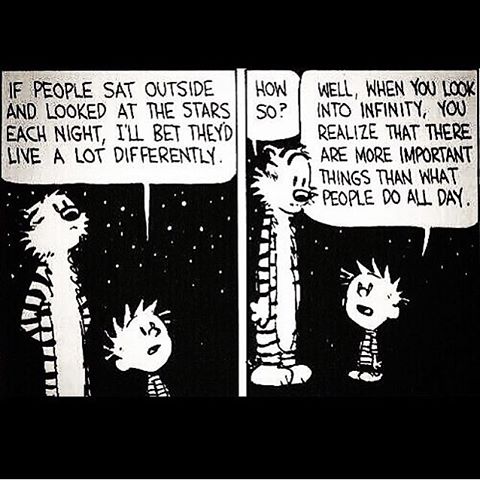
This course revives a tradition originally rooted in Aristotle’s ancient school in Athens, the Lyceum, whose students by legend were said to have roamed the campus grounds with their mentors during classes. Many philosophers and writers since have extolled the benefits of ambulatory thinking, and Britain in particular continues to nurture a vibrant walking culture whose leading lights have included philosophers like John Locke, John Stuart Mill, and Bertrand Russell, novelists like Charles Dickens, George Eliot, and Jane Austen, and poets like Wordsworth, Shelley, Coleridge and Keats.
Across the pond, meanwhile, prominent American peripatetics like Emerson, Thoreau, and William James have advanced novel versions of naturalism, transcendentalism, and pragmatic empiricism that both extend and confound their British ancestors. The resulting Anglo-American dialogue is rich in implication for the future development of all those traditions. The connecting thread is walking. We will follow in the footsteps of some of the British figures most closely linked with these traditions and that development, and interrogate their ideas in the style and manner that first gave them breath.
Our method will involve selected readings, specific questions pursued on the very ground where targeted British figures first conceived the ideas under scrutiny, and an opportunity for students to participate in the process of trans-Atlantic intellectual cross-pollination.
Before, during, and after each site visit, students will emulate the peripatetic method of discourse by splitting into small roving conversational groups of two or three to discuss issues prompted by assigned readings, discussion, and site-visit content. Each will then post summaries of their conversations and subsequent reflections on a blog-site created specifically for the course. They will then continue to engage with the instructor(s) and one another in ongoing face-to-face discussions and online discussion threads that will ultimately provide the core basis for a final written project directed by the instructor(s) and posted by each student within two weeks of our return.
Readings Students will read selections from the following texts, either in print or etext versions.
Amato, On Foot: A History of Walking - “Mind over Foot: Romantic Walking and Rambling,” pp.101-124; “The Transformation of Walking from Necessity to Choice,” 255-278
Coverley, The Art of Wandering - “The Writer as Walker” & “The Walker as Philosopher,” 11-38; “The Return of the Walker,” 205-231
Dewey, Art as Experience and "The Influence of Darwinism on Philosophy"
Gilbert et al (ed.), The Walker’s Literary Companion
Gros, “A Daily Outing-Kant,” and “Strolls,” in A Philosophy of Walking,153-167
Horowitz, On Looking (tba)
Hosler, [Darwin’s] Sandwalk Adventures
James, The Meaning of Truth (tba)
James (Henry & William), selected letters (tba)
Minshull (ed.), The Vintage Book of Walking - “Why Walk,” pp.1-28; “Walk With Me,” 239-269
Mitchell (ed.), The Joys of Walking - Stephen, “In Praise of Walking,” 18-38; Dickens, “Night Walks,” 43-56, and “Tramps,” 95-112; Trevelyan, “Walking,” 57-79; Hazlitt, “On Going a Journey,” 86-94
Nicholson, The Lost Art of Walking, on London, 86-113; “Walking Home and Away From Home,” & “Perfect and Imperfect Walks, Last Walks, and Walks We Didn’t Take,” 217-261
Orlet, “Gymnasiums of the Mind” in Philosophy Now, issue 44
Russell, An Inquiry Into Meaning and Truth: the William James Lectures
Russell, The Conquest of Happiness (tba)
Schiller, Essays in Humanism - Preface; “Truth,” 44-61; “Reality and ‘idealism’,” 110-127, “Darwinism and Design,” 128-156, “The Place of Pessimism in Philosophy,” 157-165
Solnit, “The Mind at Three Miles an Hour” in Wanderlust: A History of Walking, pp.14-29
Sprigge, American Truth, British Reality - “Introduction,” 1-6; “Bradley contra James,” 363-370; “Conceptual Thinking as Distortive of Reality: James and Bradley,” 434-438; “Darwinist Critique of Christianity,” 558-561; Conclusion, 573-583
Thoreau, “Walking”
Toibin, The Master
In the weeks prior to departure, students will be expected to read Orlet, Solnit, and Thoreau, and as many of the paired readings below as they can manage. Additional pairings of text(s) and locale(s) may be appended during the course, in response to conversations and circumstances “on the ground”.
Itinerary & paired readings
Tue. Jul 12, 2016 Guide - will meet group members in arrival hall of London Heathrow airport and accompany them to hotel with a 2-hour panoramic tour en-route. Private minicoach - will arrive at London Heathrow airport and provide transfer to hotel with a full-day city tour en-route. Admission: Strawberry Hill (Horace Walpole’s Gothic Castle).
Admission: Dickens House (maximum of 15 people can visit at one time - 30min interval between timeslots - 1-1.5hrs duration per time slot) hrs 10am - 5pm. 3 Star Hotel Standard Room such as Bayswater Inn, Queens Park Hotel, Royal Eagle Hotel, Central Park, London, England. READ: Dickens, in The Joys of Walking
Wed. Jul 13, 2016 Breakfast included. Please check with hotel reception for specific times. London Oyster Card £20 Including Activation Fee. Admission: Highgate Cemetary (about 90 min total for tour of West Side and browsing East Side on own - grp tours only available weekday mornings and very limited availability). Admission: Keats House (prebooked groups Tuesday - Friday 10am to 12pm). Admission: Freud House (suggested to allow 1.5 hrs for visit - opening hours Wed - Sun 12 - 5pm). 3 Star Hotel Standard Room such as Bayswater Inn, Queens Park Hotel, Royal Eagle Hotel, Central Park, London, England. READ: “Mind over Foot: Romantic Walking and Rambling,” in Amato.
Thu. Jul 14, 2016 Breakfast included. Please check with hotel reception for specific times. Private minicoach - will arrive at hotel and provide a full-day excursion to Kent and Sussex. Admission: The home of Charles Darwin (Down House). Admission: Lamb House. Admission: Restoration House, Rochester (the Satis House of Dickens' “Great Expectations”, the home of Miss Havisham). 3 Star Hotel Standard Room such as Bayswater Inn, Queens Park Hotel, Royal Eagle Hotel, Central Park, London, England. READ: Hosler, [Darwin’s] Sandwalk Adventures; James (Henry & William), selected letters (tba); Dickens, “Tramps,” in Mitchell.
Fri. Jul 15, 2016 Breakfast included. Please check with hotel reception for specific times.
Private minicoach - will arrive at hotel and provide a full-day excursion to Cambridge. Guide - meets group in Cambridge and provides a half-day walking tour. 3 Star Hotel Standard Room such as Bayswater Inn, Queens Park Hotel, Royal Eagle Hotel, Central Park, London, England. READ: Russell, An Inquiry Into Meaning and Truth: the William James Lectures, and The Conquest of Happiness (tba).
Sat. Jul 16, 2016 Breakfast included. Please check with hotel reception for specific times. Free day - Optional trip to Paris for the day. 3 Star Hotel Standard Room such as Bayswater Inn, Queens Park Hotel, Royal Eagle Hotel, Central Park, London, England.
Sun. Jul 17, 2016 Breakfast included. Please check with hotel reception for specific times. Group makes own way to Bradford by train and then by public transit to local area attractions. Admission: Bronte Society and Bronte Parsonage Museum plus guided walk, Haworth. Taste of the Moors Walk - Approx 1.5 hours with guide (readings from Wuthering Heights) - Groups over 20 will be split into 2 groups. 3-4* hotel standard room such as The Dubrovnik Hotel, Bradford, England. READ: “The Writer as Walker” & “The Walker as Philosopher,” in Coverley.
Mon. Jul 18, 2016 Breakfast included. Please check with hotel reception for specific times. Group makes their own way by train to Stratford Upon Avon. 3 Star Hotel Standard Room such as Best Western Grosvenor, White Swan, Stratford-Upon-Avon, England. READ: The Walker’s Literary Companion (tba)
Tue. Jul 19, 2016 Breakfast included. Please check with hotel reception for specific times.
Admission: Shakespeare's Trust, entry to 2 properties. Group makes their own way to Oxford via train. 3 Star Hotel Standard Room such as Holiday Inn Express Oxford - Kassam Stadium, Oxford, England. READ: “Why Walk,” “Walk With Me,” in Minshull.
Wed. Jul 20, 2016 Breakfast included. Please check with hotel reception for specific times. 3 Star Hotel Standard Room such as Holiday Inn Express Oxford - Kassam Stadium, Oxford, England.
Thu. Jul 21, 2016 Breakfast included. Please check with hotel reception for specific times.
No transportation included. Guide provides morning walking tour in Oxford (Lewis Carroll orientated). Admission: Christ Church. Free afternoon in Oxford. 3 Star Hotel Standard Room such as Holiday Inn Express Oxford - Kassam Stadium, Oxford, England. READ: John Locke (tba); Lewis Carroll (tba)
Fri. Jul 22, 2016 Breakfast included. Please check with hotel reception for specific times.
No transportation included. Free day in Oxford. 3 Star Hotel Standard Room such as Holiday Inn Express Oxford - Kassam Stadium, Oxford, England. READ: Schiller, Essays in Humanism (tba); Sprigge, American Truth, British Reality (tba)
Sat. Jul 23, 2016 Breakfast included. Please check with hotel reception for specific times.
Transfer from oxford hotel to LHR via private minicoach.
For more info contact phil.oliver@mtsu.edu. Apply at OEA SUMMER PROGRAMS - https://mtsu.studioabroad.com/index.cfm?FuseAction=Programs.ViewProgram&Program_ID=56043
Podcast


 Charles Darwin (

 Posts
Posts