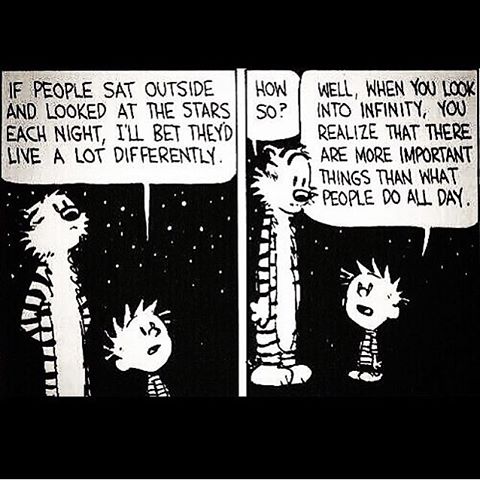
It's Ecclesiastes (and Job) Day in A&S, and I can't get this out of my head. Might as well spread the meme around...
To everything there is a season... a time to be born, and a time to die... There is nothing for a person to do but "to rejoice, and to do good in his life." It is a comforting speech, but the mood doesn't hold. Jennifer Hecht
Tuesday, February 9, 2010


Monday, February 8, 2010
spirited atheist
At least one New Atheist rejects the "kinder, gentler" label. My bad? Susan Jacoby does not want to belong to that particular club if it will have someone like her for a member...
For the record, though, my "kinder, gentler" list is not exclusively distaff. James, Sagan, Gould, and-- among the living-- Ruse, Shermer, even (arguably) Dennett in some contexts.
Also for the record: Dennett did not "coin the term 'Bright'..." He did endorse it, but he really says lots of respectful things about religion as a form of life.
But, it's great to see Jacoby joining the ranks with her new Washington Post column. An excerpt from the first edition:
Speaking only for myself, I find that awareness of my inevitable extinction enhances rather than diminishes my life. This awareness makes me want to leave something behind, if only a piece of scholarship that will be useful to some seeker of knowledge in a library of the future. I will admit that I am deeply disturbed by the possibility that libraries may become extinct, although the digital world offers a kind of eternal life that neither an atheist nor a religious believer could have predicted when I was a child. The novelist Milan Kundera has written about a number of developments the Creator never imagined--among them surgery and humans' relationship with their dogs. To that I would add the internet. The digital world, because it is a product of human intelligence, is a part of the nature (for better and for worse) of which men and women also comprise a finite part. To fill our portion of the universe with the best achievements possible, through our love and our work, is purpose enough for a lifetime and requires no transcendence of nature and no afterlife.
For the record, though, my "kinder, gentler" list is not exclusively distaff. James, Sagan, Gould, and-- among the living-- Ruse, Shermer, even (arguably) Dennett in some contexts.
Also for the record: Dennett did not "coin the term 'Bright'..." He did endorse it, but he really says lots of respectful things about religion as a form of life.
But, it's great to see Jacoby joining the ranks with her new Washington Post column. An excerpt from the first edition:
Speaking only for myself, I find that awareness of my inevitable extinction enhances rather than diminishes my life. This awareness makes me want to leave something behind, if only a piece of scholarship that will be useful to some seeker of knowledge in a library of the future. I will admit that I am deeply disturbed by the possibility that libraries may become extinct, although the digital world offers a kind of eternal life that neither an atheist nor a religious believer could have predicted when I was a child. The novelist Milan Kundera has written about a number of developments the Creator never imagined--among them surgery and humans' relationship with their dogs. To that I would add the internet. The digital world, because it is a product of human intelligence, is a part of the nature (for better and for worse) of which men and women also comprise a finite part. To fill our portion of the universe with the best achievements possible, through our love and our work, is purpose enough for a lifetime and requires no transcendence of nature and no afterlife.
Sunday, February 7, 2010
marching in

I do know that we all want to be in that number, and that we all can't be, any more than we can all be above average. Alas.
But wait 'til next year, and get ready for Spring Training.
Saturday, February 6, 2010

Friday, February 5, 2010
religion doesn't evolve
Marine biologist and former White House science adviser Jeff Schweitzer is not much impressed by speculations about a god gene and the evolution of religion. Nothing here about Higgs-Boson, though. (He's responding in part to Nicholas Wade's new book on the subject.) Thanks for the link, Dean. And oh, btw: the Hitchens response to the Googlers at 33'10" when he's asked about people who feel a need for the communal and other benefits of church membership but don't really believe any of the doctrine, and who seek out "the least obnoxious" faith and take it half-heartedly: "This used to be called the Church of England, or the Unitarians-- of whom Bertrand Russell remarked that they believe in one god MAXIMUM." Hitch also mentions the late novelist Peter DeVries, who said the movement from poly- to mono-theism is progress, next step being non- or a- or anti-theism altogether. That presumably would be the apotheosis of religious evolution! (And is Hitch's response to Robert Wright.)
First, religion did not evolve through the mechanisms of natural selection. The idea of god perpetuates itself through cultural transmission. Second, atheists as a rule do not claim that religion is "useless" at all, fully recognizing that an appeal to an unseen force had benefits to early human societies unschooled in the sciences. Third, even if the absurd claim were true that religion evolved through natural selection, that would in no way challenge the tenet that god is nothing but a silly myth. The "evolution" of religion would simply mean that perpetuating a ridiculous myth had a selective advantage, nothing more, and would certainly not lend credence to the myth itself...
Religion was born not from some god gene, but of fear of the unknown, of the drive to control the uncontrollable, of the need to have mastery over one's fate in the face of an uncertain world. The first ideas of religion arose not from any awe of nature's wonder and order that would imply an invisible intelligent designer, but rather from concerns for the events of everyday life and how the vast unknown of nature affected daily existence. To allay fears of disease, death, starvation, cold, injury and pain, people fervently hoped that they could solicit the aid of greater powers, hoped deeply that they could somehow control their fate, and trusted that the ugly reality of death did not mean the end. Hope and fear combine powerfully in a frightening world of unknowns to stimulate comforting fantasies and myths about nature's plans.
The human brain is extraordinarily adept at posing questions, but simply abhors the concept of leaving any unanswered. We are unable to accept "I don't know," because we cannot turn off our instinct to see patterns and to discern effect from cause. We demand that there be a pattern, that there be cause and effect, even when none exist. So we make up answers when we don't know. We develop elaborate creation myths, sun gods, rain gods, war gods and gods of the ocean. We believe we can communicate with our gods and influence their behavior, because by doing so we gain some control, impose some order, on the chaotic mysteries of the world. By making up answers to dull the sting of ignorance, we fool ourselves into thinking we explain the world. Religion was our first attempt at physics and astronomy...
Thursday, February 4, 2010
"Shadows of Doubt"
Jonathan Miller's "Atheism: A Rough History of Disbelief"-- a nice complement to Hecht's Doubt: a history.
I don't suppose our friend the ranting hellfire-spouting evangelist, spotted out in the rain in front of our student center for a curtain call earlier today, has seen it. (Yup, he's back.) Didn't get a chance to ask him, last time he graced us with his inspired presence here in October. (Neither did Rabbi Rami...)
Poor guy's still lost in the woods.
I don't suppose our friend the ranting hellfire-spouting evangelist, spotted out in the rain in front of our student center for a curtain call earlier today, has seen it. (Yup, he's back.) Didn't get a chance to ask him, last time he graced us with his inspired presence here in October. (Neither did Rabbi Rami...)
Poor guy's still lost in the woods.
Wednesday, February 3, 2010
"my team"
In Plato's Euthyphro, Socrates poses a stumper question: The point which I should first wish to understand is whether the pious or holy is beloved by the gods because it is holy, or holy because it is beloved of the gods.
Euth. I do not understand your meaning, Socrates.
Maybe a baseball analogy would help:
 "There are moderates who revere the tradition they were raised in, simply because it is their tradition, and who are prepared to campaign, tentatively, for the details of their tradition, simply because, in the marketplace of ideas, somebody should stick up for each tradition until we can sort out the good from the better and settle for the best we can find, all things considered. That is like allegiance to a sports team, and it, too, can give meaning to a life — if not taken too seriously. I am a Red Sox fan, simply because I grew up in the Boston area and have happy memories of Ted Williams, Jimmy Piersall, Carl Yastrzemski, Pudge Fisk, and Wade Boggs, among others. My allegiance to the Red Sox is enthusiastic, but cheerfully arbitrary and undeluded. The Red Sox aren't my team because they are, in fact, the Best; they are the Best (in my eyes) because they are my team." Dan Dennett
Arbitrariness has its place, I guess. Who else should you root for than "your team"? But is life really a ballgame?
Euth. I do not understand your meaning, Socrates.
Maybe a baseball analogy would help:

Arbitrariness has its place, I guess. Who else should you root for than "your team"? But is life really a ballgame?
Tuesday, February 2, 2010
quiz
We've focused a lot on New Atheists in A&S so far, but we're about to take up a fairly extensive survey of Old Atheists-- brought to us by Christopher Hitchens' Portable Atheists anthology , and by Jennifer Michael Hecht in Doubt: A History (The Great Doubters and Their Legacy of Innovation from Socrates and Jesus* to Thomas Jefferson and Emily Dickinson). Yes, "doubt" here is a publisher-prompted euphemism, not Ms. Hecht's idea (as she told D.J. Grothe ). But a rose is a rose...
Hecht's introduction is highlighted by the Scale of Doubt Quiz . Take it, see what it tells you.
*Did you know that Jesus was a radical secular humanist ?
Hecht's introduction is highlighted by the Scale of Doubt Quiz . Take it, see what it tells you.
*Did you know that Jesus was a radical secular humanist ?
Monday, February 1, 2010
soul
Sure, says Dan Dennett, we've got soul (as canvassed in today's dawn post) and spirituality. But we've got no mysterious lumps of wonder tissue (as he also tells Jonathan Miller)...
Sunday, January 31, 2010
SJG on NOMA

But he's worth reading on NOMA too, not because there aren't deep conceptual problems with the view but because it reflects the large soul and spirit of an atheist (he calls himself "agnostic" but I think he's just being polite) who is entirely civil and entirely unthreatened by the existence of people who see the world differently. Good for him, and good for us that he's left such a vast body of work to pull off the shelf on a snowy winter's eve.
I also like the sweet post-script tribute to Carl Sagan.
Just as religion must bear the cross of its hard-liners. I have some scientific colleagues, including a few prominent enough to wield influence by their writings, who view this rapprochement of the separate magisteria with dismay. To colleagues like me—agnostic scientists who welcome and celebrate thc rapprochement, especially the pope's latest statement—they say: "C'mon, be honest; you know that religion is addle-pated, superstitious, old-fashioned b.s.; you're only making those welcoming noises because religion is so powerful, and we need to be diplomatic in order to assure public support and funding for science." I do not think that this attitude is common among scientists, but such a position fills me with dismay—and I therefore end this essay with a personal statement about religion, as a testimony to what I regard as a virtual consensus among thoughtful scientists (who support the NOMA principle as firmly as the pope does).
I am not, personally, a believer or a religious man in any sense of institutional commitment or practice. But I have enormous respect for religion, and the subject has always fascinated me, beyond almost all others (with a few exceptions, like evolution, paleontology, and baseball). Much of this fascination lies in the historical paradox that throughout Western history organized religion has fostered both the most unspeakable horrors and the most heart-rending examples of human goodness in the face of personal danger...
I believe, with all my heart, in a respectful, even loving concordat between our magisteria—the NOMA solution. NOMA represents a principled position on moral and intellectua] grounds, not a mere diplomatic stance. NOMA also cuts both ways. If religion can no longer dictate the nature of factual conclusions properly under the magisterium of science, then scientists cannot claim higher insight into moral truth from any superior knowledge of the world's empirical constitution. This mutual humility has important practical consequences in a world of such diverse passions.
Religion is too important to too many people for any dismissal or denigration of the comfort still sought by many folks from theology. I may, for example, privately suspect that papal insistence on divine infusion of the soul represents a sop to our fears, a device for maintaining a belief in human superiority within an evolutionary world offering no privileged position to any creature. But I also know that souls represent a subject outside the magisterium of science. My world cannot prove or disprove such a notion, and the concept of souls cannot threaten or impact my domain. Moreover, while I cannot personally accept the Catholic view of souls, I surely honor the metaphorical value of such a concept both for grounding moral discussion and for expressing what we most value about human potentiality: our decency, care, and all the ethical and intellectual struggles that the evolution of consciousness imposed upon us.
As a moral position (and therefore not as a deduction from my knowledge of nature's factuality), I prefer the "cold bath" theory that nature can be truly "cruel" and "indifferent"—in the utterly inappropriate terms of our ethical discourse—because nature was not constructed as our eventual abode, didn't know we were coming (we are, after all, interlopers of the latest geological microsecond), and doesn't give a damn about us (speaking metaphorically). I regard such a position as liberating, not depressing, because we then become free to conduct moral discourse—and nothing could be more important—in our own terms, spared from the delusion that we might read moral truth passively from nature's factuality...
Here, I believe, lies the greatest strength and necessity of NOMA, the nonoverlapping magisteria of science and religion. NOMA permits—indeed enjoins—the prospect of respectful discourse, of constant input from both magisteria toward the common goal of wisdom. If human beings are anything special, we are the creatures that must ponder and talk. Pope John Paul II would surely point out to me that his magisterium has always recognized this distinction, for "in principio, erat verbum"—"In the beginning was the Word."

Carl Sagan organized and attended the Vatican meeting that introduces this essay; he also shared my concern for fruitful cooperation between the different but vital realms of science and religion. Carl was also one of my dearest friends. I learned of his untimely death on the same day that I read the proofs for this essay. I could only recall Nehru's observations on Gandhi's death—that the light had gone out, and darkness reigned everywhere. But I then contemplated what Carl had done in his short sixty-two years and remembered John Dryden's ode for Henry Purcell, a great musician who died even younger: "He long ere this had tuned the jarring spheres, and left no hell below."
The days I spent with Carl in Rome were the best of our friendship. We delighted in walking around the Eternal City, feasting on its history and architecture—and its food! Carl took special delight in the anonymity that he still enjoyed in a nation that had not yet aired Cosmos, the greatest media work in popular science of all time.
I dedicate this essay to his memory. Carl also shared my personal suspicion about the nonexistence of souls—but I cannot think of a better reason for hoping we are wrong than the prospect of spending eternity roaming the cosmos in friendship and conversation with this wonderful soul.
But on the other hand, there's this guy. Talk about a "cold bath." I much prefer Gould's tone, but Hitchens is right.
But on the other hand, there's this guy. Talk about a "cold bath." I much prefer Gould's tone, but Hitchens is right.
Subscribe to:
Posts (Atom)


 Charles Darwin (

 Posts
Posts