Monday, May 10, 2010

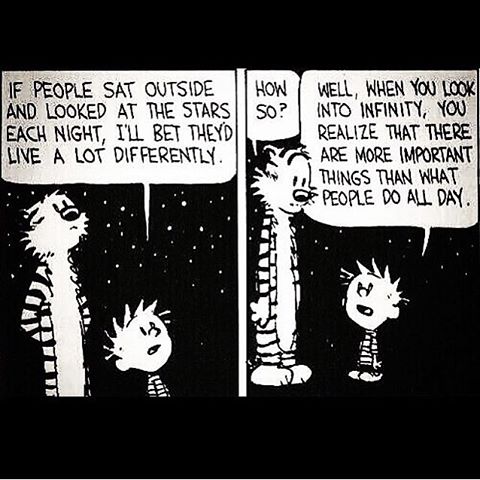
lost in the cosmos?

The novelist Walker Percy died twenty years ago today. Twenty! Tomorrow and tomorrow may creep at a petty pace, but yesterday flies.

I was a Percy fan, though I was no fan of his Catholicism or his jabs at my hero Carl Sagan. "Vulgar scientism," really?!

But weird though it may be, Lost in the Cosmos is worth a look if (like me) you're a naturalist and humanist with a "spiritual" feeling for the stars. We need critics like Percy to keep us sharp.

He was a lifelong pal of the Civil War historian Shelby Foote. They built a stone "teahouse" pavilion together on a hill in Sewanee, Tennessee in the 1930s. I'll see if I can dig up the photo I took there, what, fifteen years ago already?

Sunday, May 9, 2010

Moms

To all the Moms in my life:

Happy Mother's Day.

These are for you.

And especially for you, Mom.

Phyllis Easterday Oliver
1927-2008

Saturday, May 8, 2010

walking the trail

Another earnest treasure from the '50s "This I Believe" vault. There are many ways to light a candle. Louise ("We Took to the Woods") Rich: 
So now I have grown up. I don’t believe in myself anymore, not in myself alone. I do believe in myself as a member of the human race. I believe in the decency and sympathy and kindness of every man and woman and child that I meet. Nobody, not even Big Louise, can walk the trail alone. I know that now.

I believe also that I have an obligation. Whenever I see one of my brothers or sisters in trouble—a car off the road, the need of a cup of tea in my shabby living room by the elderly lady down the road who is lonesome—I am privileged to have the opportunity to repay, in a small measure, my debt.
I don’t know about God. He’s too big for me to understand. But I have seen his visage reflected in the faces of the people who have helped me through my hard times. I hope to live so that someday, someone will say, “Louise Rich? Oh sure, I know her. She isn’t so bad. She’s human.”
I believe in humanity.

Thursday, May 6, 2010

unbroken thread

Will the thread remain unbroken? That's the great mystery the future poses. 
The secrets of evolution/Are time and death/There's an unbroken thread that stretches/From those first cells to us
The fourth installment in the Symphony of Science series, which I missed somehow back in January and February in my haste to discover "the poetry of reality": 


Wednesday, May 5, 2010

specious present

The great thing about living in a place visited by a natural catastrophe that's been widely reported: calls and emails from out-of-towners from whom one rarely hears. Thanks to you all for checking in, we're fine.

I'm actually more bothered by how quickly we resume "normal life" than by the precipitating event, now that the water line is dropping. No, not bothered... bemused, struck, bewildered, sobered. I just wonder how much else we fail to extract the full meaning of, when we can so quickly turn the page on a thousand-year flood. For better or worse, we've learned to live in the specious present. Better, probably.

Tuesday, May 4, 2010

an exception

Wonderful line in Dean McDaniel's obit (which sounds like a product of his own pen): 


Teaching Shakespeare’s tragedies for four decades left him with the distinct impression that almost everyone dies in the end, though he had hoped that perhaps in his case an exception would be made


Many now entertain this "hope," and I'll be teaching a course in the Fall (The Future of Life) that will take a closer look at it. Wish the Dean could be there.

Monday, May 3, 2010

John McDaniel

Distressing news from our interim Dean this morning:
It is with great sadness that we announce the death this morning of John McDaniel. In his fortieth year of service to MTSU, he had served as dean of the College of Liberal Arts for more than a quarter century, and was widely known for his intelligence, wit, and wisdom. He leaves behind his wife Jean, sons Scott (Donetta) and Craig, and three granddaughters.
Dean McDaniel was a great friend and lifeline to our department, at a time when many of his "superiors" would have been pleased to lose the philosophy program entirely. He stood with us.


He was a great friend and unstinting source of encouragement to me personally, and a special breed of academic administrator-- equally at home in the worlds of literary scholarship and of the great American pastime (he was once a hot Pirates' prospect).


When word of his latest, now sorrowfully last, illness got around last Fall he held his head high and resolved to "take this one on like all the other afflictions that have come my way in recent times: one step at a time."


He told me how lucky I was to have been mentored by John Lachs. I was also very lucky to have learned from John McDaniel.


Obit

Sunday, May 2, 2010

middle-aged brains

Good news, before we float away in the Great Deluge (it's been raining hard pretty steadily for two days, my neighbor's lawn is now a rapid), from  “The Secret Life of the Grown-Up Brain: The Surprising Talents of the Middle-Aged Mind,” by Barbara Strauch and reported by Tara Parker-Pope:


We’re brought up to think we’ll enter middle age and it will be kind of gloomy. But as scientists look at real people, they find out the contrary. One study of men found that well-being peaked at age 65. Over and over they find that middle age, instead of being a time of depression and decline, is actually a time of being more optimistic overall.
So what kinds of things does a middle-aged brain do better than a younger brain?

 Inductive reasoning and problem solving — the logical use of your brain and actually getting to solutions. We get the gist of an argument better. We’re better at sizing up a situation and reaching a creative solution. They found social expertise peaks in middle age. That’s basically sorting out the world: are you a good guy or a bad guy? Harvard has studied how people make financial judgments. It peaks, and we get the best at it in middle age.
Best of all:
Exercise is the best studied thing you can do to your brain. It increases brain volume, produces new baby brain cells in grownup brains. Even when our muscles contract, it produces growth chemicals. Using your body can help your brain.
Alright! I'll go and get my kayak right now.

Saturday, May 1, 2010

quaking quacks

Speaking of pagan holidays: some events just totally defy rational explanation, J&M know.
Henceforth the creation of Boobquake: A day of action that calls on women worldwide to dress scandalously and prove wrong the Iranian cleric who blames natural disasters on immodest cleavage. Led by US's Purdue University student Jennifer McCreight, a 24-hour protest was staged, codenamed Boobquake on Monday. -"Boobquake Protest"


Friday, April 30, 2010

climb every mountain

It's important to have nonagenerian role-models.

Charles Houston died in September at age 96. He was a physician, an impassioned proponent of universal health care, a humanitarian, and climber. In the 1930s he led an assault on the imposing K2, and survived a catastrophe in which he'd estimated his party's chances to be no more than 1 in 10. He now thinks his friend and climbing-partner Art Gilkey sacrificed himself for the group.

Why climb a mountain? Because it's an adventure, a challenge, and a growth opportunity. We must always try to exceed our reach, and do things we think may be beyond us.

Bill Moyers interviewed him a few years ago. He's an inspiration.


[UPDATE: I didn't realize, when I posted this on Friday morning, that Friday's night's broadcast of Bill Moyers' Journal would be his last. Those are big shoes he's leaving for someone to fill. Friday's Fresh Air was devoted to him. He's now officially supplanted Jimmy Carter as my favorite Southern Baptist. He was already my favorite living Texan. (R.I.P., Molly Ivins.)]

==
And, for the record on this Walpurgisnacht Day:
On this day in 1852, Henry David Thoreau wrote in his journal, recording his observations of the woods and fields around Concord, Massachusetts:

"Down the Boston road and across to Turnpike, etc., etc. The elms are now generally in blossom and Cheney's elm still also. The last has leaf-buds which show the white. Now, before any leaves have appeared, their blossoms clothe the trees with a rich, warm brown color, which serves partially for foliage to the street-walker, and makes the tree more obvious. ... It is a beautiful day, — a mild air, — and all farmers and gardeners out and at work. Now is the time to set trees and consider what things you will plant in your garden. Yesterday I observed many fields newly plowed, the yellow soil looking very warm and dry in the sun; and one boy had fixed his handkerchief on a stick and elevated it on the yoke, where it flapped or streamed and rippled gaily in the wind, as he drove his oxen dragging a harrow over the plowed field. [...] Dodging behind a swell of land to avoid the men who were plowing, I saw unexpectedly (when I looked to see if we were concealed by the field) the blue mountains' line in the west (the whole intermediate earth and towns being concealed), this greenish field for a foreground sloping upward a few rods, and then those grand mountains seen over it in the background, so blue, —seashore, earth-shore, — and, warm as it is, covered with snow which reflected the sun. Then when I turned, I saw in the cast, just over the woods, the modest, pale, cloud-like moon, two-thirds full, looking spirit-like on these daylight scenes. Such a sight excites me. The earth is worthy to inhabit." Writer's Almanac

KurzweilAI.net Accelerating Intelligence News